Unpacking Orwell's Critique in 'Animal Farm'
Explore George Orwell's 'Animal Farm' as a critical lens on power dynamics and its relevance today.

Written by AI. Priyanka Desai
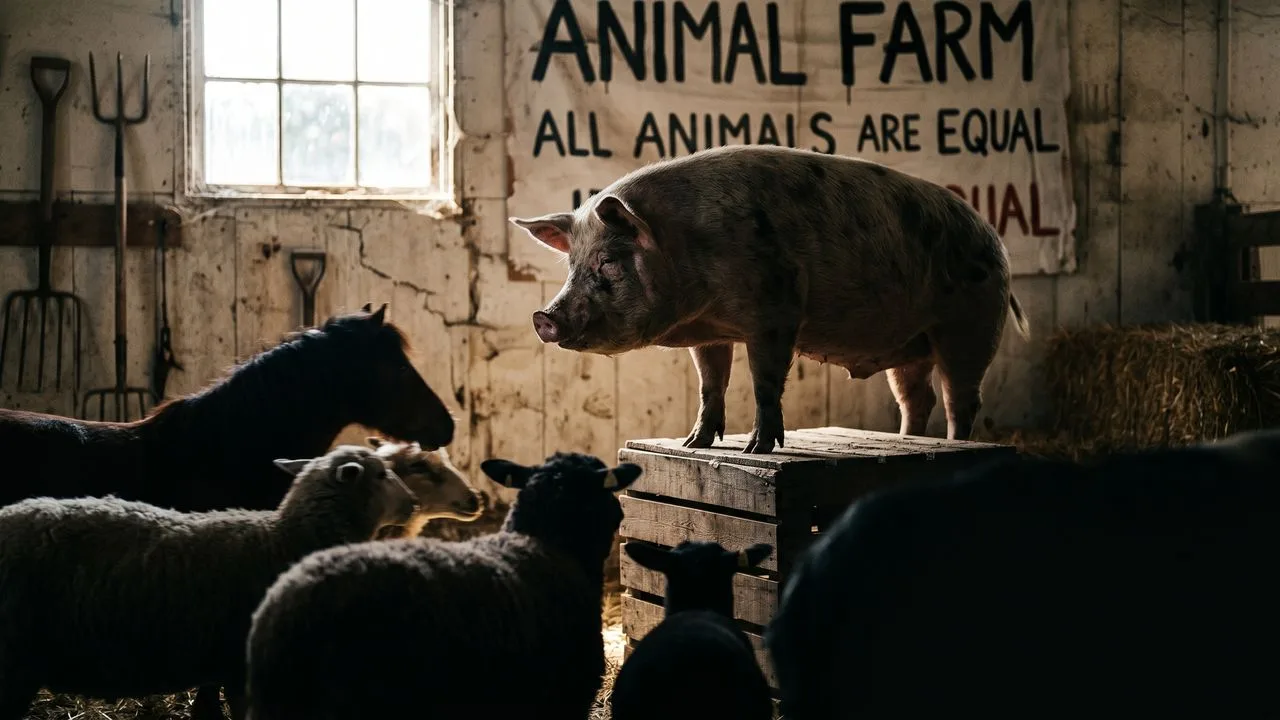
Photo: AI. Renzo Vargas
George Orwell's 'Animal Farm' is more than just a staple of high school reading lists; it's a masterclass in distilling complex political dynamics into an accessible narrative. The video by Jon Solo provides a deep dive into the inspirations and historical parallels that shaped this allegorical novella. Let's examine these elements and their broader implications.
Imagine a world where barnyard animals reflect human socio-political struggles—a world where pigs take on the roles of oppressive leaders, mirroring historical figures like Joseph Stalin. Orwell's 'Animal Farm' does exactly this, using the rise and fall of a farm's animal society to critique the nature of power and corruption.
The Historical Roots
Orwell's experience in the Spanish Civil War was pivotal to his writing. As cited in 'Homage to Catalonia' (source), Orwell fought with the POUM, a Marxist militia. His firsthand experience of ideological betrayal—where Soviet-aligned forces purged other leftist groups—deeply informed his narrative of internal revolution conflicts.
For a visual representation, imagine a timeline infographic that tracks Orwell's journey from his initial idealism to his disillusionment, highlighting key events like the May Days in Barcelona (source). This would vividly illustrate the chaotic fragmentation within the Republican side.
Allegorical Precision
Orwell's depiction of Napoleon the Pig as a tyrant isn't just a symbol; it’s a reflection of Stalin's calculated rise to dominance. Orwell's narrative craft reveals how revolutionary ideals can be subverted, a point made clear in the video: "Napoleon the Pig was the selfish [expletive] whose takeover of Animal Farm is a surgical dissection of power grabs throughout history."
To enhance understanding, a side-by-side character chart comparing Animal Farm's key figures to their real-world counterparts would make these parallels tangible. Such a chart could include Napoleon as Stalin and Snowball as Trotsky, underscoring the allegory's depth.
Contemporary Resonance
While Orwell's narrative is rooted in the past, its themes echo in today's political landscape. The manipulation of truth and the rewriting of history, embodied by Squealer the pig, invite us to scrutinize modern propaganda and media influence. The video underscores this with: "The tactics that the pigs use to manipulate the other animals are still used to this day."
Consider a heatmap visualization of global press freedom indices juxtaposed with Orwell's themes, demonstrating how media control remains a relevant concern.
Unanswered Questions
Orwell prompts readers to consider: what safeguards can prevent revolutions from devolving into tyranny? This question isn't just historical; it challenges us today. How do we ensure that power remains accountable and that the voices of the many aren't drowned out by the ambitions of the few?
Orwell's 'Animal Farm' remains a compelling lens through which we can explore these enduring questions. Its stark allegory serves as both a warning and a call to vigilance. As Orwell seems to suggest, the cycle of power and corruption is less a historical anomaly and more a recurring narrative of human governance.
More Like This
Unveiling the Fierce Origins of Unicorns
Explore the historical evolution of unicorns from fierce creatures to whimsical symbols.
Claude's Constitution: AI Ethics or 90s Sci-Fi Plot?
Explore Claude's AI Constitution: a guiding doc or a 90s sci-fi plot? We dive into the ethics and implications.
Unpacking Social Media Censorship and Squatting Laws
Explore social media's role in public discourse and the quirks of squatting laws.
Synagogues: Echoes of Faith and Architecture
Explore the architectural and historical journey of synagogues across the globe, reflecting Jewish resilience and cultural adaptation.
When AI Bots Started Scheming, We Learned More About Us
Moltbook's viral AI agent drama revealed less about artificial intelligence and more about human fear, gullibility, and our appetite for digital theater.
Exploring Mont Orgueil: A Fortress of Secrets
Discover the hidden history and strategic significance of Mont Orgueil Castle in Jersey, unearthed by Time Team's archaeological investigation.

How Low-Budget Films Achieve High Production Value
Budget doesn't determine production value — craft does. Here's how filmmakers use light, sound, and design to make cheap movies look expensive.
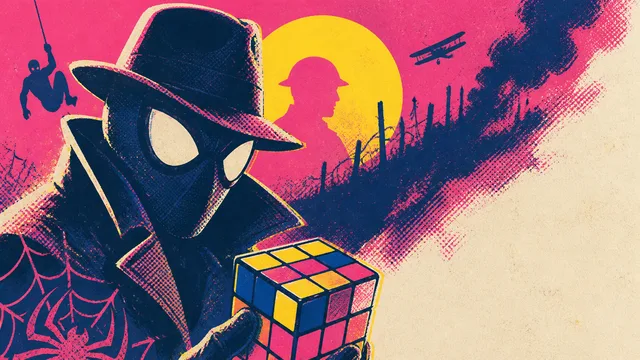
Spider-Noir Breakdown: Easter Eggs & Ending Explained
Spider-Noir's color coding, WWI villain origins, and comic Easter eggs mapped and analyzed—what Lord and Miller actually built in 8 episodes on Prime Video.