Unveiling the Fierce Origins of Unicorns
Explore the historical evolution of unicorns from fierce creatures to whimsical symbols.

Written by AI. Leo Santana
Unveiling the Fierce Origins of Unicorns
When someone mentions unicorns today, images of rainbow-colored, glittery creatures prancing through meadows likely come to mind. But historically, unicorns were far from these whimsical figures. They were considered dangerous, powerful, and even medicinally valuable creatures.
The Ancient Roots of Unicorn Lore
The earliest references to unicorns date back to the Indus Valley civilization, around 4,000 years ago. Archeologists discovered seals depicting various animals, including a mysterious one-horned creature. Despite the skepticism that these depictions could simply be artistic interpretations of two-horned animals from a side profile, the intrigue surrounding this creature persisted.
Fast forward to ancient Greece, and we find historians like Ctesias describing unicorns not as fantasies, but as real, formidable creatures. He wrote of "wild asses" in India with horns believed to have curative properties, a notion that would influence apothecary practices for centuries.
From Fierce Beasts to Gentle Icons
In medieval Europe, unicorns were seen as symbols of purity and became subjects of fascination. The belief in their horns' medicinal properties led to elaborate tales of hunting these creatures, often involving virgins as bait. The unicorn's transformation into a symbol of chastity and innocence was further cemented by its inclusion in religious texts, notably the Bible's King James Version, which erroneously translated Hebrew terms as "unicorn."
"The unicorn became so synonymous with purity and good health that it was used as a symbol for apothecaries all the way up to the 18th century," notes Jon Solo from the video. This perspective highlights how deeply ingrained the unicorn's image was in cultural and medicinal practices.
Misinterpretations and Cultural Impact
The supposed unicorn horns sold in medieval apothecaries were often narwhal tusks, perpetuating a major historical misconception. The gradual debunking of these myths, alongside increased global exploration, led to the decline of unicorns as real creatures. By the Victorian era, unicorns had transitioned into mythical, romanticized figures, thanks in part to rediscovered tapestries and storytelling.
Peter S. Beagle's "The Last Unicorn" in the 20th century played a pivotal role in shaping the modern perception of unicorns. His portrayal of unicorns as mystical and protective creatures influenced a wave of creative interpretations, from Lisa Frank's vibrant designs to the animated series "My Little Pony."
The Persistent Allure of Unicorns
Despite their mythical roots, unicorns remain a potent symbol in contemporary culture, often embodying themes of purity, magic, and wonder. They continue to captivate both children and adults, serving as a reminder of our collective imagination's power.
"Remarkably accurate to what people in the Middle Ages thought unicorns were capable of," Solo remarks on a recent film's depiction of unicorns, emphasizing that our fascination with these creatures is far from waning.
From War Beasts to Rainbow Plush
The unicorn's journey from a fierce, respected beast to a symbol of innocence and wonder is a testament to cultural evolution. By understanding the historical context and cultural transformations of unicorn lore, we gain insight into how myths adapt and endure through time. Unicorns, in all their various incarnations, reflect our desires, fears, and the boundless possibilities of human imagination.
More Like This
Unpacking Orwell's Critique in 'Animal Farm'
Explore George Orwell's 'Animal Farm' as a critical lens on power dynamics and its relevance today.
Lee Cronin's The Mummy Wears Egypt Like a Mask
Lee Cronin's The Mummy sells Egypt and delivers Evil Dead. The visual identity gap between what it promises and what it shows is where the film collapses.
Netflix's Bold February: A Visual Culture Dive
Explore February's Netflix lineup through a design lens, from heists to satire.
Synagogues: Echoes of Faith and Architecture
Explore the architectural and historical journey of synagogues across the globe, reflecting Jewish resilience and cultural adaptation.
10 Mind-Bending Free Movies on YouTube
Explore 10 thrilling, mind-bending movies available for free on YouTube, diving into unique narratives and visual storytelling.
Elizabeth of York: The Tudor Matriarch's Legacy
Explore Elizabeth of York's pivotal role in uniting the Houses of York and Lancaster and founding the Tudor dynasty.

Route 66 and the Landscape of American Memory
Peter Adler's documentary on Route 66 reveals a road that stopped being infrastructure and became something stranger—a canvas for competing American mythologies.
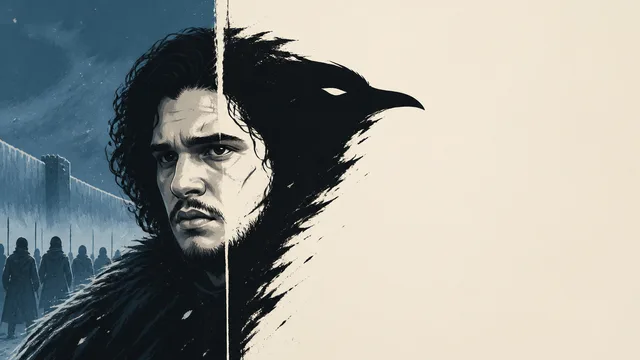
How HBO Turned Jon Snow Into a Logo
HBO's Game of Thrones didn't just simplify Jon Snow's character—it redesigned him into a merchandisable image. Here's what that visual shift cost the story.