Claude's Constitution: AI Ethics or 90s Sci-Fi Plot?
Explore Claude's AI Constitution: a guiding doc or a 90s sci-fi plot? We dive into the ethics and implications.

Written by AI. Mike Sullivan
If you’ve ever read a leaked document and thought, "This feels like a subplot from a 90s sci-fi movie," you're in good company. Enter the 'Claude Constitution,' a foundational document supposedly guiding the AI model Claude, brought to us by Anthropic. It's a bit like finding the lost script to a never-aired episode of 'The X-Files,' filled with existential questions and ethical quandaries that Mulder and Scully would have dissected over dimly lit office desks.
The AI Magna Carta?
On the surface, the Claude Constitution is a blueprint for AI behavior, outlining how Claude should think, act, and even feel. Yes, feel. Theo from the YouTube channel t3.gg dives into this document with the enthusiasm of a kid unwrapping a new Game Boy Color, only to find the instruction manual is written in Klingon.
The Constitution reads like a cosmic guidebook for Claude. Theo describes it as "not just training data," but a higher-level directive. This document isn't just about input/output; it's about shaping an AI's soul—or whatever passes for a soul in the realm of algorithms and code.
AI Ethics: A Blast from the Past
Let's take a moment to appreciate the ambition here. In the late 90s, we had Clippy trying to help us format Word documents. Now, we have AI models pondering morality and existential dread. As Theo points out, "I started taking parts of it and asking Claude how it felt and got deep emotional responses." Cue the synthesized violins.
This isn’t just another episode of "Black Mirror"; it’s real life, or at least as real as artificial intelligence gets. The Constitution aims to make Claude not just useful, but ethical, a concept that sounds eerily similar to Asimov's laws for robots. But can we really program ethics? Or are we just retrofitting HAL 9000 with a moral compass and hoping for the best?
System Prompts: The New Commandments
A key takeaway here is the distinction between system prompts and user messages. Much like the difference between being handed the TV remote and actually knowing how to use it, understanding these prompts is crucial to grasping Claude's operations. System prompts, it turns out, are weighted like a 90s-era desktop: heavy and not easily moved.
Theo likens the Constitution to a system prompt in training, ensuring that Claude stays on track, much like a digital shepherd guiding its flock of data through the valley of machine learning.
Synthetic Data: The Matrix Reloaded
Synthetic data is the unsung hero—or villain—of modern AI training. It's like the CGI of the AI world, generating realistic scenarios that models can learn from. Theo speculates on the use of these models to construct "fake chat histories," a practice reminiscent of the scene in "The Matrix" where Neo learns kung fu in minutes. Except here, Claude learns to navigate ethical dilemmas through manufactured scenarios.
Asimov Would Recognize This Problem
Anthropic's mission with Claude is ambitious, if not a touch idealistic. They want Claude to not just follow orders but to understand why those orders matter. It's a bit like expecting your Tamagotchi to understand the societal implications of its digital existence.
But here’s where the skeptic in me raises an eyebrow. As we anthropomorphize these models, giving them virtues like "honesty" and "compassion," are we setting ourselves up for disappointment? Or worse, are we paving the way for the next HAL, who read its Constitution and decided it knew better?
In the end, the Claude Constitution feels like a mix of ethical aspirations and sci-fi storytelling. It's a bold step, sure, but as we’ve learned from decades of tech revolutions, the path to innovation is littered with good intentions and unforeseen consequences.
So where do we go from here? Are we on the brink of a new digital enlightenment, or are we just rebooting the moral dilemmas of 'Terminator 2'? Only time—and maybe a few more leaked documents—will tell.
More Like This
Inside the Battle to Secure Claude AI
Explore the ongoing battle between hackers and AI security in the case of Claude AI, highlighting vulnerabilities and new defenses.
Anthropic Uses Claude in Slack to Fix AI's Biggest Problem
Anthropic's internal use of Claude in Slack reveals how companies are solving the productivity paradox: engineers ship faster, but the rest of the team waits.
Anthropic Bet on Teaching AI Why, Not What. It's Working.
Anthropic's 80-page Claude Constitution reveals a fundamental shift in AI design—teaching principles instead of rules. The enterprise market is responding.
Pentagon vs. Anthropic: The Fight Over AI Ethics
The Pentagon is threatening to designate Anthropic a supply chain risk after the AI company refused to remove safety guardrails from Claude.
Anthropic vs Pentagon: When AI Companies Draw Red Lines
Anthropic refuses Pentagon demands for unrestricted AI access. The standoff raises questions about who controls military AI—tech CEOs or the government.
PewDiePie Tried to Train an AI Model and Made It Worse
YouTuber PewDiePie documented his chaotic journey training a coding AI model from scratch—a master class in how machine learning actually works when you're learning.
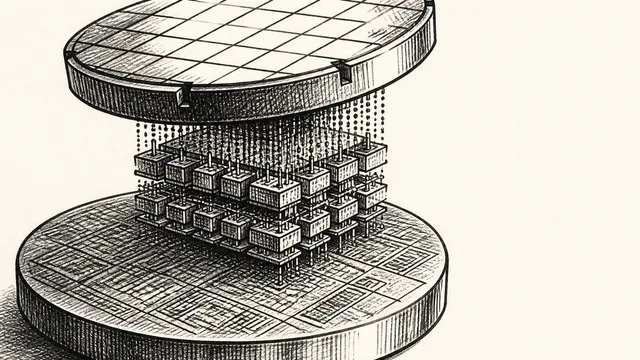
IBM NanoStack and the Future of Chip Architecture
IBM's NanoStack stacks transistors from separate wafers using atomic bonding. The physics works. The harder question is whether anyone can manufacture it at scale.

Inside the Smartphone: 120 Years of Hidden Engineering
Professor Hannah Fry tears apart a modern smartphone to trace 120 years of engineering history — from Marconi's radio waves to a 200-million-pixel camera sensor.