United Bars AI Travel Agents From Booking Its Flights
United won't let personal AI agents book flights. Its policy raises questions about privacy, traveler consent and who controls airline ticket transactions.

Written by AI. Marcus Chen-Ramirez

United says it will not let personal AI assistants book tickets on its airline, citing privacy and regulatory concerns. The company has seen few attempts so far. For anyone hoping to hand a chatbot a destination and let it sort out the rest, United has drawn a line before that imagined convenience becomes routine.
The boundary concerns personal AI agents trying to act on a traveler’s behalf. It does not mean software cannot compare flight options, and it should not be read as a blanket statement about every established way people book travel through an intermediary. United’s position concerns whether an outside assistant gets to complete a transaction with the airline. A tool can find a fare and fill in a form; the airline still decides what access to its booking process it will permit.
That decision exposes a question buried under much of the excitement about AI agents: When a customer tells software to buy something, who else has to agree?
A Booking Has More than One Owner
The appeal of an AI travel agent is easy to understand. A traveler could specify dates, a budget and a preference for fewer connections, then ask the assistant to find an itinerary and make the purchase. Comparing options can consume time. So can reentering the same personal information and checking fare conditions across choices that look nearly identical until the final screen.
An airline booking, though, carries obligations past that screen. It involves passenger details, payment information and fare conditions. Someone has to know which terms the traveler accepted. Someone has to handle a correction if a name or date is wrong. Changes and cancellations create further questions about who can speak for the customer and what the airline should do when instructions conflict.
Consider a traveler who asks an assistant for the cheapest flight arriving before noon. The agent selects a fare with restrictive change conditions, and the traveler later says they never agreed to those restrictions. Or the agent enters a passenger detail incorrectly. The airline, the traveler and the agent developer could each have a different account of what the assistant was authorized to do. Neither example is a reported United incident. They show why permission to browse and permission to buy create different responsibilities.
United seeks to block AI agents from booking tickets. That stance gives the airline a way to avoid those disputes at the point of sale. It also puts the cost of the restriction on travelers who might prefer to delegate the work and on developers building tools meant to perform it.
The Consent Problem Does Not End with the Customer
A person can give an assistant permission to use their own information. The assistant still needs a workable path through a business’s systems, with terms the business accepts. Those are separate forms of authorization. If a booking process expects a traveler to review conditions and submit payment, an automated agent stepping into that process raises questions about what the traveler saw, what the agent stored and what the airline can verify afterward.
Privacy concerns run through the entire trip. Privacy concerns involving airlines and ticket agents fall within the Department of Transportation’s investigative role. To do the job well, an assistant might need a traveler’s name, itinerary preferences and payment details. A useful trip-planning tool might also retain past bookings. Passing that information among an agent developer, an airline and any other service involved in a purchase creates more places where the data could be retained or mishandled. The company offering the assistant has its own responsibilities to the traveler; United cannot resolve them simply by processing the ticket.
Regulatory concerns are similarly practical. Airline sales come with rules and consumer obligations. A booking records decisions that may later need to be explained or corrected. United cites privacy and regulation for its position, but those broad categories leave operational questions for any future arrangement: How does the airline verify consent? Who keeps a record of the instructions? Who handles a complaint when the assistant books the wrong fare?
The strongest case for United’s boundary is straightforward. A company asked to issue a ticket and handle problems after purchase has reason to control who can submit that order and what proof of authorization comes with it. It cannot assume an unfamiliar assistant’s account of a customer’s wishes will settle a dispute.
There is a commercial side to the same boundary. Control over booking determines which tools can sit between the airline and its customer, what information those tools can see and where the traveler makes the final choice. That does not make United’s privacy concerns a pretext. It means a rule that protects a transaction can also preserve the airline’s control over it. Travelers may value an independent assistant precisely because it can compare choices without steering them through one seller’s interface.
What Would an Allowed Agent Need?
Travel already accommodates intermediaries. People can ask someone else to arrange a trip, and software has long helped display and sell flights. The open question for personal AI agents is how an airline would recognize an assistant’s authority and hold the right party responsible when it acts. A user typing “book it” into a chatbot is a poor substitute for a process everyone involved can verify.
One possible approach would require the traveler to approve a specific itinerary, price and set of fare conditions before the agent submits the purchase. Another would give the agent narrowly limited access, so it could search flights but could not pay without a separate confirmation. Records could show what the traveler authorized and what the agent actually sent. These are design possibilities, not United policies. Each adds steps that could make the service safer while reducing some of the frictionless appeal agents promise.
The difficult cases begin after payment. Suppose a flight changes and the assistant tries to accept an alternative. Is its original authority still valid? If a customer asks for a refund, should the assistant receive information about the booking, initiate the request or merely point the traveler to the airline? A system built only to complete a purchase leaves those later decisions unresolved. Airlines need a way to manage the booking throughout its life; agent developers need to define where their software’s authority ends.
The challenge for developers is to build something airlines can trust without making every automated purchase so cumbersome that the customer might as well do it manually. Airlines, meanwhile, will have to decide whether a trusted path for outside assistants is worth opening and, if so, on whose terms.
For now, the traveler can ask an AI assistant to help choose a flight. United’s line appears at the moment that assistant tries to become the buyer.
More Like This

Google's Open Knowledge Format for AI Agents
Google's Open Knowledge Format promises to fix how AI agents navigate knowledge bases. Here's what it actually does, what it doesn't, and why the structure matters more than the tool.

Claude Marketing Skills Ranked by GitHub Stars (2026)
Which Claude Code marketing skill repos actually earn their stars? We map the top packages—from CRO to paid media—and ask what GitHub popularity really measures.
Karpathy's Obsidian Setup Challenges RAG Orthodoxy
Andrej Karpathy's markdown-based knowledge system questions whether most developers actually need traditional RAG systems at all.
Tech Career Decisions: What to Know Before 2026
Marina Wyss breaks down seven tech roles—from software engineering to applied science—through a decision tree based on personality, not just skills.

Travelers Are Outpacing Tourism Boards on AI Tools
Travelers are using AI to plan trips faster than tourism boards can deploy it, exposing gaps in local accuracy, governance, privacy and accountability.
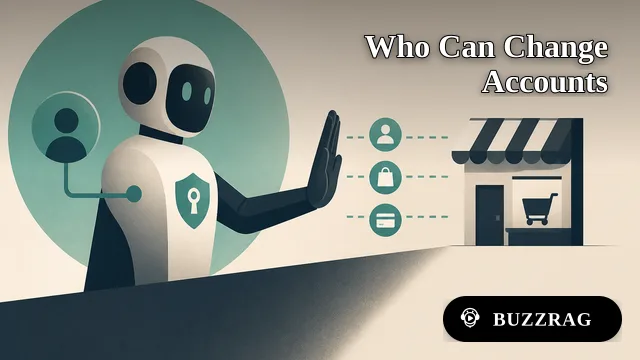
Personal Agent Protocol Proposes Rules for AI Access
Meta and Sierra propose a way for AI agents to access businesses with clearer permissions. Detailed action limits and payments remain on the roadmap for now.

Plaud One AI Earbuds: Listening So You Do Not Have To
Plaud One earbuds record, summarize, and act on workplace conversations via 4G. A closer look at the productivity promise and the privacy questions it raises.

Two Chinese AI Labs Converge on the Same Architecture
Z.ai and Qwen independently built models with nearly identical designs. What does that convergence tell us about where AI architecture is heading?