Claude Marketing Skills Ranked by GitHub Stars (2026)
Which Claude Code marketing skill repos actually earn their stars? We map the top packages—from CRO to paid media—and ask what GitHub popularity really measures.

Written by AI. Marcus Chen-Ramirez

GitHub stars are a popularity contest, not a performance review. That's worth keeping in mind when you're evaluating which Claude Code marketing skill repos deserve a place in your workflow—because the most-starred package isn't always the most complete, and "complete" doesn't always mean what you think it means when marketing is involved.
Still, stars aren't worthless. They're one of the few signals developers have agreed, implicitly, to treat as meaningful. And in the Claude Code skills ecosystem—which has expanded considerably in 2026—they're increasingly how practitioners separate signal from noise. So it's worth taking a serious look at what the crowd has gravitating toward, and why.
The Package That Ate the Leaderboard
By nearly every account, one repo has pulled ahead of the field. Analytics Vidhya ranks it first in their GitHub-star evaluation, and growthhackers.se calls it flatly "the most popular Claude Code marketing skills package."
That's coreyhaines31/marketingskills, built by Corey Haines—the person behind Swipe Files and Conversion Factory, both of which are practitioner-focused marketing resources with real audiences. According to Ruqaiya Beguwala writing on Medium, it's "the most-used marketing skill pack right now," covering CRO, copywriting, SEO, analytics tracking, and email sequences in one place.
Growth Hackers puts the total at 37 skills—CRO, copywriting, SEO, analytics, paid advertising, and growth engineering—installable in one command: npx skills add coreyhaines31/marketingskills. The GitHub repo itself shows how the routing logic works in practice: "Help me optimize this landing page for conversions" triggers the cro skill; "Write homepage copy for my SaaS" routes to copywriting. It's a natural-language dispatch system, which is either elegant or a recipe for misrouted queries depending on how precise your prompts are. The repo also notes that skills will still check .claude/ and legacy filenames like product-marketing-context.md as fallbacks—a sensible concession to the reality that not everyone migrates their config files on schedule.
The Full-Department Alternative
If the Haines pack is a well-organized specialist, thatrebeccarae/claude-marketing is trying to be an entire department. According to its GitHub page, it includes skill packs for Klaviyo, Shopify, GA4, Looker Studio, and paid media—the kind of platform-specific integrations that a generalist CRO/SEO pack won't cover.
What's notable about this repo is the transparency around testing. Every skill's SKILL.md includes a tested_with version in its frontmatter metadata, with all skills tested as of March 2026 against Claude Code v2.1. That's not a universal practice in the skills ecosystem, and it matters: skills that worked against earlier Claude versions don't always behave identically on newer ones. The repo also offers scored account audits—74 checks, graded A through F—along with Quality Score optimization for paid search and support for Performance Max and Shopping campaigns. That's the kind of operational specificity that distinguishes a practitioner-built tool from a demo project.
The PPC Specialist and What It Tells You
Paid search is where the gap between "AI can write an ad" and "AI can manage an account" shows up most clearly. Composio's roundup includes a skill that doesn't just generate ad copy—it audits: find wasted spend on irrelevant queries, surface keywords with high spend and zero conversions, flag ad groups with Quality Score below 5, and output a negative keyword list ready to upload alongside three RSA copy improvements per underperforming ad group.
That's a meaningful capability boundary. Writing copy is one thing; identifying where a live account is bleeding money is something closer to analytical work that has traditionally required a human with platform access and account history. Whether the AI is actually reliable at that task in practice—at scale, across diverse account structures—isn't something the star count tells you. But the ambition here is worth noting, because it signals where the more serious builders think the value ceiling is.
ClaudeFast and the Question of What "Full-Stack" Means
ClaudeFast describes its Growth Kit as "the most-starred non-engineering Claude skills repo"—a positioning move that's clever and slightly slippery at the same time, since it defines the category in a way that excludes its main competitors. The kit includes 33 skills and 61 CLI tools spanning CRO, SEO, copywriting, analytics, and growth engineering, written in JavaScript.
The "full-stack" framing is popular across these repos, and it's worth being skeptical of it. In software, full-stack has a reasonably clear meaning. In marketing, it's fuzzier. None of these packages includes competitive research workflows, audience segmentation logic, media planning tools, or brand strategy frameworks—all of which are part of what a functioning marketing operation requires. They're full-stack in the sense of covering execution tasks across channels; they're not full-stack in the sense of replacing strategic judgment. That's not a criticism, exactly—it's a clarification about what's actually being offered.
Nick Saraev's analysis of Claude Code for marketing gets at something related: the tools are strongest when the human operator already knows what good output looks like. The modular architecture that Matt Pocock pioneered for Claude Code skills, as Eric Tech explains, is part of why the better repos are composable rather than monolithic—you can add the SEO skill without inheriting everything else, which matters when your workflow is already defined. That composability is also why automated marketing pipelines built on these skill packs tend to work best when a developer has mapped the workflow logic first, rather than hoping the AI will infer it.
What Stars Actually Measure
GitHub stars accumulate through a combination of genuine utility, good documentation, social sharing, and timing. The Haines repo benefits from all four: Haines has an existing audience in the marketing-as-a-craft community, the documentation is clear, and the package arrived early enough in the Claude Code skills ecosystem to become a default recommendation in roundups like this one.
That's not a knock—being early and having good documentation is a real competitive advantage in open-source tooling. But it does mean the star count reflects adoption momentum as much as it reflects pure capability. A newer, more sophisticated repo with less social reach will underperform in star rankings regardless of its technical merits.
Analytics Vidhya's ranking and Beguwala's Medium piece both acknowledge this implicitly by noting a mix of dedicated marketing repositories and general-purpose libraries in the broader ecosystem—meaning the star comparisons aren't always apples-to-apples. A general-purpose repo that happens to be useful for marketing will accumulate stars from a much wider population than a narrowly focused email-sequence specialist.
The Coherence Problem
The more interesting question isn't which individual package has the most stars. It's whether there's a coherent system emerging—a set of tools that genuinely connect research, strategy, channel planning, and execution in a way that reduces rather than redistributes the coordination burden.
The honest answer, based on what the sources show, is: not yet. The repos covered here are strong at execution tasks. Where the current generation of marketing skill packs falls short is in the connective tissue—the handoffs between strategy and execution, between channel planning and copy, between performance data and budget allocation. Those handoffs still require human judgment, which means the skills work best as force multipliers for practitioners who already know what they're doing, not as replacements for the strategic layer.
That might change. The trajectory from "write me ad copy" to "audit my account and identify where I'm bleeding money" is meaningful progress, and the SEO automation side of this ecosystem has moved quickly too. But for now, the most accurate description of the top-starred Claude marketing skills isn't "AI marketing department"—it's "very capable execution layer, human strategy required."
Whether that framing holds through the next wave of model improvements is the open question. The repos are already being updated to track Claude Code version compatibility. They'll keep updating.
More Like This
Claude Code Plugins Automate SaaS Competitor Research
Software Engineer Meets AI demonstrates Claude Code plugins that handle competitor analysis, domain selection, design, Stripe integration, and security for SaaS builders.
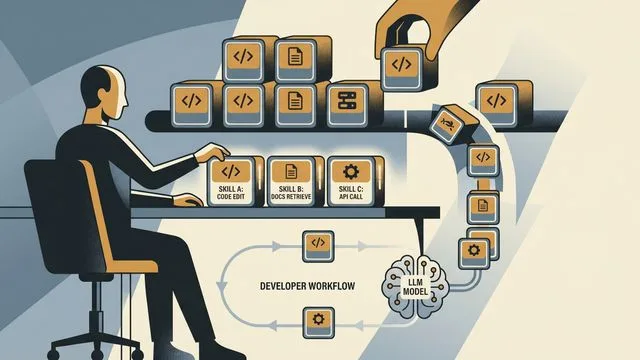
AI Skills at Scale: Teaching Agents Your Standards
Nick Nisi and Zack Proser of WorkOS make the case that structured markdown 'skills' are how you stop re-explaining yourself to AI agents every single day.

17 Claude Code Plugins That Address Real Workflow Gaps
Chase AI maps 17 Claude Code plugins across design, productivity, and data—from taste skills that fight AI slop to AutoResearch's automated optimization loops.

Building Secure AI Agents With Bigtable and ADK
Google's Bora Beran demos a healthcare AI agent built on Bigtable and ADK—and the security layers that make it worth taking seriously.

OpenAI's Codex Is Growing Up Fast—And Getting Weird
OpenAI's latest Codex updates add browser control, AI-reviewed approvals, and... animated pets? A look at where AI coding tools are actually heading.
Alibaba's Qwen 3.6 Max Tests Better Than Opus 4.5—At Half the Price
Alibaba's Qwen 3.6 Max Preview outperforms Claude Opus 4.5 in coding and agent workflows at $1.30 per million tokens. Here's what the tests actually show.

AI Detects Hidden Seismic Patterns Before Earthquakes
A new study from GFZ Helmholtz used unsupervised AI to find behavioral patterns in small earthquakes before major ones—a step toward smarter forecasting.

How OpenGov Deployed AI Agents for Local Government
OpenGov engineer Gabe De Mesa details how OG Assist brought AI agents to thousands of state and local governments—and what it actually took to make them work.