UAE Eyes 7% to 8% Growth as IMF Raises Its Forecast
The UAE is aiming for 7% to 8% growth in 2027 after an IMF forecast upgrade. Investment, trade, employment and wages will test how widely gains reach.

Written by AI. Carmen Rodriguez
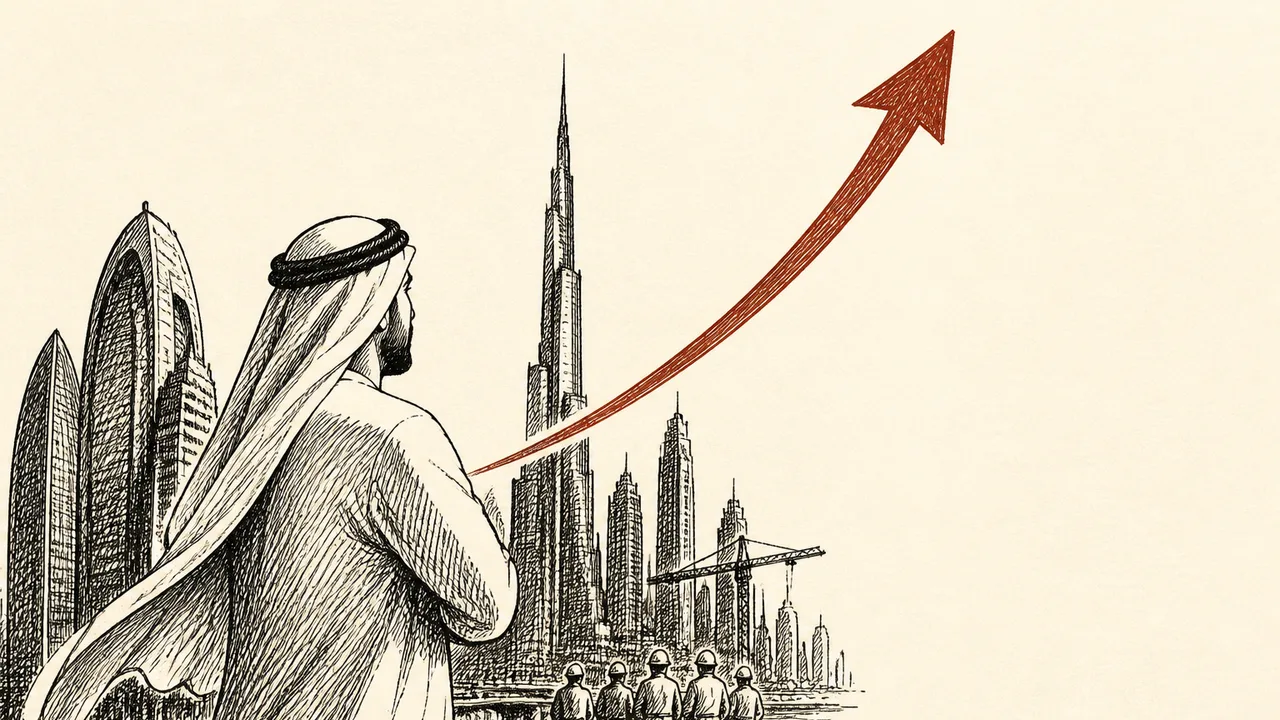
A UAE minister says the country could grow by 7% to 8% in 2027, an ambitious pace that would put an unusually large number at the center of next year's economic debate. The minister expressed optimism after the International Monetary Fund raised its forecast and credited a “different” economic model for the government's confidence. The remarks did not specify which sectors or policy changes would produce that pace, or give the IMF's revised numerical forecast.
That leaves two propositions to examine. The IMF sees a stronger outlook than it previously did. The minister thinks the UAE can reach 7% to 8% growth next year. An upward revision can support confidence without endorsing the government's target.
A national growth rate answers how much output an economy produces compared with an earlier period. It cannot, by itself, answer who earns the income generated along the way. A construction boom can raise output while creating work that ends when projects finish. A broader rise in orders across businesses might support hiring and wages for longer. Both would appear in the headline number. Their consequences for a worker deciding whether to change jobs, or a firm deciding whether to invest, could be quite different.
What Would Have to Grow?
The strongest case for the minister's optimism is that a raised IMF forecast and the government's own assessment point in the same direction: expectations have improved. Staff completed a 2026 Article IV mission to the UAE, the IMF announced on November 18, giving readers a direct account of the Fund's assessment to examine alongside the minister's target. If the UAE's economic model can generate sustained demand across several industries, a fast year of growth could encourage more investment and employment. That is a plausible argument to test, rather than a result already in hand.
Start with the composition of output. A growth rate concentrated in a handful of large projects can be impressive while leaving a great deal dependent on the timing of those projects. Growth spread across many firms and customers has another route to durability: businesses have reason to keep producing after any single investment is complete. The distinction would show up in orders, hiring and follow-on spending, not merely in the final GDP figure.
Trade provides another test. Rising trade activity could signal customers beyond the UAE are buying what businesses there produce or distribute. But the value of transactions alone would not settle how much income remains with local firms and workers. Investment figures require the same care. Spending on a new facility creates activity during construction; the longer test is whether that facility subsequently wins customers, operates profitably and sustains jobs.
These are questions for the government's growth case, not claims that one industry or project is driving the target. Calling an economic model “different” invites a more precise account: different in its sources of demand, in its mix of businesses, or in its ability to keep expanding after an initial burst of spending? Each answer implies a different way to judge whether 7% to 8% is achievable.
The Wage Line Beneath the GDP Line
A worker can live through a year of strong national growth without seeing a raise. Output can rise because more people work, because each worker produces more, or because capital-intensive activity expands. Those paths have different implications for pay. Even when employers hire, the quality of the jobs determines what growth buys the people doing them.
Employment totals would be one place to look as 2027 unfolds, but a count of jobs is only a first pass. Are positions steady enough for workers to plan around? Do pay increases keep up with living costs? Are working hours predictable, and do workers receive the compensation they are promised? Those questions concern the distribution of growth, not a challenge to the GDP calculation.
The distinction also matters to businesses. Employers need workers who can afford to stay, develop skills and meet demand. Workers need more than an expanding aggregate to make rent and plan their next year. If output rises while pay and job security lag, the national figure can describe a successful year for investors and a much narrower improvement for households. If employment and earnings rise with output, the minister's forecast would carry a more tangible meaning outside economic briefings.
That is why wage and employment data belong alongside investment and trade figures when assessing this target. They would help answer whether expansion reaches people through paychecks as well as company accounts. A headline GDP rate cannot do that work on their behalf.
A Forecast is a Starting Point
The IMF's upward revision strengthens the case for examining the UAE's prospects seriously. Forecasts incorporate judgments about conditions ahead, and those judgments can change as conditions change. The government's 7% to 8% ambition asks a further question: whether actual activity next year will match the pace the minister expects.
For investors, that suggests a sequence of checks rather than a single number to repeat. First, look for the scale of the IMF revision and the period it covers. Then look for the government's assumptions behind its 2027 target. As the year progresses, compare those assumptions with investment decisions that have moved beyond announcements, trade that reflects continuing demand, and employers that are adding jobs they expect to keep. A forecast upgrade is useful information; it cannot stand in for those later results.
For households, the useful checks are closer to the ground. New jobs may matter more than a percentage point of national output. Higher pay may matter more than a larger investment total if everyday costs rise alongside it. Neither perspective requires dismissing rapid growth. It requires asking what the growth rate measures and what it leaves for other numbers to explain.
The minister has put a clear marker on 2027: 7% to 8%. The IMF revision gives that ambition a more encouraging backdrop. The next figures on output, investment, trade, employment and wages will show whether the country's “different” model can turn a fast national rate into growth that lasts beyond the forecast.
More Like This

ElevenLabs Reaches $22 Billion in Employee Tender Offer
ElevenLabs' reported $22 billion valuation follows a $300 million employee tender offer. What the sale reveals, and what workers and investors cannot see.
Business Rules 2026: Impact on Labor and AI
Explore how emerging business rules and AI technology reshape labor dynamics and worker dignity by 2026.

EU Entry/Exit System: Border Delays and What They Mean
The EU's new EES biometric border system is causing summer travel delays. Here's what it asks of travelers, workers, and the institutions behind both.

IMF Raises 2026 Growth Forecast as Energy Risks Persist
The IMF expects 3.1% global growth in 2026, helped by AI investment, while energy costs and strained public budgets complicate the outlook for workers.

Iran Sanctions and the People Caught in the Crossfire
Trump's new Iran sanctions target trade networks spanning China, India, and Turkey. Here's what economic warfare looks like for the people living inside it.

Temporary Work Is Reshaping the U.S. Labor Market
Temp jobs are surging in 2026 and economists say the trend signals something structural, not just cyclical. Here's what the shift means for workers and employers.