TikTok Is Now a Serious App Marketing Tool
Julia Pintar of Playkit says TikTok is now the most effective free channel for app launches. Here's the playbook—and the questions it leaves open.

Written by AI. Bob Reynolds

Photo: AI. Dante Nwosu
Here is something that would have sounded absurd five years ago: the most effective free marketing channel for launching a software product is a short-video platform that your grandchildren use to watch teenagers dance. And yet, if you talk to the people actually moving download numbers right now, that's roughly what they'll tell you.
I've been covering technology long enough to remember when "word of mouth" meant someone mentioning your product at a trade show. I watched direct mail give way to email. I watched email give way to search advertising. Each transition had its skeptics, and the skeptics were usually wrong — not about the downsides, but about whether the new channel was real. TikTok as a serious business tool sits in that same uncomfortable place. The instinct to dismiss it is understandable. The evidence says you probably shouldn't.
Julia Pintar, co-founder of Playkit — which she describes as a user-generated content agency, though the term encompasses things that used to be called influencer marketing and word-of-mouth campaigns — recently laid out her approach to app distribution in a video for the Starter Story Build channel. It's worth taking seriously, with a few flags attached.
Before we get into the playbook, the numbers she leads with deserve a caveat. Pintar says Playkit has generated "over one billion views and more than twelve million app downloads" for clients including Substack, Quizlet, and Cash App over the past eighteen months. Those are striking figures. They also come entirely from Pintar's own presentation, with no independent verification. I have no particular reason to doubt her — the client list is real, and those are not companies that waste marketing budgets casually — but readers should treat self-reported agency metrics the way they'd treat a used car salesman's description of engine condition. Directionally useful, not auditable.
With that noted: the playbook itself is coherent, and the underlying logic holds up.
The problem she's solving
The setup is this: building a mobile app has gotten dramatically easier. AI-assisted development tools can now let a reasonably technical person assemble a functioning prototype in hours rather than months — though "functioning" is doing considerable work in that sentence, and a prototype is not a finished product. The point is that the technical barrier to entry has dropped. The result is a market flooded with new apps, which means the barrier that actually matters now is getting anyone to notice yours.
Pintar puts it plainly: "We know how to make product, but acquiring those users is really difficult."
This is not a new observation. The software industry has been cycling through distribution crises since the App Store turned a trickle of mobile applications into a torrent. What's changed is which channel is working. Right now, according to Pintar and others I've spoken with, that channel is short-form video on TikTok and Instagram — vertical videos, usually under sixty seconds, posted frequently and iterated based on what generates engagement.
The five steps
Pintar's approach breaks into five stages, and I'll describe each in plain terms because the jargon in this space is thick enough to obscure what's actually simple advice.
Know exactly who you're selling to. Not "young people interested in productivity" but something more like "female biology students at community colleges who are panicking about finals." The specificity matters because the content you make will be aimed at a particular person, and vague targeting produces vague content that resonates with no one.
Teach the platform's algorithm who your audience is before you post anything. TikTok and Instagram both use recommendation systems — software that decides which videos to show to which users. These systems learn from your behavior. If you spend two or three days searching for content your target user would search for, liking what they'd like, and commenting on what they'd comment on, the platform starts to understand what kind of account you are. The result is that when you do post, the platform routes your video toward the people most likely to find it relevant. This is what Pintar calls "warming up" an account. Think of it as calibrating a compass before you start navigating.
Make videos that feel like content, not advertisements. This is where things get interesting and, I'd argue, philosophically thornier than Pintar lets on. She describes three formats: a "hook and demo" video that opens with a person's face and then shows the product; a "long text" format — a roughly six-second clip of someone's face with text overlaid, designed to spark comments; and a "talking style" video built around a story that happens to include the product. The through-line in all three is that they are designed to not look like advertising.
Post consistently and at intervals. Two to three times per day, with at least two hours between posts. Before each post, spend two minutes engaging with other content — liking, sharing, commenting — so the platform doesn't flag your account as automated. This is grunt work, but it's the kind of grunt work that used to go into direct mail schedules and store display rotations.
Measure what works and repeat it. In the first weeks, the goal isn't a video that reaches a million people. The goal is comments that say "what app is this?" or "how did you do that?" — signals that the message is landing with the right people. From there, you're testing variations and doubling down on what generates those signals. By week eight, Pintar says, clients are typically seeing videos with millions of views. Again, that's her characterization of her own results.
The part worth thinking harder about
Pintar's most revealing example involves a creator who made a video for Quizlet — a study-tool app — by telling a story about a stranger in a coffee shop and the petty drama in the comments section, weaving in a glimpse of the app almost as an afterthought. The story was real enough to feel genuine, and the product placement was light enough that most viewers probably didn't register it as advertising at all.
I want to be direct about this, because I think it deserves more examination than Pintar gave it. That video was constructed. The story may have been true, the person telling it may have genuinely used Quizlet, but the packaging — the hook, the emotional beats, the casual product reveal — was engineered to convert viewers into users. Pintar describes the "long text" format as producing "the highest rate of conversion because it feels the most organic." She's making a virtue of the concealment.
I'm not calling this manipulation in the malicious sense. Advertising has always worked by making the commercial feel natural — that's what a good jingle does, what a well-placed product in a movie does, what a celebrity endorsement does. My readers who spent careers in retail or consumer goods will recognize the logic immediately. But there's a difference between advertising that presents itself honestly and advertising that is specifically engineered to erase the boundary between personal recommendation and paid promotion. The Federal Trade Commission has disclosure rules for exactly this reason, and they apply to social media — a fact conspicuously absent from Pintar's playbook.
The practical success of the approach isn't in question. Whether a viewer who later realizes the "genuine story" was a crafted marketing piece feels deceived is a different question, and one that tends to surface as platforms and regulators pay closer attention.
What the playbook doesn't say
The other thing worth naming is that this entire strategy runs on platforms that make the rules. TikTok's algorithm is a black box maintained by a company with its own interests and its own legal exposure in several countries. Pintar's advice on not reposting identical content, on behaving like a human before you post — these are tactics for working within the platform's tolerance, not around it. The platform can change what it tolerates at any time. Any founder who builds their entire acquisition strategy around TikTok's current preferences is building on ground that has shifted before and will shift again. Pintar is aware of this — she's building a newsletter and encouraging diversification — but the framing of the playbook is still heavily TikTok-centric.
None of that makes the advice bad. It makes it advice with an expiration date, like most marketing advice has always had.
The core proposition — understand your user precisely, show up where they already are, tell stories rather than run ads, measure what actually changes behavior — is older than TikTok, older than the internet, older than television. What Pintar has done is adapt it to a platform her audience lives on. Whether that platform is still this dominant when you read this piece is, honestly, the more interesting question.
More Like This
YouTube Lets Users Finally Kill Shorts Feed—With Caveats
YouTube now allows users to set a zero-minute daily limit on Shorts, effectively removing them from feeds. Here's what the feature actually does—and doesn't—do.
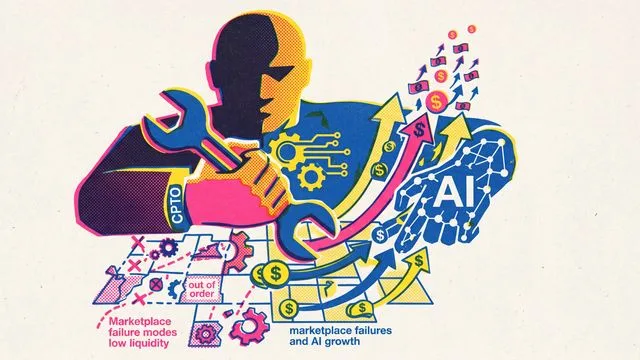
GoFundMe's CPTO on Marketplace Failure & AI Growth
GoFundMe's CPTO Arnie Katz breaks down 3 marketplace failure modes and how AI agents are driving real revenue—not just dev productivity.

The Enhanced Games' Real Business Isn't Sports
The Enhanced Games look like a doping Olympics. The actual business model is a $1.2B pharmaceutical marketing engine. Here's how it works.

Inside the Emma Maersk: How the World Sails
The Emma Maersk carries what the documentary estimates as half a billion dollars of cargo across 13,000km. Here's what that actually takes.
The $401M App Built by One Guy Who Can't Code
AI coding tools are enabling non-developers to build million-dollar apps. Here's what's actually working—and what the success stories aren't telling you.
How Prayer Lock Hit $20K Monthly: Lessons from Mau
Explore how Mau's Prayer Lock app reached $20K/month by focusing on innovative marketing and AI-driven development.

Claude Code and AI-Driven SEO for Shopify Stores
A live walkthrough of using Claude Code, SEMrush MCP, and Shopify to build AI-optimized pages raises real questions about where SEO is heading.

Garry Tan's Blueprint for the AI-Native Company
Y Combinator's Garry Tan argues that how you organize AI matters more than which AI you use. Here's what that means in practice.