The Exorcist: Martyrs Reframes a Family Horror Story
Mike Flanagan’s new Exorcist film puts a detective on a serial-killer case. Its announced premise raises a familiar question about possession and family danger.

Written by AI. Devon Quincy
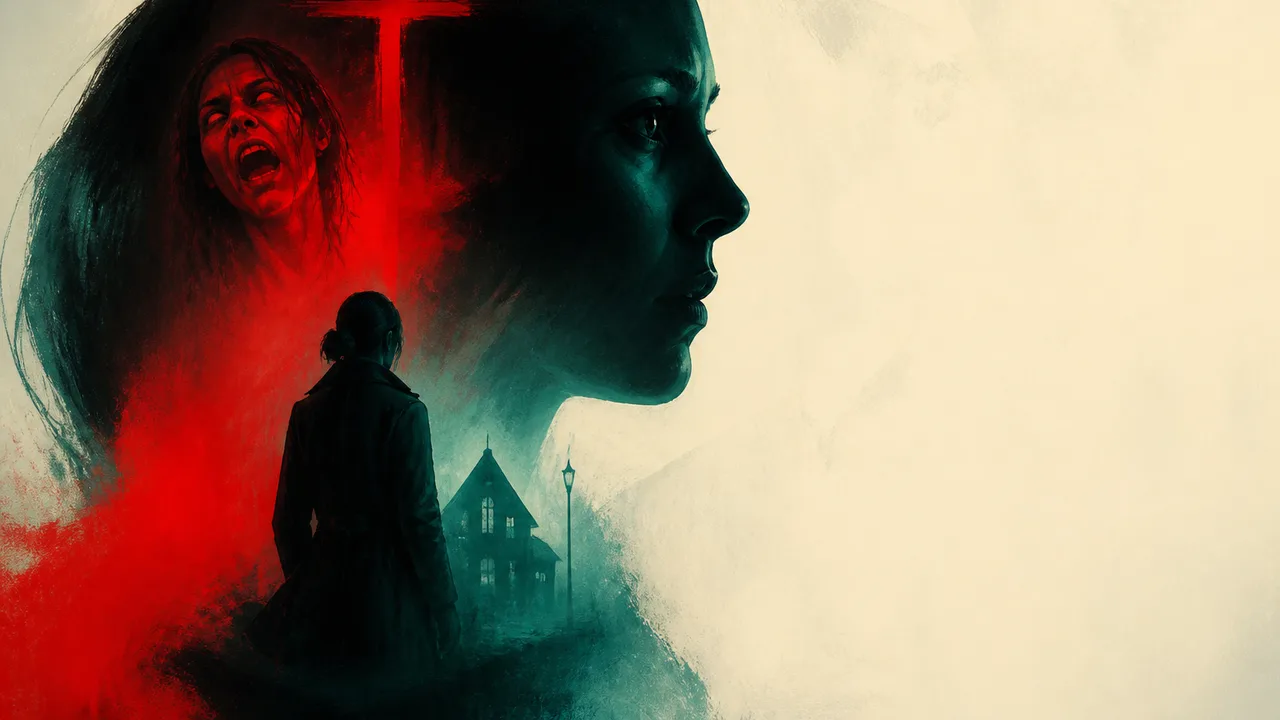
Scarlett Johansson’s detective has a serial killer to investigate in The Exorcist: Martyrs, scheduled for March 12, 2027. Mike Flanagan’s new film gives her a homicide case, an execution that fails to end the killing, and a threat that reaches her family. The case sounds like a sharp turn for a series whose name promises possession. The family threat sounds rather more familiar.
Johansson plays Julie Miller, an NYPD homicide detective and single mother to Max, a boy who has just turned 12. A killer known as Father Sunday, played by John Leguizamo, is executed, but the killings continue. Miller and fellow detective Gina Restrepo, played by Sasha Calle, remain on the case. Otherworldly trouble eventually endangers Miller’s mother and son, and priests enter the story. Those are the announced elements of the plot, not a description of how its scenes play out.
Flanagan has described the project as a serial-killer thriller that combines what he likes about Se7en and The Silence of the Lambs with The Exorcist. Possession remains in the film. In his account, the connection between that possession and the murder mystery can take the story “out of the bedroom and out of parental torment and into something much, much bigger.” That is a useful statement of intent. It also sets a useful test: how far can a story move from parental torment when its detective is a parent and danger follows her child home?
A New Case, an Old Fear
The 1973 Exorcist has a compact premise: a 12-year-old girl is possessed, her mother tries to save her, and two priests conduct an exorcism. That basic outline is enough history for the comparison here. A parent’s attempt to protect a child gives supernatural danger its human scale; the priests bring an answer the mother cannot supply herself.
Martyrs changes the parent’s starting position. Miller is a detective, so she enters the story with a case to pursue and a professional obligation to other people in danger. She also has a child of the same age as the girl at the center of the 1973 premise. The announced threat to Max does not tell us he is possessed. It does put a parent-child relationship beside the film’s confirmed possession, inviting a question about where the case will ultimately lead.
They do reveal a difference in how each story initially gives its parent a role. The earlier premise begins with a mother trying to save her child. The new one begins with a mother whose work requires her to investigate deaths beyond her family. If the danger reaches Max, Miller’s public responsibility and private fear could collide.
The execution offers a second way into Flanagan’s idea. Father Sunday’s death does not stop the killings. Within a detective story, the person identified as a killer has been punished, yet the problem Miller is investigating persists. She has reason to keep looking. The supernatural element may make that failure of closure frightening, but the procedural frame gives the story a practical question first: who, or what, is responsible for the continuing deaths?
That frame could let Martyrs spend time on people and harms beyond Miller’s household. A homicide investigation starts with victims and a pattern of killings; a parent facing danger at home starts with someone she knows intimately. The announced plot contains both scales. Flanagan’s hope for something bigger than parental torment makes sense if the case keeps them in conversation, rather than treating the murders as a long road back to one threatened child.
It also makes the family’s presence more interesting than a continuity check. Miller does not have to repeat the earlier mother’s predicament for Max to change the stakes of her work. A detective can pursue a case because it is her job and become afraid of what that case might cost her son.
What the Promise of Difference Covers
Flanagan has called Martyrs “a completely new story, completely new characters” in a separate interview. His stated aim is clear: he is making a film about Miller’s investigation, not another account of the original child and her mother. In the Esquire interview, he also describes people under the influence, or direct control, of evil as part of the serial-killer-thriller idea. That gives the murder case a proposed connection to possession, rather than placing two unrelated genres side by side.
New characters can still encounter a familiar fear. For The Exorcist, the 1973 premise located that fear in a parent’s inability to protect her child without help. Martyrs gives its parent a badge and begins outside the home, among killings she is charged with investigating. When danger approaches Max, those facts pull against each other. The badge gives Miller a way to act; motherhood gives the danger a person she cannot regard as just another lead.
There is room for either emphasis in the announced setup. The film might follow the consequences of Father Sunday’s execution across the investigation, letting family danger become one part of a wider story. It might bring the investigation toward Miller’s household and make the procedural the route by which the old parental fear returns. Both are plausible readings of what Flanagan and the plot description have put forward. The March release will answer them through the choices a premise cannot show: whose danger holds the film’s attention, what Miller can learn, and what happens when knowing fails to keep someone safe.
For now, the most revealing detail may be the one that initially looks like a coincidence. The earlier film’s possessed child is 12; Miller’s son has just turned 12. The shared age proves no shared fate. It does sharpen the question hanging over this new detective story: how much of its horror will Miller find on the case, and how much will follow her back to Max?
More Like This

Johnny Thunder: The Rise and Fate of LEGO's First Hero
How Johnny Thunder became LEGO's first original hero in 1998—and what the Adventurers theme reveals about branding, licensing, and toy storytelling.
When ABS Challenges Go Wrong: A Rules Breakdown
Umpire Carlos Torres denied two ABS challenges in one A's-Orioles game. Here's what the tape reveals about a protocol still working out its kinks.