Spotify Renews Joe Rogan Podcast Deal Without Exclusivity
Spotify's renewed Joe Rogan license keeps his podcast on the platform and widely distributed. The reported $250 million figure leaves key contract terms unknown.
Written by AI. Damon Wright
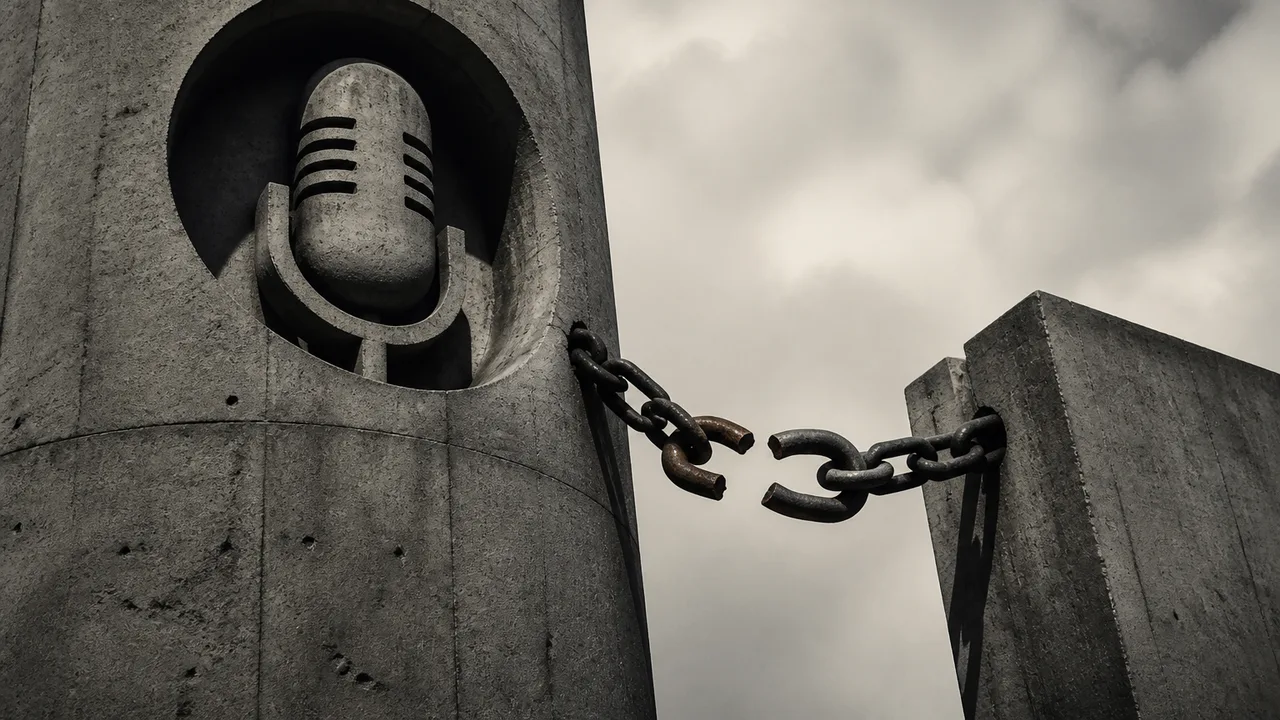
Spotify and Joe Rogan renewed their partnership on October 8 under a multiyear licensing agreement that keeps The Joe Rogan Experience on Spotify while allowing it to appear elsewhere. The arrangement carries forward a change that began in 2024, when the show stopped being exclusive to Spotify. Rogan is staying. The requirement that listeners come to Spotify to hear him is gone.
That sequence explains more about the deal than its headline number. Spotify first signed Rogan in 2020 when exclusive podcasts could give people a reason to open its app rather than a competitor’s. The new agreement preserves a relationship with one of podcasting’s biggest shows without reserving the show for Spotify listeners. It is a narrower promise to the platform, and a wider distribution path for Rogan.
From a Destination to a Distribution Partner
Rogan’s 2020 multiyear deal made his podcast exclusive to Spotify and was said at the time to be worth about $100 million. For a company widely identified with music streaming, the appeal of an exclusive show was straightforward: anyone who wanted that show had to use Spotify. Exclusivity gave the platform a reason to advertise the podcast as something a rival app could not offer. That was the bargain’s visible distribution feature; the reported price was never a substitute for the full contract.
The relationship also showed the complications of making a host central to a platform’s identity. In 2022, Neil Young led a boycott of Spotify over concerns about COVID-19 vaccine misinformation on Rogan’s show, the Los Angeles Times reported. Spotify published its content rules and said it would add advisories to podcasts discussing COVID-19. Young returned to the service in 2024. Those events did not determine the terms of this renewal, but they show what an exclusive relationship can bring into the same conversation: the show’s audience, its host’s editorial choices and the platform’s response to objections.
In 2024, Spotify extended the Rogan partnership while allowing The Joe Rogan Experience onto other platforms. The show remained on Spotify and reached listeners through rival destinations. That change separated two things that the original exclusive had bundled together: Spotify’s continuing association with Rogan and Spotify’s control of where people could hear him. The October 2026 renewal keeps that separation in place.
The audience is substantial whichever app a listener chooses. The Joe Rogan Experience has 18 million Spotify followers and topped Spotify, YouTube and Apple Podcasts’ 2025 podcast lists. A follower count measures accounts following the show on Spotify, not how many people listen to a given episode or where they choose to listen. Its use here is to explain why Spotify would want to maintain the relationship even after surrendering exclusive distribution, rather than to claim a change in audience caused by the 2024 decision.
Rogan called the partnership “an amazing fit” in a statement. Spotify’s head of content partnerships, Jordan Newman, said the company’s podcast business had grown alongside the show and that Spotify wanted to keep building the relationship. Both parties are describing continuity. The contract’s public shape describes the change: Spotify can keep a major program in its catalog without making that catalog its only home.
The terms also set a boundary on what readers can infer. Spotify and Rogan have not disclosed the renewal’s precise length, financial terms or detailed advertising arrangements. The Wall Street Journal estimated a $250 million earnout, citing unnamed sources; that is a reported estimate, rather than a payment confirmed by the companies. The useful fact for understanding how to find the podcast is simpler: renewal did not restore the Spotify-only arrangement.
What Exclusivity Buys, and What Licensing Preserves
An exclusive podcast gives a platform a feature competitors cannot carry. That can help explain why a platform might pursue one, even when listeners would prefer to use their usual app. A widely distributed licensed show answers a different need: the platform can continue offering it to its users while the host reaches audiences elsewhere. Spotify’s Rogan agreements have taken both forms. The progression shows what the company is willing to keep after exclusivity ends, though it does not identify management’s private reason for choosing the current structure.
The contrast with another big podcast deal is instructive. Alex Cooper, host of Call Her Daddy, agreed to a multiyear SiriusXM deal in 2024 encompassing exclusive programming from her company. Its value had competing estimates, but the relevant feature here is the programming commitment: SiriusXM secured content it could identify as exclusive, while Spotify’s renewed Rogan arrangement keeps the show widely distributed. The agreements involve different hosts, companies and rights packages, so Cooper’s deal cannot price Rogan’s or tell us which approach works better.
For hosts, wider distribution offers a clear practical advantage: a listener does not have to switch to one company’s app to follow the show. For Spotify, the continuing advantage is also plain, if more modest than ownership of the destination: its users do not have to leave Spotify to hear Rogan. Neither point requires a claim that the parties split advertising revenue in any particular way. A licensing label tells readers the kind of relationship being renewed; it does not reveal every right inside the contract.
Spotify bought an exclusive destination in 2020, kept the show as distribution widened in 2024, and has now renewed the partnership on that wider footing. A Spotify listener can still press play. So can someone somewhere else.
More Like This
How UTA Is Rebuilding the Creator Economy Deal
UTA's Ali Berman and Raina Penchansky explain how they build creator businesses—from brand deals to physical products and navigating AI threats.

When Celebrities Actually Do Real Science
From Hedy Lamarr's frequency-hopping patent to Brian May's astronomy thesis, these celebrity scientists made contributions that still hold up under scrutiny.