Southwest Airlines Is Building Airport Lounges by 2027
Southwest is building 11+ airport lounges by 2027, starting in Austin, Baltimore, Honolulu, and Nashville. A brand that sold you equality is now selling you a room.

Written by AI. Kael Maddox
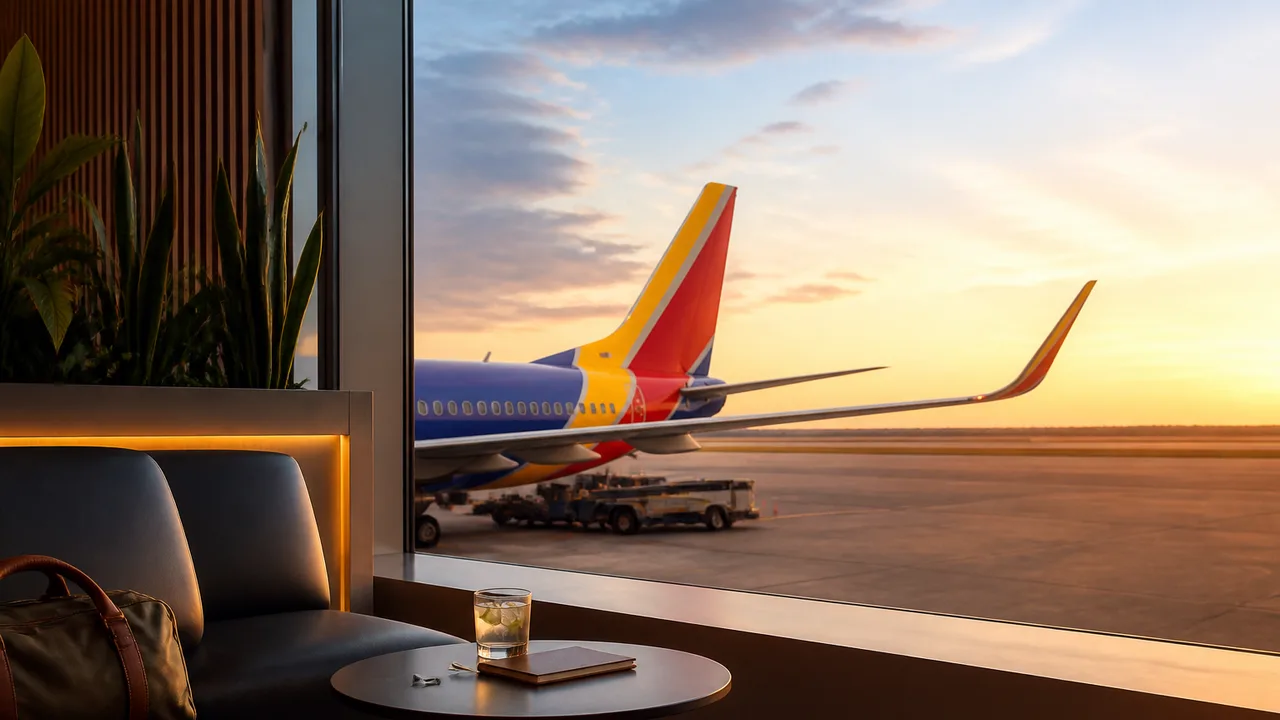
I've boarded enough Southwest flights at 6 a.m. to know the smell of that gate: burnt coffee from a cart, a boarding group argument already forming, forty people in Group C calculating whether the middle seat by the bathroom is really that bad. Southwest built its whole identity on that scene. No first class. No seat assignments. No one's better than anyone else until the A-list kicks in, and even then you're all eating the same pretzels at 35,000 feet.
So when Southwest confirmed it's building airport lounges, I sat with that for a minute.
According to CNN, the first four lounges will open in late 2027 at Austin-Bergstrom International, Baltimore/Washington International Thurgood Marshall, Daniel K. Inouye International in Honolulu, and Nashville International. View from the Wing and Live and Let's Fly both report the total footprint will be at least 11 locations. NerdWallet notes the airline confirmed at least seven additional lounges beyond the first four, with no timeline attached. Alongside the lounges, Southwest plans to launch a premium Southwest Rapid Rewards Credit Card issued by Chase in 2027.
This is a big structural move from an airline that spent fifty years telling you the structure was the point.
Four Cities That Aren't Chicago or Dallas
Austin, Baltimore, Honolulu, Nashville. If you're expecting hubs, this list surprises you. AeroTime confirmed the four cities, and the pattern is readable once you look at Southwest's network logic rather than a legacy carrier's hub map. These aren't fortress hubs with a captive corporate travel market. They're high-frequency leisure and business hybrid markets where Southwest competes hard against carriers that already have lounge products. Austin and Nashville are both drowning in tech and media money. Baltimore is a D.C. proxy full of government contractors and consultants who'd love a quiet room before a 7 a.m. flight south. Honolulu is a five-hour haul from the mainland where the lounge proposition is obvious: you want somewhere to sit that isn't a gate full of kids in leis at 5 p.m.
Southwest isn't opening these in cities where it already dominates. It's opening them in cities where it needs to convince a specific traveler to stop defecting to American or Delta.
The Chase Piece Is the Actual Engine
The lounges are the headline, but the credit card is the revenue model. The Points Guy and One Mile at a Time both flag the Chase partnership as central to how access will work. The premise is straightforward: a premium Chase card unlocks lounge entry, the way Amex Platinum unlocks Centurion Lounges or the Chase Sapphire Reserve unlocks Priority Pass. You're not just buying a seat upgrade; you're buying into an ecosystem that keeps you paying an annual fee every January.
For Southwest, the card relationship with Chase matters beyond lounge construction costs. Co-branded airline credit cards are how carriers build a revenue stream that isn't directly tied to seat sales or fuel prices. TheTravel reports that the new premium card will put some perks behind a paywall that Southwest previously offered more freely, which is its own small story about what this transformation costs the average Rapid Rewards member.
The architecture here is Delta's Sky Club model, applied to a carrier that spent decades positioning itself against exactly that kind of stratification. Delta charges hundreds of dollars a year for Sky Club access and enforces capacity limits so aggressively that day-pass sales were suspended and then capped. Southwest gets to observe what worked and what alienated people before it builds its own version.
What Southwest Is Actually Betting On
Skift frames this as a strategic move to attract business travelers and frequent flyers who value comfort and convenience. Simple Flying characterizes the airline as rushing toward a summer 2027 target, which suggests internal urgency beyond a simple product expansion. AirlineGeeks and FlightGlobal both confirm construction has begun, so this isn't a concept being floated; ground has been broken.
The bet Southwest is making is that a segment of its existing customer base has graduated. The person who booked Southwest to Nashville for $89 in 2015 is now a 36-year-old with a company card and an opinion about airport wifi. Southwest wants to capture that traveler before they fully migrate to American's AAdvantage or Delta's SkyMiles ecosystem. Once someone's deep enough into a competitor's lounge network and card benefits, switching becomes costly.
The Traveler frames the target squarely as premium travelers. Southwest's brand has historically derived its appeal from the absence of premium tiers. The boarding cattle-call I described at the top is annoying, but it's also honest: we're all equal here. The moment you build a room some people can enter and others can't, you've made a different promise.
The Egalitarianism Question
I've chosen Southwest on routes where it cost more than the alternatives, specifically because the product felt fair. No baggage fees for years. Free checked bags when competitors charged $35 each way. A points system that didn't require an MBA to decode. That brand positioning was functional and ideological at the same time, and it built loyalty that was less transactional than what Delta or United managed.
What's happening now is a deliberate renegotiation of that contract. TheTravel documents how the new premium card puts previously free perks behind a fee. The lounges extend that logic physically: comfort is available, but comfort now has velvet ropes.
Southwest has been under pressure from activist investors and a post-pandemic competitive environment that rewards premium revenue. Live and Let's Fly describes the lounge program as part of an accelerating premium transformation, and "accelerating" is probably the most important word in that sentence. Southwest isn't dipping a toe in; it's committing to at least 11 locations with a major bank as co-architect.
The open question, and I don't think anyone can answer it yet, is whether Southwest's core customers follow them upmarket or feel pushed out. A carrier that made its name on everyone getting the same deal is now building rooms for the people who can afford better. Whether that's a smart evolution or a slow erosion of the thing that made Southwest Southwest is exactly what the next few years will show, one lounge opening at a time.
More Like This

Hotel AI Visibility: Why Google Rank No Longer Guarantees Discovery
Hotels that rank well on Google are disappearing from AI chatbot results. Here's what's driving that gap and what properties need to rethink about their content.
Long-Haul Flights Are Often More Comfortable Than Short Ones
Wide-body aircraft, better air quality, and the psychology of surrender make long flights surprisingly pleasant. Here's what actually drives the comfort gap.
Flight Attendants Share Honest Tips for Air Travel
Flight attendants reveal what they actually do on planes, from skipping the coffee to packing smarter. Here's what their habits tell frequent flyers.
andBeyond Amazon Explorer Yacht: Luxury on the River
andBeyond launches the Amazon Explorer yacht in the Peruvian Amazon in 2026. A look at the specs, the route, and what eco-luxury really demands here.

Airbnb Hires Pepijn Rijvers as Chief Business Officer
Airbnb named Pepijn Rijvers, ex-Booking.com and Viator, as its new CBO. Here's what his hire signals about the platform's hotel ambitions.

United vs. American Airlines: The Battle for O'Hare
United and American Airlines are fighting over gates at O'Hare. Behind the scheduling war is a credit card loyalty economics story worth understanding.
Madrid Metro Line 11 Extended to Valdebebas for €880M
Madrid's Comunidad has approved an €880M extension of Metro Line 11 to Valdebebas Norte—7.2 km, four new stations, and a bet on the city's northern edge.

World Cup 2026 Economic Ripple Reaches Non-Host Cities
The 2026 World Cup is lifting hotels and spending in cities nowhere near a stadium. Here's what the data shows—and what it obscures about who actually keeps the money.