ShinyHunters' FBI Claim Turns Credibility Into Leverage
ShinyHunters claims it breached the FBI via PeopleSoft. We separate verified facts from boasts and examine risks facing employees, applicants and spouses.

Written by AI. Rachel "Rach" Kovacs
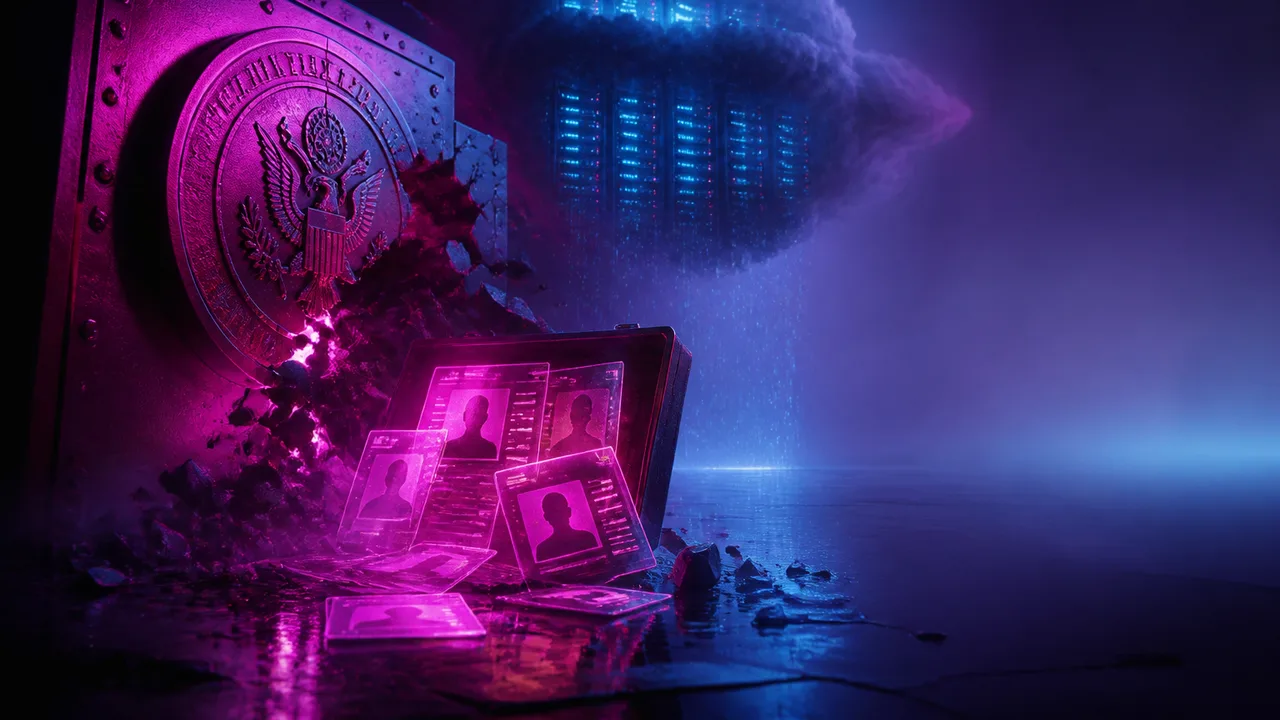
ShinyHunters says it breached FBI systems through Oracle PeopleSoft, reached an AWS GovCloud environment and stole between 2TB and 3TB of data about employees and applicants. The group has supplied fragments that deserve investigation, but its largest claims remain unconfirmed.
The demand attached to the alleged theft is unusual for a crew associated with data-theft extortion. ShinyHunters says it wants the FBI to correct or withdraw a May 2026 security bulletin, rather than pay a ransom. One representative described the plan to 404 Media as “maybe coercion.”
That choice offers a useful way to understand modern extortion. A criminal brand needs victims to believe three things: the intruder has their data, can publish it and will follow through. An official warning that the crew may exaggerate or fabricate claims threatens that leverage. If ShinyHunters’ account is accurate, the FBI operation doubles as an attempt to defend the credibility behind future demands.
What Has Been Established so Far
Three outlets received closely aligned accounts from ShinyHunters representatives. That gives us multiple interviews, but the interviews all originate with the party seeking attention and leverage. Repetition across publications does not independently verify the underlying intrusion.
BleepingComputer reported that the group claimed a previously unknown PeopleSoft remote-code-execution vulnerability provided initial access. ShinyHunters said it then moved into FBI-managed AWS GovCloud infrastructure and accessed services including human resources, MedLink and Criminal Justice Information Services. The publication could not independently verify the alleged zero-day, lateral movement or volume of stolen data.
The group also supplied an image that appeared to show the FBI Jobs website defaced with its Umbreon logo and the message “THIS SITE HAS BEEN SEIZED BY SHINYHUNTERS.” The site subsequently displayed a maintenance message, while 404 Media reported that the application portal was unavailable when its story was published.
The strongest evidence concerning the data comes from a sample provided to 404 Media. The publication received approximately 5,000 purported employee records containing fields such as names, addresses, phone numbers, dates of birth and, in some cases, spouse information. It checked some numbers with OSINT Industries and found matches to people with the listed names. Searches using District 4’s Darkside tool associated some numbers with Justice Department personnel.
Those checks establish that some fields appear accurate. They do not establish where ShinyHunters obtained them, when they were collected or whether the group possesses terabytes of newly stolen FBI material. Accurate information can coexist with inflated claims, and a sample cannot demonstrate access to every employee and applicant.
As of the reports published September 22, the FBI had not publicly confirmed the breach to the outlets. Oracle and AWS had not answered The Register’s questions about the alleged PeopleSoft flaw and data theft. No available response from those organizations resolves the central technical questions.
Why a Retraction Could Be Valuable
The dispute begins with an FBI FLASH bulletin issued on May 15. As The Register’s account describes it, the bulletin warned that ShinyHunters uses threatening messages and calls, may target relatives and has engaged in swatting. It also warned that extortionists may falsely claim to hold compromising material that does not exist. ShinyHunters denies those allegations and gave the FBI one week to correct or remove the report.
For an extortion operation, credibility functions like working capital. A victim who thinks the attacker may be bluffing has less reason to pay. A government warning that identifies exaggeration as part of the playbook could therefore weaken later demands, even if no money is sought from the government itself.
That reasoning depends on several unproven premises. It assumes the spokesperson accurately represents the actors behind the intrusion, that retaliation was the motive and that the described access occurred. A public performance aimed at attracting customers, intimidating investigators or magnifying a smaller compromise could produce much of the same messaging.
ShinyHunters’ own wording still exposes the mechanism. Calling the demand coercion acknowledges that the alleged data is supposed to change the FBI’s behavior. Money is one possible outcome of extortion leverage; a retraction is another possible prize.
The Oracle History Adds Context, Not Confirmation
ShinyHunters has previously appeared around exploitation of an unknown Oracle vulnerability. During Clop’s 2025 Oracle E-Business Suite data-theft campaign, ShinyHunters was part of a group called Scattered Lapsus$ Hunters that released a proof-of-concept exploit. Oracle later confirmed that the code matched an exploit used in the attacks, according to BleepingComputer. ShinyHunters subsequently claimed the exploit had belonged to it and that Clop obtained it without permission.
That history raises the plausibility that the group could possess Oracle exploit knowledge. It cannot verify this PeopleSoft claim. E-Business Suite and PeopleSoft are separate products, the alleged FBI vulnerability has not been confirmed, and past access to one exploit does not demonstrate possession of another. Cybercrime résumés are self-written, often in all caps, and should be checked accordingly.
The comparison with ShinyHunters’ reported compromise of Instructure’s Canvas platform shows how the same leverage can serve different goals. After that episode, the group claimed data connected to hundreds of millions of students, teachers and staff. Its usual model, as described by the outlets, threatens publication unless a victim pays. With the FBI, the stated price is a change to the official record.
The comparison has limits. The Canvas figure was itself reported as the group’s claim, while the FBI sample has received only partial validation. The affected populations and operational risks also differ. Education records can harm students and staff at enormous scale. A law-enforcement personnel dataset can expose investigators, relatives and applicants to targeted intimidation and provide organizational clues to criminals or foreign intelligence services.
The Risk Does Not Depend on a Terabyte Count
Addresses, dates of birth, phone numbers and spouse details can support tailored impersonation, harassment and targeting. Applicants deserve attention alongside employees because the alleged dataset could expose people who sought sensitive government work but never joined the agency.
People who have worked for or applied to the FBI should not assume the full claim is true. They can still take proportionate precautions: secure primary email and mobile accounts with strong multifactor authentication, replace reused passwords, reduce reliance on biographical security questions and warn household members about messages that use accurate personal details to manufacture trust. Buying random “dark web protection” because an attacker named a large number is unlikely to clarify whether a record came from this incident.
Organizations running internet-facing PeopleSoft systems have a different job. Security teams can inventory exposed deployments, preserve logs covering the reported Monday-night window, examine identity and cloud audit trails for unexpected access, and restrict unnecessary exposure while awaiting vendor guidance. ShinyHunters also claims it is using the alleged flaw against other organizations, including Fortune 500 companies, but that broader campaign remains unverified.
The next useful signals will come from an FBI confirmation, an Oracle advisory, forensic findings that connect the sample to the reported intrusion, or evidence of exploitation elsewhere. Until one arrives, defenders should treat the claim seriously enough to investigate and skeptically enough that an extortion crew does not get to write the incident report.
More Like This
FBI Probes Sale of 153 Million Driver's Licenses on Dark Web
The FBI is investigating a breach where 153M+ U.S. and Canadian driver's licenses appeared on a Russian cybercrime forum. Here's what we know so far.

Mapping the Claude Ecosystem: Four Products, One Platform
Claude has grown from a chatbot into a layered ecosystem of products and automations. Here's what each piece actually does—and what questions it raises.

Claude Fable 5 and the Data You Hand Over
Claude Fable 5 promises to handle whole jobs autonomously. Before you hand it your CRM export, ask who controls what it learns about you.