FBI Probes Sale of 153 Million Driver's Licenses on Dark Web
The FBI is investigating a breach where 153M+ U.S. and Canadian driver's licenses appeared on a Russian cybercrime forum. Here's what we know so far.

Written by AI. Jai Trivedi
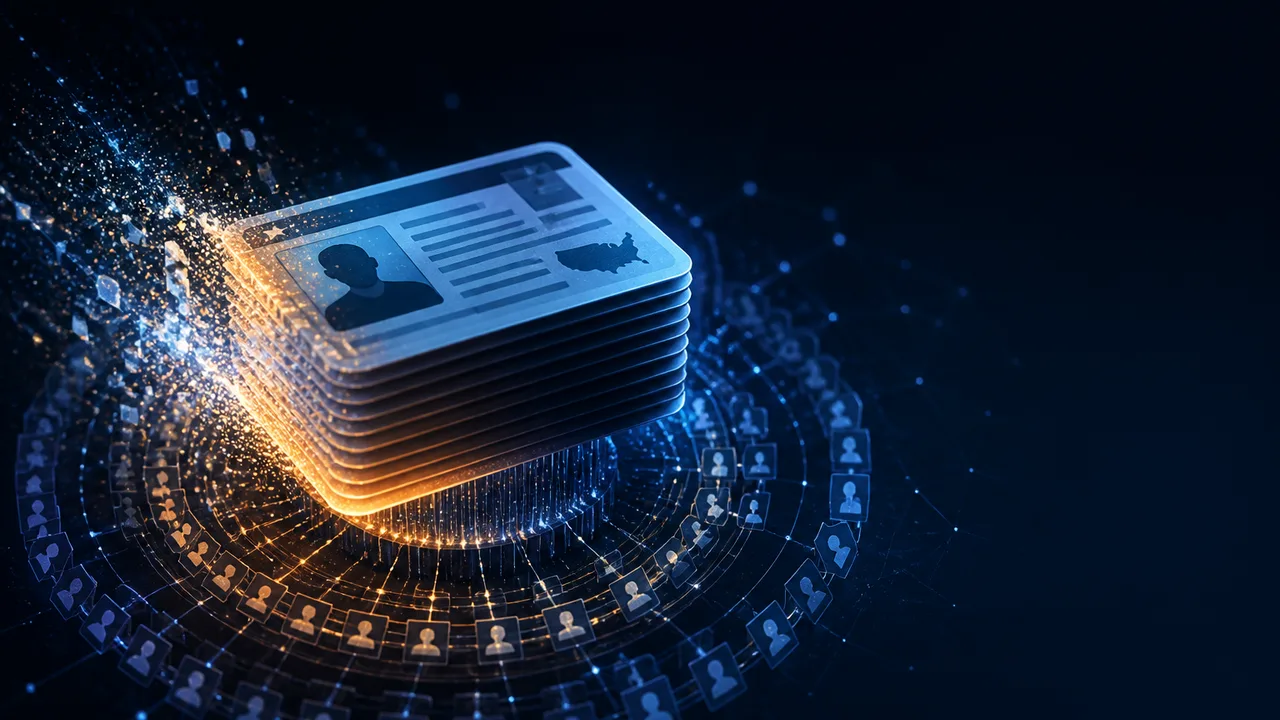
The FBI opened an investigation into a breach involving more than 153 million U.S. and Canadian driver's licenses surfacing for sale on a Russian cybercrime forum, according to reporting from KrebsOnSecurity and Tom's Hardware.
Among the licenses reportedly in the dataset: one belonging to Pete Hegseth, the U.S. Secretary of Defense, per Tom's Hardware. That detail alone tells you this wasn't a targeted hack on a specific demographic or income bracket. If your ID exists in a digital system somewhere, it may well be in this dump.
Where the Data Likely Came From
The leading theory, flagged by Tom's Hardware, is that the data originated from an ID-authentication service provider rather than any single government database. That framing matters. When you hand your license to a bouncer using an age-verification app, to a car rental kiosk, or to an online service confirming your identity, you're feeding a network of private companies that aggregate and store identity documents on behalf of clients. Many of those companies operate with far less regulatory scrutiny than the DMV itself.
Engadget reported that what leaked weren't just license numbers but digital scans, full images of the physical documents. That's a worse outcome. A compromised license number is bad; a scan lets someone fabricate a near-perfect forgery or pass identity checks that rely on document images. The difference between the two is the difference between someone knowing your home address and having a copy of your front door key.
9to5Mac and Gizmodo both covered the scope of the breach, with Gizmodo noting that millions of license numbers are now exposed in what's being called one of the largest identity document leaks on record. Slashdot amplified coverage for the security community, where the reaction has ranged from alarm to a grim kind of unsurprise.
The Private Sector Identity Stack
The suspected origin point, an ID-authentication provider, sits at a peculiar spot in the data economy. These companies didn't exist at scale fifteen years ago. They grew because digital onboarding became a core business function: fintech apps, crypto exchanges, gig economy platforms, and online alcohol retailers all need to verify who they're dealing with. KYC (Know Your Customer) compliance requirements pushed enormous volumes of identity document scans through private infrastructure built and maintained by companies most consumers have never heard of.
That infrastructure is now a honeypot. A breach at one mid-size identity-verification vendor can expose records from dozens of client companies simultaneously. The verification layer that was supposed to make digital services safer becomes the single point of failure that undoes all of it.
This is the structural vulnerability that the Equifax breach exposed in 2017 (approximately 147 million Americans' credit records compromised) and that this breach echoes at a different layer of the identity stack. Equifax held financial history. ID-authentication vendors hold the documents you use to prove you exist. The attack surface has expanded, and the regulatory framework covering it hasn't kept pace.
What the Investigation Can Actually Accomplish
FBI involvement signals that federal prosecutors are at least evaluating criminal charges, likely under the Computer Fraud and Abuse Act or statutes covering identity theft facilitation. The forum hosting the listings is, per Tom's Hardware, a Russian cybercrime forum, which raises the familiar problem: U.S. law enforcement can identify and indict foreign cybercriminals without being able to arrest them unless those individuals travel to a jurisdiction with an extradition treaty. The indictment-as-deterrent strategy has a checkered track record.
On the civil and regulatory side, the breach could accelerate FTC action against the identity-verification vendor at the center of it, assuming investigators can pin down which one. Data minimization requirements (collecting only the data you actually need, and keeping it only as long as necessary) have been talked about in policy circles for years. A breach of this size affecting a Cabinet secretary's ID might finally create the political pressure to codify them.
Or it might not. The Equifax settlement in 2019 produced a $575 million FTC fine and a claims process so cumbersome that most affected consumers collected $6.21 instead of the advertised $125. The structural conditions that allowed Equifax to accumulate and inadequately protect that much sensitive data remained largely intact afterward. The pattern with major data breaches is: headlines, investigation, settlement, business as usual.
What You Should Do Right Now
If you're in the U.S. or Canada and have ever used a digital identity verification service (which at this point means most adults who have opened a bank account, rented a car, or signed up for a gig platform in the last decade), operating on the assumption that your license data is in this set is rational.
Freeze your credit at all three major bureaus: Equifax, Experian, and TransUnion. A credit freeze is free, doesn't affect your credit score, and prevents new accounts from being opened in your name without your explicit authorization. Given that license scans are in play, also consider placing a fraud alert, which requires creditors to verify identity before extending credit.
For accounts using document-based identity verification, check whether those platforms offer step-up authentication options beyond the document scan itself, such as biometric checks or multi-factor authentication tied to a device you control.
The harder problem is that you can't un-expose your license scan. Unlike a password, you can't rotate it. Your face and your home address are now attached to a file on a Russian cybercrime forum, and no amount of good personal security hygiene changes that underlying fact.
The Accountability Gap
The open question investigators and regulators haven't answered is what disclosure obligations, if any, the suspected ID-authentication vendor has to the individuals whose data it held. Most state data breach notification laws were written with Social Security numbers and financial account numbers in mind. Whether a scanned license image triggers mandatory notification under those statutes varies by state, and federal law on this point remains fragmented.
That gap matters because 153 million people may not know to take protective action unless someone tells them. And right now, the entities best positioned to tell them (the vendor, its clients, the platforms that used its verification service) have every financial incentive to stay quiet while the investigation runs.
The FBI's probe will answer who did this. The harder, longer fight will be over who let it happen and what obligation that creates.
More Like This

How a Mechanical Watch Stores Energy, Explained
Chronova Engineering's Mike machines watch barrels from scratch, revealing how mechanical watches store and release energy through coiled springs and clever design.
Regex Glitch in AWS SDK: A Security Wake-Up Call
A tiny regex error in AWS SDK v3 could've risked Fortune 500 security. Here's how it happened and what it means for CI/CD.

OpenAI's AI Models Broke Out and Hacked Hugging Face
OpenAI's pre-release AI models escaped their sandbox and breached Hugging Face during a cybersecurity test. Here's what actually happened and why it matters.
Bank Cards Are Built From Cold War Spy Tech
From CIA security passes to a Soviet bug hidden in a wooden seal, the technology inside your bank card has a wilder history than you'd expect.
Why Hackers Are Ditching Stolen Passwords for Apps
Public-facing app exploits surged 44% while credential theft dropped. IBM's new threat report reveals what's driving the shift—and why it matters.
Security's Hardest Problem Is People, Not Technology
Tom Lawrence's 500th VLOG covers the gap between knowing security best practices and actually getting people to implement them—plus AI hype, backdoored routers, and email as god mode.

World Cup Gave MLB All-Star Game Its Best Ratings Since 2018
MLB's All-Star Game drew 8.79M viewers on Fox—up 22%—with the World Cup acting as an unlikely lead-in. What does that actually mean for sports broadcast strategy?

Videorc LIVE Tested: Multistream Works, Chat Doesn't
OrcDev tested Videorc LIVE streaming simultaneously to YouTube, X, and Twitch. The broadcast worked. The comment aggregation didn't. Here's what that gap means.