Self-Charging Toothbrush Shows Promise in a Short Trial
A piezoelectric toothbrush improved plaque and gum measures over three months. An earlier PTFE design shows what changed and why long-term benefits remain untested.

Written by AI. Priya Sharma
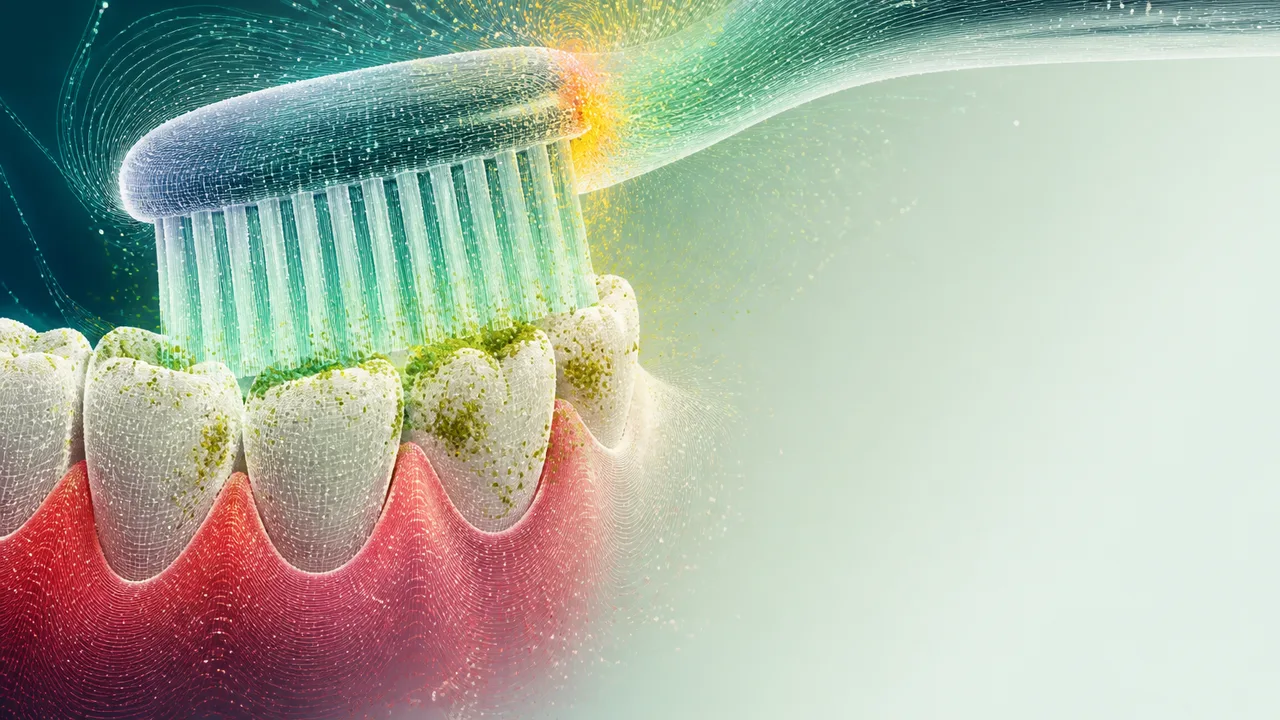
Yanhui Lu and colleagues at Peking University have developed a toothbrush whose bristles generate electrical charge when they bend. In laboratory tests and a three-month human evaluation, the experimental brush performed better than conventional nylon brushes on several measures of plaque and gum health. The central question is how much of that advantage comes from the bristles’ proposed antibacterial chemistry, and how much a short trial can tell us about protecting teeth over years of use.
The bristles are made from polyvinylidene fluoride, or PVDF, a piezoelectric plastic that produces charge under mechanical pressure. Brushing supplies the movement. The researchers propose that the resulting charge helps generate reactive oxygen species, molecules capable of damaging bacteria, while the bristles also scrub plaque from teeth. That last action is familiar; the proposed chemical action is the addition under test.
The team made bristles of two thicknesses and measured their electrical response under pressure. It also detected reactive oxygen species on the brushes. The thicker bristles generated more electricity in the laboratory and performed particularly well in tests involving two oral bacteria.
An Earlier Route to Electrically Active Brushing
Lu’s group is building on an existing idea in dental materials research. In a 2024 Journal of Materials Science study, Gaoqiang Ma and colleagues proposed a toothbrush design using an electrically polarized form of polytetrafluoroethylene, or PTFE. Their published abstract describes ultrasonic activation of the material to produce reactive oxygen species. It reports antibacterial activity in material tests and whitening of stained teeth after 20 hours of treatment.
The two designs ask related questions with different setups. In the earlier work, ultrasound activated the PTFE material used for the proposed design. In Lu’s brush, ordinary brushing bends the PVDF bristles. That change puts the electrical response in the part of the brush already moving against teeth, without requiring a battery for the proposed reaction. It also makes contact time a demanding test: a laboratory result must survive the transition to a brushing session in a human mouth.
Ma’s abstract describes material characterization, antibacterial testing and whitening, but gives no human brushing result or detailed methods for comparing its antibacterial results with Lu’s. Lu’s group added tests on plaque and a three-month human evaluation. These studies were not a head-to-head trial of PTFE against PVDF. Their different activation methods and tests cannot support a ranking of which material kills more bacteria in daily use. The earlier work establishes a precedent for using an electrical effect in dental cleaning; the newer work asks whether a brush designed around the motion of brushing can improve measured oral-health indicators in people.
What the Experiments Measured
In one set of laboratory experiments, the thicker PVDF bristles killed about 53% of Streptococcus mutans, a bacterium associated with tooth decay, and 78% of Porphyromonas gingivalis, which is associated with gum disease. Nylon bristles killed about 9% and 8%, respectively, under those test conditions. The researchers also grew plaque from human mouths on pieces of cow enamel. After three minutes of brushing, the experimental brushes removed more than 99% of that plaque, compared with about 80% for nylon brushes. Cow enamel bearing cultivated plaque offers a controlled testing surface; it cannot reproduce every condition in a mouth.
A laboratory test that added an antioxidant largely eliminated the new bristles’ antibacterial effect. Because the antioxidant neutralizes reactive oxygen species, that result strengthens the case that those molecules contributed to bacterial killing in the test. It cannot measure how much of the difference in people came from chemical activity rather than brushing mechanics. The researchers also observed changes in bacterial genes involved in molecular transporters. Newcastle University oral microbiologist Nicholas Jakubovics, who was not involved in the study, questioned how clearly those changes explain the bacteria’s response, he told Live Science.
The human evaluation brings the brush closer to its intended use. Researchers recruited 115 adults into four groups: two groups used experimental brushes and two used conventional ones. Participants brushed twice daily with fluoride-free toothpaste for three months.
The reported plaque scores fell by roughly 40% among people assigned experimental brushes and roughly 15% among those assigned nylon brushes. Dental examinations also found improvements in gum inflammation and bleeding with the experimental brushes.
Researchers also sequenced bacteria in plaque samples and reported a lower relative abundance of several disease-associated bacteria in the experimental-brush groups. Relative abundance describes a share of the microbial community. The microbiome findings offer another way to investigate how the brush might work; the dental examinations supply the more direct short-term measure of what happened in participants’ mouths.
Safety deserves its own timescale. The PVDF bristles retained their structure and electrical properties after three months of simulated use. Lab-grown mouse cells exposed to brush material showed no signs of damage, and brushing cow enamel did not increase its surface roughness. Those tests offer initial reassurance about the material, but cannot settle the safety of repeated contact with human oral tissues over longer periods. Jakubovics called for longer-term tissue safety to be examined.
The case for developing the brush is straightforward: it combines ordinary plaque removal with a laboratory-supported route to antibacterial activity, and people assigned the brush had better plaque and gum measures during the three-month evaluation. Demonstrating fewer cavities, less progressive gum disease or less tooth loss would require studies measuring those outcomes over longer periods. Lu’s team plans longer-term follow-up. For now, the brush’s strongest human result concerns what dental examinations measured after three months, rather than what happens to teeth years later.
More Like This
The Electromagnetic Spectrum Explained by Neil deGrasse Tyson
Neil deGrasse Tyson and Chuck Nice trace how electricity and magnetism unified into the electromagnetic spectrum—and what that means for everything we see and build.

Grover's Algorithm Explained with Quantum Minesweeper
Dr. Katie McCormick uses Minesweeper to explain Grover's algorithm — a quantum search method with real implications for cryptography and beyond.