Rivals Paid Evaluations Test Recruiting Rankings' Value
Rivals' paid evaluations have reported prices of $399 and $499. Families must weigh scouting feedback and exposure against uncertain recruiting results.

Written by AI. Denise Okafor-Williams

Rivals is charging $499 to evaluate high school football players it has not formally assessed, The Athletic reported on September 30. That price buys access to a scouting assessment and ranking consideration. It does not tell a family whether a college coach will see the evaluation, agree with it or change a recruiting decision because of it.
The reported price is itself unsettled across accounts of the service. Front Office Sports put recruiting evaluations at $399, while The Athletic and Awful Announcing reported $499. The available accounts do not establish whether those figures reflect different packages, a price change or another distinction. Families comparing the offer should confirm the current terms before treating either figure as the price they would pay.
Rivals Recruits also offers a lower-priced entry point: athletes can start by claiming a profile for $29.99, Yahoo Sports reported. The service promotes the possibility of increased exposure and college interest. Those possibilities leave the buyer with several separate questions: What information does the athlete receive? Who else sees it? And can any of those steps help with a college decision?
What the Fee Can Buy
A scouting assessment can have value even if it never produces a ranking. A player who has received little attention might want an outside view of their strengths and weaknesses. A family might use that feedback to decide which programs to contact or where more development would help. Those are plausible uses of an evaluation; the available reporting does not show what Rivals' paid customers typically learn or whether the feedback changes their plans.
Rivals says athletes who pay for evaluations are assessed by the same scouting team that evaluates and ranks top prospects, according to Youth Sports Business Report. For a family, that addresses a reasonable concern about whether paying leads to a lesser process. It still leaves open how an assessment feeds into rankings. The same scouts can evaluate two players without giving both the same level of public attention, particularly when a ranking selects from a much larger pool.
The phrase ranking consideration describes an opportunity for assessment. It does not specify where an athlete will be ranked, or whether they will appear in a ranking at all. The service's potential value therefore rests partly on what it delivers to players who are assessed but remain unranked. If those players receive detailed, usable feedback, a family could judge the purchase worthwhile on those terms. If the main attraction is a chance at public recognition, the odds of receiving that recognition become central to the decision. The supplied accounts do not establish those odds.
For Rivals, paid evaluations create a second customer relationship alongside the audience for its recruiting coverage. The athlete or family pays for an assessment; readers and coaches may later encounter the site's judgments about prospects. That arrangement raises a question about incentives, rather than proving that any ranking has been compromised. The company can make the process easier to evaluate by explaining what payment covers, what it cannot influence and how scouts decide which assessed players enter public rankings.
A Ranking Has More than One Audience
Recruiting rankings compress a great deal of judgment into a short list. That makes them easy for fans and families to follow, and potentially useful for a coach looking for players to examine. Coaches do not all assign them the same weight, Front Office Sports reported. A list can draw attention to a prospect while leaving the central recruiting work to the program: evaluating the player against its own needs and available opportunities.
That helps explain why a family and a coach might value the same Rivals assessment differently. The family may want evidence that someone has looked closely at an athlete who has struggled to get noticed. The coach has to decide whether that athlete fits a roster, a system and the program's recruiting priorities. A favorable outside assessment could prompt a closer look. The available reporting does not show that coaches use paid evaluations consistently as leads, or that they give those evaluations weight beyond their own review.
The service also sits at an awkward point in the recruiting market. Visibility is scarce, and a recognizable recruiting brand can offer a player a way to seek it. Yet the buyer cannot purchase the decision that gives exposure its highest possible value: a college program choosing to recruit that player. A parent weighing $399 or $499 is buying a process with an uncertain downstream result. The family may reasonably decide the assessment itself is useful. It should not have to guess whether the advertised exposure means a public profile, inclusion in a ranking or direct attention from coaches.
None of those outcomes should be assumed from the word evaluation. The price comparison is difficult, too, while the published figures conflict and the lower-priced profile option sits alongside the scouting offer. Without a clear breakdown of deliverables at each level, a family cannot readily compare the cost of being listed with the cost of being assessed.
Who Can Afford Another Look?
A fee for evaluation can expand access for an overlooked player who has the money to seek an assessment. It can also put an additional route to a scout behind a payment. Both consequences follow from the structure of the offer. Whether the paid route changes who ultimately appears in Rivals' rankings is a separate question, and the supplied reporting provides no figures on how many athletes buy evaluations or what happens to them afterward.
Price can affect the pool before any scout makes a judgment. A family with room in its budget can purchase an extra opinion; another may have to rely on existing footage, school contacts or whatever attention the athlete has already attracted. The gap does not establish that the paying athlete is favored in the final ranking. It does mean that access to this assessment begins with an ability to pay, even as Rivals says the same scouting team handles paid evaluations and top prospects.
The strongest case for the service is straightforward: a player who has not been formally evaluated gets a route to established scouts, and those scouts may provide useful feedback or visibility. The strongest unresolved question is just as concrete: how often does that route produce information or attention a family could not have obtained otherwise? Published examples of feedback, clear terms for each price and evidence about what happens after an assessment would help buyers answer it.
Until then, the $399 and $499 figures price the chance to be evaluated. The value of that chance depends on what Rivals delivers after a family pays, and what coaches do with it.
More Like This

NFL and NFLPA Negotiate Flag Football at 2028 Olympics
The NFL and NFLPA are negotiating player participation in Olympic flag football. Here's what the labor dynamics and scheduling realities actually mean for athletes.

World Cup Knockout Ticket Prices Drop 39% on Resale Markets
World Cup knockout stage resale prices fell 39% from $2,040 to $1,245. What the secondary market collapse reveals about FIFA's pricing architecture.
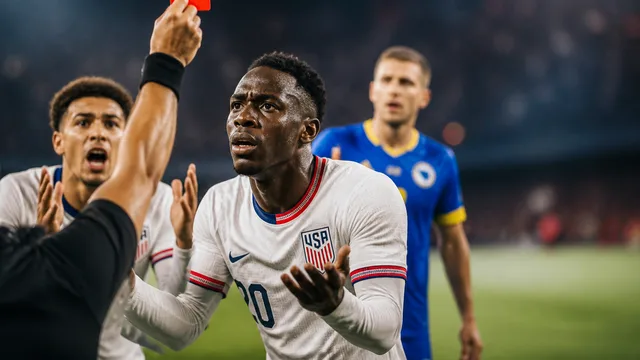
USMNT Beats Bosnia, Advances Despite Balogun Red Card
The USMNT beat Bosnia 2-0 to reach the World Cup Round of 16, despite Folarin Balogun's controversial red card. Here's what it means on and off the field.

Chelsea Stake Sale Would Put Clearlake in Full Control
Chelsea's reported £950 million stake sale would give Clearlake full control, raising questions over spending, cash flow, stadium plans and exit timing.