Oura’s $2.2 Billion IPO Puts Shareholder Sales First
Oura’s IPO could raise $2.2 billion, but most proceeds go to existing holders. We unpack its tender, subscriptions, reported loss and warranty risks today.

Written by AI. Alex Volkov
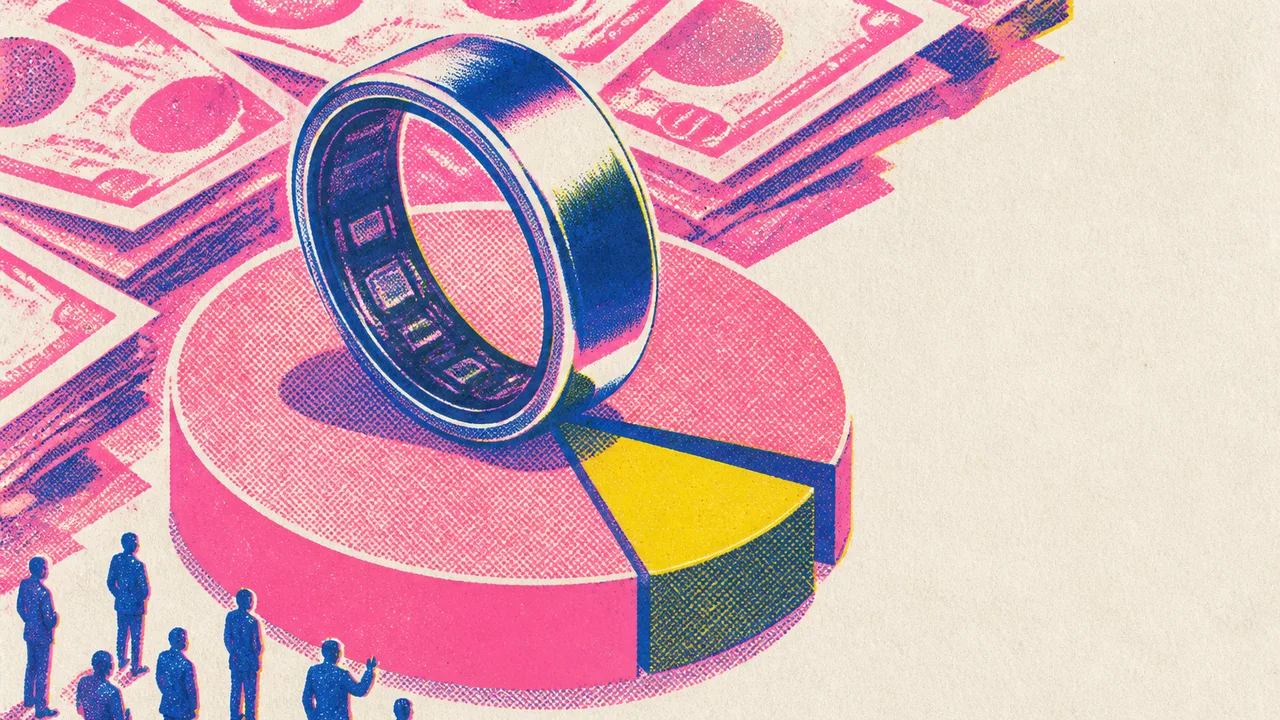
Oura launched an initial public offering on September 21 that could raise $2.2 billion and value the smart-ring company at about $14.1 billion.
The headline makes this sound like a large capital injection into a fast-growing consumer technology business. The share split describes a different transaction. Oura plans to sell 13.5 million shares, while existing stockholders offer 36.5 million. At the top of the $40 to $44 range, sellers receive about 73% of the base offering’s proceeds.
That distinction matters because an IPO can finance a company, provide liquidity to existing holders, or do both. Oura’s proposed deal leans heavily toward liquidity. At $44, the company would collect about $594 million before fees, while selling stockholders would receive about $1.61 billion. A 7.5 million-share over-allotment option also consists entirely of stock from existing holders.
Cash-outs do not prove that insiders expect trouble. Venture funds have finite lives, founders and employees may have spent years holding illiquid shares, and an IPO exists partly to create a market for them. The concentration of secondary shares still changes what public investors are financing. Most of their money will purchase ownership from current holders rather than fund Oura’s operations.
The IPO Started with February’s Tender
The history behind the offering makes its structure easier to read. During the nine months ended June 30, Oura repurchased $1.17 billion of its shares. That included 13,295,528 preferred shares bought for $40.18 apiece in a February tender offer. The company drew $375 million from a revolving credit facility to help pay for the repurchases.
Oura is now marketing IPO shares at $40 to $44. In practical terms, preferred holders received liquidity near the price being presented to public investors several months later. The IPO therefore looks like the second stage of a broader recapitalization: private holders received cash, the balance sheet absorbed part of the cost, and public capital is arriving afterward.
This sequence also explains Oura’s alarming reported loss. Bloomberg’s filing-based account shows a $924.3 million net loss attributable to stockholders on $1.21 billion of revenue for the nine-month period. The figure includes the effect of a deemed dividend to preferred shareholders.
The more detailed reconciliation shows $60.8 million of net income before a $985 million deemed dividend associated with preferred holders. Subtracting the dividend produces roughly the reported $924.3 million loss, allowing for rounding. Investors should still examine cash use, debt and the $1.17 billion repurchase. They should avoid treating the headline loss as though Oura’s rings and memberships burned $924.3 million through ordinary operations.
The preferred-stock history also matters to employees trying to understand their own equity. Liquidation preferences can determine the order in which preferred and common holders receive money in a sale or other liquidation event. The available reporting does not disclose Oura’s preference multiple, participation rights or conversion terms, so a responsible payout waterfall cannot be calculated. The February tender provided preferred holders with negotiated liquidity at $40.18; it does not establish what common shares would have received under a liquidation preference.
Oura had $371.8 million in cash and a $1.62 billion stockholders’ deficit at June 30. The roughly $594 million of gross primary proceeds would rebuild financial capacity, although underwriting fees and other offering costs will reduce the amount reaching the company.
A Smaller Ask, Measured Against Two Starting Points
Oura’s launched offering is smaller than the company’s reported ambitions in August. The earlier target was as much as $3 billion at a valuation above $16 billion. A $2.2 billion deal represents a 27% reduction from that fundraising target, while the indicated valuation is roughly $2 billion lower.
Compared with Oura’s 2025 private round, the direction reverses. The company raised $875 million at an approximately $10.9 billion valuation in its Series E. A $14.1 billion market value would sit about 29% above that level.
Both comparisons are useful, within limits. The August figure was a reported target rather than a completed transaction, so the reduction shows where bankers believe demand may clear today, not a realized loss for shareholders. The Series E comparison shows an uplift from the last private benchmark, but private-round terms can include protections that common stockholders will not receive.
The broader 2026 IPO market has accommodated much larger technology offerings. Bloomberg identified an $86.2 billion SpaceX listing and SK Hynix’s $26.5 billion American depositary share sale. Those deals show that investors have been willing to commit large sums to prominent technology names. Their scale and businesses make them poor valuation twins for Oura, a consumer hardware company building subscription revenue on top of ring sales. The useful comparison is market receptivity, not operating similarity.
The Ring Gets the Customer, the Membership Gets the Multiple
Oura’s strongest case rests on recurring revenue. Membership revenue grew 121% to $240.5 million in the nine months through June, with an 89% gross margin. About 94% of ring buyers convert to a paid plan, roughly 85% remain after one year, and 63% select an annual subscription.
The service had more than five million paid members by June 30. US subscriptions cost $5.99 monthly or $69.99 annually. Oura expects about 5.7 million paid members by the end of fiscal 2026, implying another 700,000 from the June level.
Hardware supplies plenty of momentum. Yahoo Finance’s technology desk reported that Oura sold 4.1 million rings in the nine months ended June 30, up from 1.8 million in the comparable period. The Ring 5 costs $399 to $499, runs for roughly a week without charging and competes with Apple Watch, Fitbit, Whoop and Samsung’s ring products. Oura says 72% of members are women and 27% are older than 45, suggesting a customer base that extends beyond the usual early-adopter caricature.
The inference for investors is straightforward: the hardware is an acquisition channel for a high-margin membership relationship. That model earns a richer valuation only if buyers keep subscribing, replacement and support costs remain controlled, and Oura’s health insights retain consumer trust. A ring sale creates revenue today; retention determines whether the economics compound.
Warranty Costs and Accuracy Claims Are the Next Tests
Oura recorded $84.4 million of warranty expense in fiscal 2025. Its warranty accrual reached $132.3 million at the end of June, after the company paid $75.5 million of claims during the preceding nine months. Those figures do not reveal whether newer Ring 5 units will produce claims at the same rate, but they establish warranty service as a cost investors should track beside unit growth.
Accuracy presents a separate risk. A proposed class action in California challenges Oura’s advertised claim of 95% sleep-staging accuracy against a clinical sleep lab. The complaint cites research involving 45 patients that found overall classification accuracy of 53.18%. Oura rejects the allegation, saying it stands behind its science and pointing to studies comparing the ring favorably with polysomnography. The lawsuit remains a disputed claim, and the cited sample alone cannot settle the broader performance question.
For customers, accuracy affects whether Oura’s guidance deserves trust. For shareholders, it also affects retention and the durability of that 89% membership margin. These consequences connect a product dispute to the valuation case without assuming how the litigation will end.
The first-day share price will mostly measure demand for a scarce new ticker. Oura’s first public quarterly filings should answer the harder questions: whether paid membership reaches 5.7 million, whether one-year retention holds near 85%, and whether warranty costs rise more slowly than the ring population. Existing holders have already found their liquidity event. Public buyers now have to find out what they bought.
More Like This

ENGO Raises €5.1M to Scale AR Sports Glasses
Grenoble startup ENGO has raised €5.1M to expand its lightweight AR glasses for athletes. Here's what the funding tells us about the wearable tech race.

Apple's AI Pin: The Future of Wearable Tech?
Explore Apple's AI pin, Microsoft's Row Alpha, and YouTube's ambitious AI roadmap shaping the future of technology.
Suunto's 2026 Firmware Update: What It Really Means
Exploring Suunto's latest firmware update and its impact on the wearable tech landscape.

Elon Musk's Problem-Solving Methods, Examined
Eric Jorgenson spent five years studying Elon Musk. Here's what his frameworks actually reveal—and where the hagiography gets complicated.

Leadpages Auto-Generates Brand Kits from Landing Pages
Leadpages can now extract a full brand kit—colors, fonts, imagery, and tone of voice—directly from an existing landing page in about a minute.