Nvidia Cosmos 3 Edge Brings AI Inference to Robots
Nvidia's Cosmos 3 Edge runs AI directly inside robots and cameras—no cloud required. Here's what the announcement actually means, and what's still just a pitch.

Written by AI. Dev Kapoor
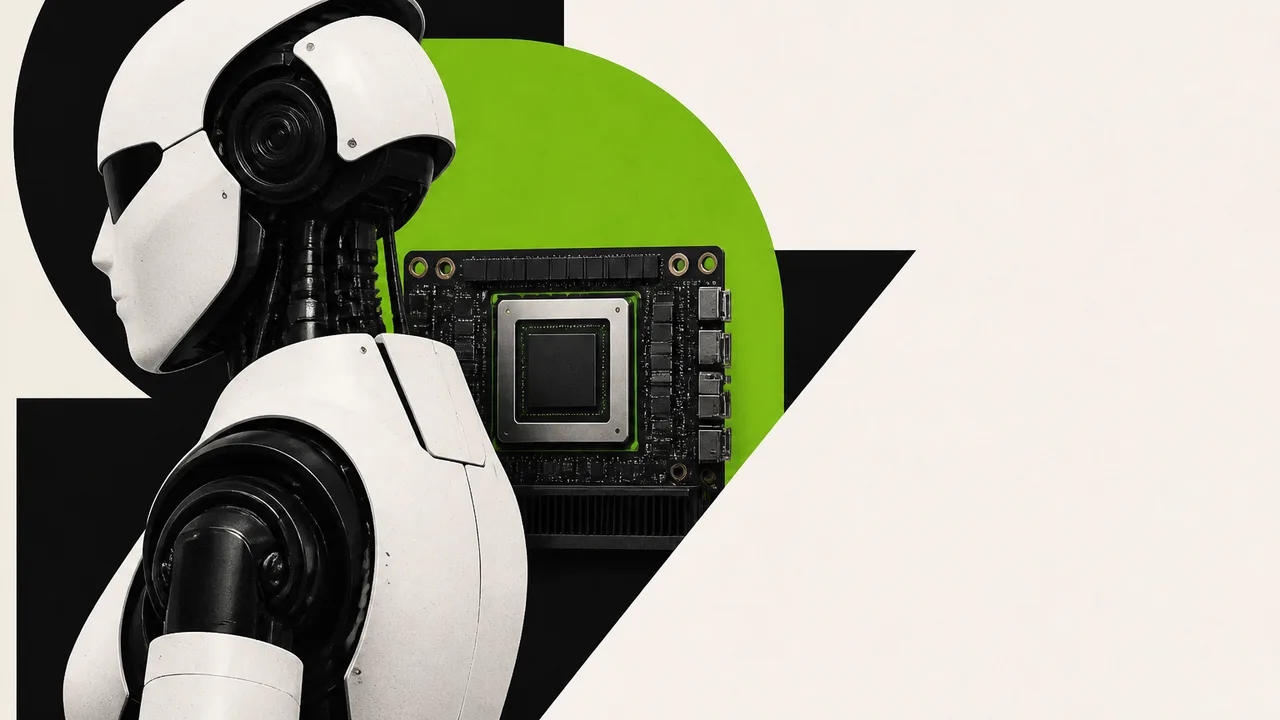
Photo: AI. Ondine Ferretti
Jensen Huang stood up in Tokyo and said something that deserves to be taken literally: "The next frontier of AI is the physical world, not text, not chat windows, the real world with real objects moving in it."
That's not a metaphor. It's a product roadmap.
The product in question is Cosmos 3 Edge, Nvidia's new model that runs AI inference directly inside machines — robots, cameras, vehicles — without routing anything through the cloud. Nvidia announced the broader Cosmos 3 family back in June, but the Edge variant, the one actually built for on-device deployment, shipped roughly six weeks later. That turnaround is itself a signal: there's competitive pressure here, and Nvidia knows it.
What "World Model" Actually Means
The framing Nvidia is pushing is worth sitting with. They're calling Cosmos 3 Edge a world model, not a language model. The distinction is more than marketing.
Language models are trained on text — they learn patterns in how words follow other words. Cosmos 3 Edge, according to Nvidia's positioning, is trained on physics: motion, cause and effect, spatial relationships. A ball rolling. A person walking toward a door. A car turning a corner. The model doesn't just classify what it sees — it predicts what happens next and selects an action accordingly.
Julian Goldie's breakdown captures the operational difference cleanly: "A language model finishes your sentence. A world model finishes your movement."
That framing makes the cloud-vs-edge question feel less like an infrastructure debate and more like a fundamental question about what kind of AI belongs where. A chatbot can afford a 200ms round trip to a server. A robot arm moving near a human worker cannot. The physics of the situation demand that the cognition happen where the action is.
Old edge AI deployments tried to solve this with frozen, specialized models — you trained something, compressed it, shipped it to a device, and hoped the real world cooperated. What Cosmos 3 Edge is claiming to do differently is bring an adaptive, predictive world model to that same deployment target. Whether the performance holds up in production environments at the range of conditions these industrial partners will throw at it — that's the real question, and it won't be answered by a Tokyo stage announcement.
The Partner List Is the Story
Nvidia didn't just ship the model. They shipped it with a coalition, and the names attached matter.
According to Nvidia's own newsroom, more than 20 Japanese companies have signaled intent to join what Nvidia is calling the Cosmos coalition. The ones already named include Fanuc, Yaskawa Electric, Fujitsu, Hitachi, Sony, SoftBank, Groove X, and Kawasaki Heavy Industries — companies that collectively represent a significant chunk of global industrial robotics production. Fujitsu is reportedly working with Fanuc, Yaskawa, and Kawasaki on a shared factory robot control platform built on the same AI stack.
That's not a startup ecosystem story. That's legacy industrial infrastructure starting to move.
SoftBank is pairing Cosmos with Nvidia's Omniverse and Isaac SIM to build what it's calling a physical AI development platform. Groove X is running it on Jetson hardware for its companion robots — the small domestic robots people actually keep in their homes. Enactic is fine-tuning Nvidia's Isaac GR00T model for elder care applications. Telexistence is applying it to retail shelf management.
Five industries — factory floors, home robotics, elder care, retail automation, and the simulation infrastructure underneath all of them — all moving on the same underlying model within weeks of general availability. That's the kind of adoption pattern that tends to compound.
The honest caveat: "intend to join" is doing real work in that sentence. Nvidia's newsroom documented the stated intentions; which of those intentions becomes shipping product over the next 6-12 months is a different question. Goldie's breakdown is fair on this point — "announcements like this are real signals of momentum, but they're also part of the pitch."
Where It Actually Runs
One thing that gets lost in the physical AI hype cycle: this isn't exotic hardware. Cosmos 3 Edge runs on Nvidia's new Jetson T2000 and T3000 modules, but also on existing RTX graphics cards and DGX systems. That matters because the installed base of Jetson and RTX hardware in factories, vehicles, and camera systems is already substantial. Nvidia isn't asking its industrial partners to rip and replace — they're asking them to push a model update.
The one-day adaptation claim — that developers can take Cosmos 3 Edge and configure it for a new robot, vehicle, or sensor in approximately a day — is the number worth interrogating. Nvidia made it. If it holds up under real deployment conditions, it would represent a genuine collapse in the integration timeline that has historically made edge AI expensive and slow to deploy. If it doesn't, it's the kind of aspirational benchmark that tends to get quietly walked back as partners encounter the actual messiness of production environments.
Nvidia's Metropolis platform is relevant context here. Updated Metropolis libraries, per reporting from Quasa.io on Nvidia's Metropolis 3.2 and DeepStream 9.1 releases, enable 6x faster vision AI agent development compared to prior tooling. For warehouse operators, that kind of acceleration is the difference between a safety monitoring system that takes two months to deploy and one that takes a year — which means it either gets built or it doesn't. The forklift-proximity detection and spill-flagging use cases aren't theoretical; they're exactly the kind of always-on, latency-sensitive monitoring that cloud pipelines have historically made impractical.
The Deployment Gap
There's a structural question underneath all the robotics coverage that doesn't get asked often enough: who actually captures the value when the deployment timeline compresses this dramatically?
The traditional answer in industrial automation is: the integrators. The companies that specialize in taking a manufacturer's hardware and a software vendor's model and making them work together in a specific factory context. If Nvidia's one-day adaptation claim is real, it doesn't eliminate that role — but it changes its economics significantly. Faster first deployment means more capacity for iteration, which means the competitive advantage shifts from "can you deploy" to "can you improve faster than your competitor."
That's a different kind of race, and it's not obvious that every industrial partner on Nvidia's announcement list is equally positioned to run it. A company like Fanuc has deep process knowledge and decades of factory relationships. A newer entrant has a lighter legacy footprint to navigate. Cosmos 3 Edge probably advantages different players than the previous generation of automation tooling did.
The model's open availability on existing hardware also means the barrier to experimentation is lower than it's ever been for smaller robotics developers. That's genuinely new. Whether it translates into meaningful competitive pressure on the industrial primes is something to watch over the next product cycle.
For now, the honest summary is this: Nvidia has shipped something technically interesting, backed by an unusually broad coalition of serious industrial partners, with at least one quantified performance claim that's been independently corroborated. The one-day adaptation benchmark and the question of which "intend to join" commitments actually ship remain open.
The gap between cloud AI and edge AI has been narrowing for years. Cosmos 3 Edge is the clearest signal yet that Nvidia intends to own the moment it closes.
More Like This

Atlas Can Lift a Fridge. Now What?
Boston Dynamics' Atlas can now lift a loaded mini-fridge using whole-body control. Here's what the demo actually tells us—and what it doesn't.
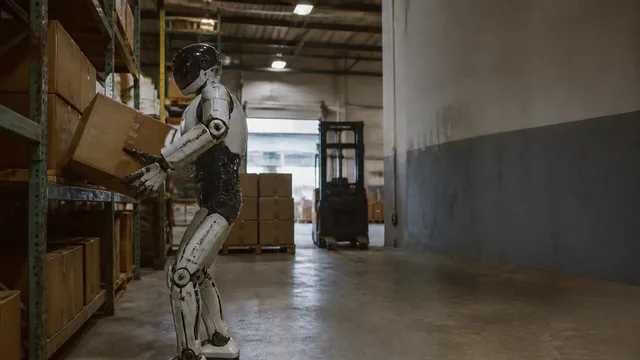
AI's Privacy Blind Spots: June's Big Model Leaks
Gemini voice cloning, Claude's persistent agent memory, and warehouse robots—June's AI leaks look exciting until you ask who's watching the watchers.
AI Agents Are Now Hiring Humans for Real-World Tasks
New platforms let AI agents post jobs and hire humans, creating an inverted gig economy. What happens when automation needs manual labor?

Meituan's LongCat 2.0: Open Source AI With 1M Token Context
Meituan's LongCat 2.0 is a 1.6 trillion parameter open-source AI with a 1M token context window. Here's what developers need to know about it.
AI's 2026 Horizon: Power, Platforms, and Persistent Problems
Explore AI's future—power constraints, platform shifts, and security challenges. Who will thrive in 2026?
Nvidia's GTC 2026: What 40 Million Times More Compute Means
Jensen Huang unveiled Vera Rubin chips, enterprise AI agents, and orbital data centers at GTC 2026. Here's what actually matters for the rest of us.

Kimi K3 Exposes the Real Cost of Open-Weight AI
Moonshot's Kimi K3 is a genuinely impressive open-weight model—and a direct challenge to every assumption the OSS AI community has built its narrative on.

C++ Compile-Time Optimization: When Theory Meets Reality
Andrew Drakeford's C++Online 2026 talk on compile-time dynamic programming starts clean and gets complicated—in exactly the ways that matter for real teams.