NFL Celebration Fines Put a Price on Player Expression
NFL players are curbing celebrations after Week 2 fines topped $300,000, exposing a labor question over expression, discipline and league control on the field.

Written by AI. Denise Okafor-Williams
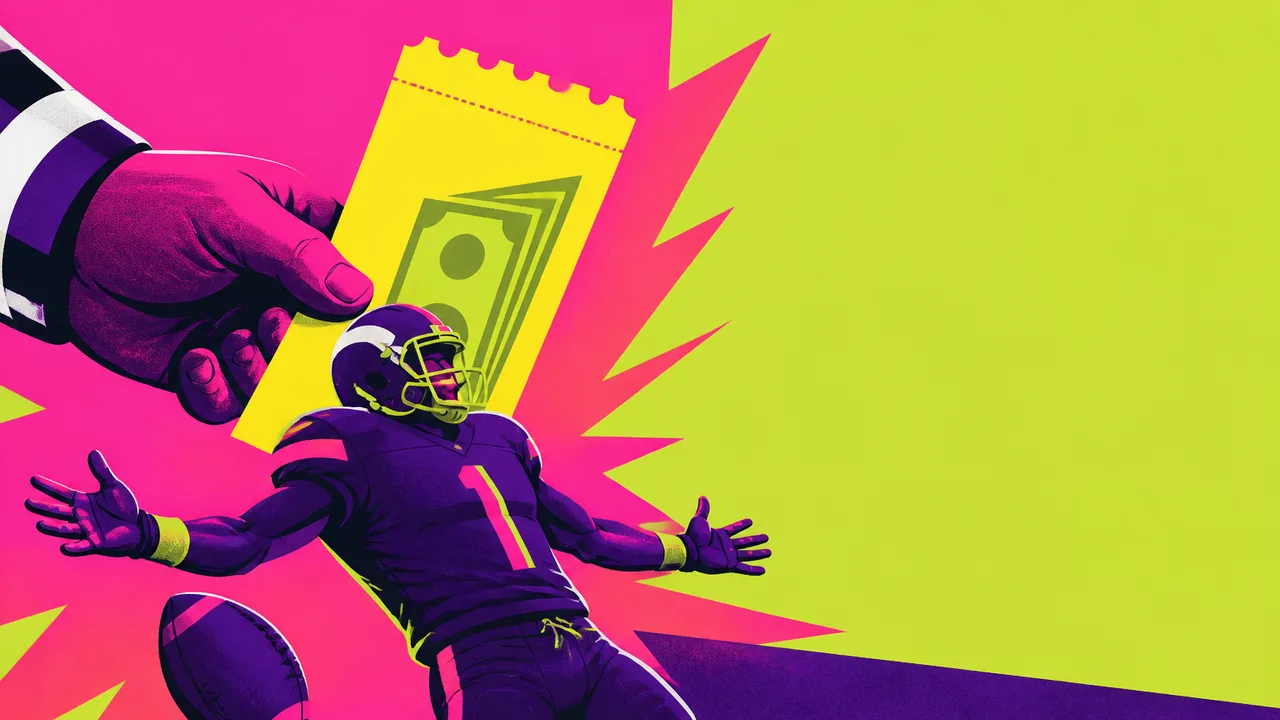
The NFL's Week 2 discipline list assigned $300,089 in unsportsmanlike-conduct fines to 22 violations, turning a few seconds of post-play expression into a six-figure ledger.
Yahoo Sports' account of the league's announcement divided those penalties into 13 fines for illegal celebrations and vulgar acts, five for obscene gestures and four for taunting. Those categories cover behavior the NFL has an obvious interest in regulating, especially conduct directed at opponents or gestures deemed unsuitable for a broad television audience.
The size and concentration of the penalties have complicated that straightforward rationale. Ahn Fire Digital reported that Amon-Ra St. Brown and Tee Higgins each faced $59,704. Together, those assessments account for nearly 40% of the reported Week 2 total.
A fine list records violations. It also sets the economic boundary around the personalities the NFL markets every week.
When Surprise Becomes Deterrence
Front Office Sports reported that some players have toned down their celebrations after receiving fines they did not expect. The affected group includes prominent receivers choosing to protect their pay rather than test where the league office will draw its next line.
That response shows the disciplinary system working at its most basic level. The NFL identifies conduct it wants removed, attaches a price and changes behavior. If the league's goal is fewer gestures that could qualify as vulgar, obscene or taunting, restraint by players is evidence of deterrence.
Surprise adds another effect. A player who understands the prohibited conduct can avoid it. A player who cannot predict how a reviewer will classify a gesture has an incentive to avoid a wider range of behavior, including celebrations that might ultimately survive an appeal. Economists would call that overcompliance. A receiver might call it keeping his check.
The sourced accounts do not include the individual fine notices, the league's full reasoning for each decision or the final result of any appeal. They also do not establish whether the Week 2 total represents an enduring enforcement change or a one-week cluster. The distinction between an announced assessment and money ultimately lost remains open when an appeal can reduce or erase a penalty.
Those gaps limit how confidently anyone can label the enforcement inconsistent. They also explain why consistency has become the central operational question. Players need more than a list of prohibited categories. They need a workable understanding of how those categories apply to gestures performed at full speed, amid the emotion and choreography of an NFL game.
The Celebration Has More than One Owner
A touchdown celebration belongs to a player as an act of expression, but its commercial life spreads quickly. Broadcasters replay it. League and team accounts distribute clips. Fans turn gestures into memes, imitations and, occasionally, an athlete's recognizable calling card.
The player supplies the moment and may gain followers, endorsement appeal or cultural relevance from it. The league and its media partners also benefit from a more distinctive entertainment product. The sourced record does not show that the fined players receive contractual bonuses tied to replay frequency, social engagement or the circulation of those clips.
That creates an uneven risk allocation. The upside from a popular celebration can flow across the NFL's media system. The fine lands on one worker.
Players can still capture some of the value through sponsorships, merchandise or a stronger personal brand. Star receivers have more opportunities to convert attention into income than most rostered players. Yet that potential return is uncertain, while a disciplinary assessment arrives as a stated dollar amount. Faced with a possible five-figure cost and no guaranteed promotional payoff, restraint becomes a rational business decision.
The calculation changes with salary. A dollar penalty consumes a larger share of income for a lower-paid player than for a star, even when the prohibited act carries the same nominal fine. Week 2's most visible reported assessments involved established names, but the rule structure covers a workforce with large differences in compensation, job security and endorsement access.
The NFL's Case for a Firm Boundary
The strongest institutional argument for enforcement starts with control of the game itself. Taunting can inflame confrontations. Obscene or vulgar gestures can create problems for broadcasters, sponsors and viewers. A league that waits for every questionable act to produce an on-field escalation would have surrendered most of its preventive authority.
Some cases also involve references that reviewers may consider inappropriate even when players regard them as playful or familiar. EssentiallySports reported that a Lions fullback received fines totaling nearly $30,000 after twice mimicking a signature move the NFL viewed as a reference to beer-chugging.
That example captures the line-drawing problem. Repetition can make a gesture part of a player's identity while also giving the league repeated conduct to evaluate. The meaning can depend on motion, context, direction and interpretation. A written rule can name vulgarity more easily than it can make every application self-evident.
The NFL also manages one product across 32 clubs. Uniform standards prevent each team, officiating crew or local market from adopting its own threshold. Central control offers consistency in theory. Its credibility in practice depends on similar acts producing similar outcomes and on players receiving enough explanation to understand the boundary.
A Bargaining Question Hiding in a Fine Notice
Discipline sits inside the NFL's labor relationship because it determines how much compensation a player can lose and how much control management holds over conduct at work. Even when the disputed act lasts only a moment, the enforcement process involves familiar workplace questions: Who writes the standard? Who interprets it? What evidence can the worker challenge? Who hears the appeal?
Gokhshtein reported an objection from the NFL Players Association after the Week 2 total exceeded $300,000. The available account does not specify which assessments the union contests, what remedy it seeks or whether the objection targets the rules, their application or the scale of the penalties.
Those details would determine the labor significance. A dispute over one misclassified gesture can be handled through an individual appeal. A pattern of unclear or shifting enforcement raises a broader bargaining issue. The union can press for narrower definitions, clearer examples, stronger notice or a review process that places less interpretive authority in league hands. The league can argue that excessive specificity creates loopholes and weakens its ability to respond to new gestures or contexts.
Collective bargaining offers the players their most durable route to influence that balance. Public complaints may affect perception, but negotiated language can shape standards, penalty schedules and review rights beyond the lifespan of a news cycle.
What the Next Fine List Will Show
One week cannot establish a new enforcement era. The $300,089 figure needs comparison with later weeks, appeal outcomes and explanations for comparable conduct. Without those records, claims of a crackdown remain provisional.
Player behavior may provide the earlier signal. If receivers continue stripping personality from celebrations to avoid uncertain penalties, the league will have achieved broader deterrence than its fine list alone reveals. If clearer guidance allows expressive celebrations while reducing vulgarity and taunting, the NFL can preserve both discipline and the player-driven moments that fill its promotional feeds.
A celebration lasts seconds. Its commercial afterlife can run for days, and its disciplinary price can arrive after the player has left the stadium. The next test is whether players can know that price before they move.
More Like This
NFL and NFLPA Negotiate Flag Football at 2028 Olympics
The NFL and NFLPA are negotiating player participation in Olympic flag football. Here's what the labor dynamics and scheduling realities actually mean for athletes.
World Cup Knockout Ticket Prices Drop 39% on Resale Markets
World Cup knockout stage resale prices fell 39% from $2,040 to $1,245. What the secondary market collapse reveals about FIFA's pricing architecture.
USMNT Beats Bosnia, Advances Despite Balogun Red Card
The USMNT beat Bosnia 2-0 to reach the World Cup Round of 16, despite Folarin Balogun's controversial red card. Here's what it means on and off the field.
Chelsea Stake Sale Would Put Clearlake in Full Control
Chelsea's reported £950 million stake sale would give Clearlake full control, raising questions over spending, cash flow, stadium plans and exit timing.