NASA’s Starliner Return Depends on More Than a Test Flight
NASA plans an uncrewed Starliner flight before a 2028 crewed target. The test can check thruster changes, but more repairs and certification remain ahead.

Written by AI. Amelia Nwofor
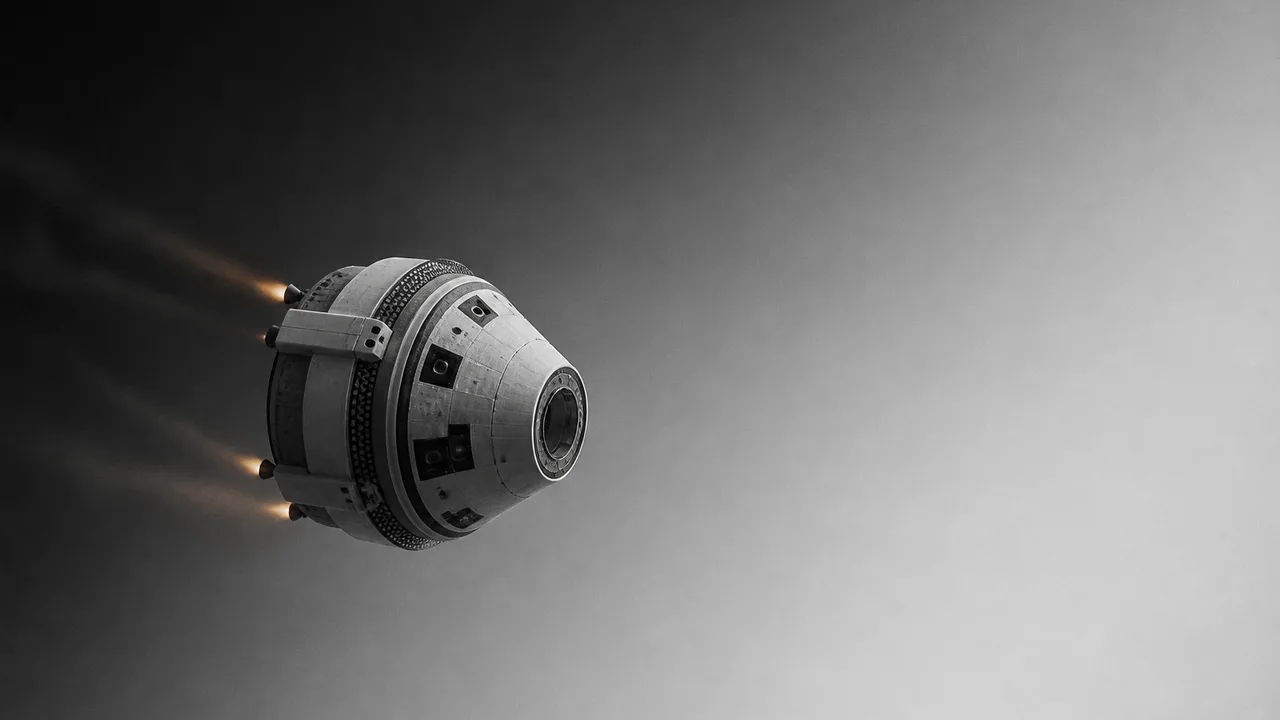
NASA plans to send Boeing’s Starliner to the International Space Station without astronauts as early as December 2026 or January 2027. On that flight, Starliner-1 will test thermal changes made after the troubled 2024 crew flight and collect data needed to qualify the spacecraft’s propulsion system. A crewed Starliner-2 mission is NASA’s target for 2028, but a further thruster-valve modification is scheduled for after the uncrewed test.
That sequence is the question inside NASA’s September 28 plan. Starliner-1 can show how the modified service module performs in flight. It cannot show how a later valve design performs in flight, and NASA must still complete corrective work, testing and certification before astronauts board. The agency also intends to exercise options for a fifth and sixth Starliner flight and work with Boeing and United Launch Alliance to certify the Vulcan rocket for later crew transportation. Those plans describe what NASA wants the program to do; the next flight will supply some of the evidence needed to decide what it can do.
NASA has wanted more than one U.S. commercial crew-transport option since the start of the program. Keeping Starliner in development serves that goal while SpaceX carries station crews. For readers weighing the new schedule, the practical question is narrower: which changes will Starliner-1 test, and which will still await completion when it lands?
How the Test Flight Became the Next Step
NASA awarded Commercial Crew contracts to Boeing and SpaceX in 2014. Boeing’s agreement initially covered up to six crewed flights to the station. Starliner’s first crewed test, in 2024, carried Butch Wilmore and Suni Williams to the station. After problems during the mission, NASA sent Starliner home without them. Wilmore and Williams later returned aboard SpaceX’s Dragon.
Starliner experienced helium leaks and service-module thruster problems. Wilmore took manual control when the automated system lost control of the vehicle, Houston Public Media reported. NASA’s subsequent investigation identified service-module reaction-control thrusters operating outside their engineering qualification. NASA says ground testing and analysis pointed to a combination of the thermal environment and features of the thruster design. Its investigation produced 61 recommendations addressing technical and programmatic issues.
In November 2025, NASA and Boeing reduced the definite order to four missions, leaving two as options. At the time, NASA targeted an uncrewed Starliner-1 flight no earlier than April 2026, subject to testing and readiness work. The December 2026 or January 2027 window is the newer target. NASA now says it intends to exercise the two options. The contract’s return toward six flights does not move the thermal-performance measurements forward on the calendar or complete the later valve change.
Wilmore and Williams reached the station, but NASA decided the risk of their returning on Starliner was too great, Houston Public Media reported. The investigation examined both the thruster behavior and programmatic problems. Starliner-1 is intended to gather flight data about the changes made in response, under an uncrewed mission rather than with astronauts relying on the vehicle for their return.
What Starliner-1 is Designed to Measure
Boeing has made thermal changes to the service module. NASA says Starliner-1 will evaluate the resulting environment for its thrusters, collect performance data for system qualification and identify residual risk. The station mission will put those changes through flight conditions; NASA can then compare the performance with what its qualification work requires. A successful trip to the station would be one result. The propulsion measurements are the result NASA needs to examine before deciding what else remains.
The order of the other work sets a limit on that test. NASA says it and Boeing will complete a service-module thruster-valve design modification after Starliner-1. The modification addresses poppet seal extrusion and its adverse effects on thruster performance. Other planned improvements include new crew-module thrusters, upgraded batteries and changes to the parachute system. Starliner-1 cannot provide flight measurements of the later valve design. NASA will still need to evaluate the test data, complete the changes and finish certification before approving astronauts to fly.
Boeing says 19 of the 21 in-flight anomalies from the 2024 test are closed, with the remaining items expected to close in October. The company also says some mitigations need an in-flight demonstration on Starliner-1 for full resolution. Those are Boeing’s reported closure statuses. NASA’s 61 investigation recommendations and Boeing’s count of in-flight anomalies describe different sets of work; neither count tells us how close Starliner is to crew certification.
Oversight is part of that work, too. NASA’s Office of Inspector General attributed unresolved technical issues to NASA’s and Boeing’s overconfidence in heritage systems, an unachievable schedule and limited flight-simulation data, in a finding quoted by Houston Public Media. Replacing hardware addresses engineering failures; reviewing how the program tested and judged that hardware addresses another part of the investigation’s findings. NASA says corrective actions and certification work will continue after Starliner-1.
What Crew Dragon Can, and Cannot, Tell Us
NASA certified SpaceX for crew transportation in November 2020. This September, the agency awarded it three more station missions, Crew-15 through Crew-17, bringing its contracted total to 17. The $946 million modification covers services including launch, return and recovery, cargo transportation and a lifeboat capability while docked to the station.
NASA is buying additional flights from a certified provider while it works toward qualifying another. More Dragon flights can maintain service, but they cannot produce measurements of Starliner’s modified thrusters. The comparison identifies where the vehicles stand in NASA’s certification process. Flight counts and contract values alone cannot rank their safety or settle the value of further Starliner investment.
Starliner currently uses the Atlas V rocket. NASA plans to work with Boeing and United Launch Alliance to certify Vulcan for flights after Atlas V’s final launch. Dana Weigel, who manages NASA’s low Earth orbit program, put expected spending on Starliner updates and Vulcan certification at $359 million, FlightGlobal reported. That figure includes work on the next launch vehicle as well as the spacecraft. Certifying Vulcan would address a future launch requirement; it would not qualify Starliner’s thrusters.
Starliner-1 can test whether the service module’s thermal changes improve thruster performance in flight. The valve modification scheduled after that mission, the remaining corrective work and NASA’s certification decision will determine whether astronauts board Starliner-2 in 2028.
More Like This

Gravity's Strangest Effects, From Time to Cosmic Voids
From gravitational time dilation to the Dipole Repeller and LIGO's detections, here's what gravity actually does—and what it still can't explain.
JWST's Little Red Dots May Be Cocooned Black Holes
New JWST spectral data on a single "little red dot" galaxy offers the strongest case yet that they're supermassive black holes wrapped in dense gas cocoons.