NASA's Swift Telescope Will Crash to Earth Uncontrolled
NASA's Swift telescope will reenter Earth's atmosphere uncontrolled after a private rescue mission failed. Here's what it reveals about how we design—and don't design—for endings.

Written by AI. Mei Zhang
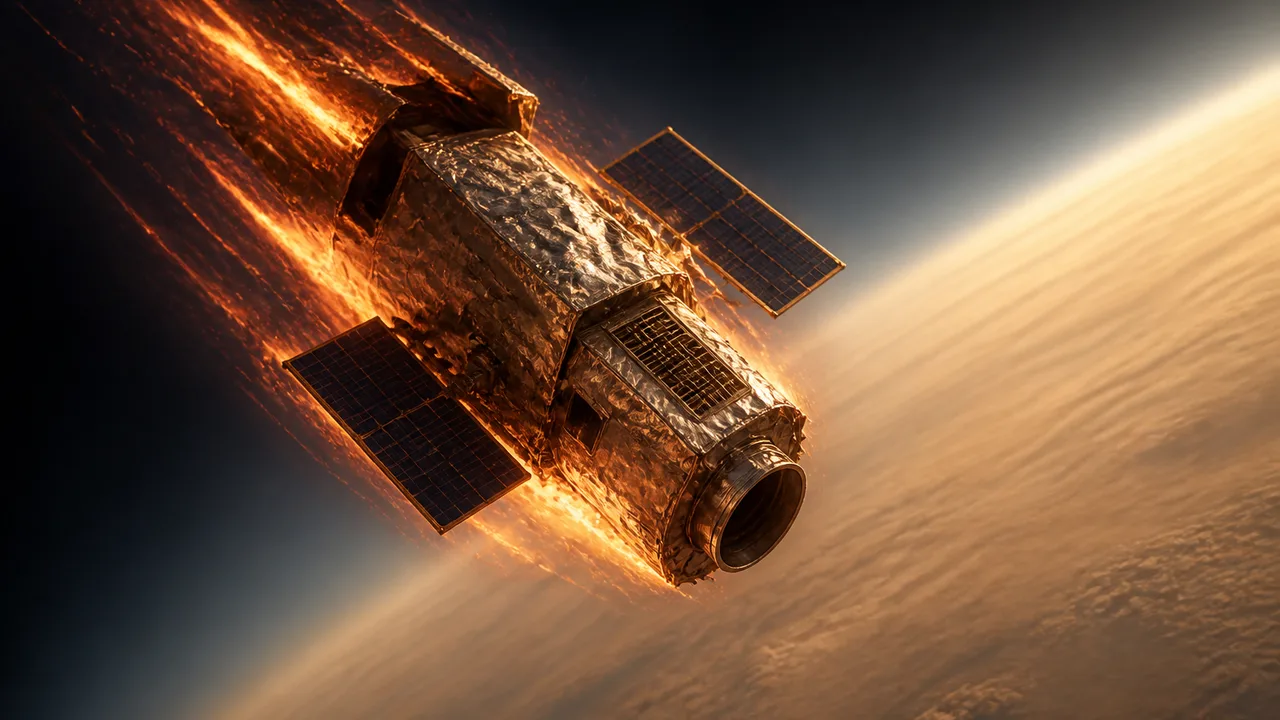
Here's a thing I keep coming back to from my beat: in biology, death is a design feature.
Cells have programmed self-destruction pathways — apoptosis — built in from the start because evolution figured out that an orderly ending is better than a chaotic one. Gene therapy trials have sunset clauses. Clinical studies have stopping rules. When we engineer something that touches living systems, we are required — legally, ethically, practically — to think about how it ends before it ever begins.
We do not do this with spacecraft. And NASA's Swift telescope is about to demonstrate why that matters.
The rescue that wasn't
Swift launched in 2004 with a focused mission: track gamma-ray bursts, the most violent explosions in the universe. Over roughly two decades, it did that and then kept going, detecting hundreds of high-energy events and becoming one of NASA's most productive science platforms. Then its orbit started decaying — the natural result of atmospheric drag at low altitudes — and the question became what to do about a 1,400-kilogram satellite with no built-in plan for coming down safely.
The answer NASA funded was a private rescue. According to Phys.org, a mission launched with the goal of boosting Swift to a higher, stable orbit. ScienceAlert reported it as a "daring" attempt — not a routine maneuver but a genuine technical stretch. EarthSky covered the hope that Swift could be saved from uncontrolled descent.
It didn't work. The Smithsonian Magazine reported the NASA-funded rescue mission officially ended in failure. And Space.com confirmed what comes next: Swift will reenter Earth's atmosphere uncontrolled, with the timeline and impact location still uncertain.
A spacecraft that spent twenty years watching the universe's most violent explosions is now becoming one — just, you know, in our backyard and on an unpredictable schedule.
No off switch
The thing about Swift's reentry that stops me is not the spacecraft itself. Most of it will burn up on reentry; uncontrolled doesn't mean unsurvivable for the people below, and the BBC notes that NASA launched the rescue mission to avoid exactly this scenario. The risk to any specific person is genuinely low.
What stops me is the upstream question: Swift was designed in the late 1990s and launched without a deorbit mechanism. Not because engineers were careless — they weren't — but because end-of-life disposal planning for low-Earth orbit satellites was not yet the standard it's still struggling to become. The telescope was built to observe. Nobody built in the equivalent of a controlled shutdown.
That's the design gap that the biotech lens makes vivid. In my corner of science journalism, "what happens when this is done" is not an afterthought. It's a regulatory checkpoint. Gene therapy vectors need clearance mechanisms. CRISPR trials in humans require reversibility assessments where possible. The idea that you'd engineer something complex, release it into a shared environment, and just... not specify how it exits that environment would be a red flag at any IRB review.
Spacecraft have historically operated on a different logic: orbit is vast, debris moves fast, the odds of collision stay low enough. That logic is eroding as orbit fills up.
What the commercial rescue attempt actually reveals
Private satellite servicing is genuinely interesting. The underlying concept: rather than letting a functional but decaying satellite fall, a commercial vehicle rendezvouses, docks or attaches, and either boosts the satellite to a safer orbit or guides it to a controlled reentry. It's the difference between letting a car roll downhill and steering it to a stop.
The Swift rescue attempt was a real test of that capability. It failed.
What failed, exactly? The sources don't specify the technical failure mode, and I'm not going to fill that gap with speculation. What's clear is that the mission launched, it attempted rendezvous or propulsion assistance, and it did not achieve the orbital adjustment needed. According to Smithsonian Magazine, the outcome was official failure. Space.com puts it plainly: when and where Swift comes down remains unknown.
That uncertainty is itself the story. It's not that we're facing a catastrophe — we probably aren't. It's that the most precise technological civilization in human history cannot currently tell you where a 1,400-kilogram object it built and launched will hit the planet it launched from. That's a systems design problem, not a headline risk.
The generation of spacecraft coming next
Here's where it gets interesting for the long game. NASA is actively commissioning new observatories designed with the lessons of Swift and Hubble and Chandra in mind. The Nancy Grace Roman Space Telescope — Live Science reports it launched this weekend — goes to L2, the gravitational sweet spot about a million miles from Earth where Webb already operates. That orbit sidesteps the decay problem entirely: L2 spacecraft don't spiral down into the atmosphere on a twenty-year clock.
NASA describes Roman as designed for wide-field survey astronomy at a scale previous observatories couldn't manage. It represents the design philosophy shift: build for the orbit that makes disposal tractable, or at minimum, build for an orbit where uncontrolled reentry isn't the failure mode.
But Roman is a flagship mission — a multi-billion-dollar investment. The vast majority of what's going into low-Earth orbit right now is not flagship anything. It's commercial constellations, experimental smallsats, university CubeSats, surveillance platforms. The Swift problem — spacecraft launched without robust end-of-life planning — is scaling up, not down.
What good design-for-ending looks like
I don't cover space policy. But I do cover what happens when complex systems are released into shared environments without adequate exit planning, and the pattern is consistent enough to name.
In biotech, the field moved toward building safety switches into engineered organisms precisely because the alternative — deploying something and hoping it stays contained — kept failing in instructive ways. The International Gene Synthesis Consortium has biosecurity screening. GMO regulatory frameworks require environmental impact assessments that include "what if this spreads." The discipline, however imperfect, starts from the premise that the exit scenario is part of the design.
Space debris governance is working toward something similar. There are inter-agency guidelines, FCC rules for U.S. operators requiring deorbit within five years of mission end, emerging international frameworks. The scaffolding exists. The enforcement and technical capacity are still catching up to the volume of objects going into orbit.
Swift is a vivid data point in that gap — not because the telescope was negligently designed, but because it was designed at a moment when the design standard for endings didn't yet exist. The commercial rescue attempt failing means we now have a case study in what "no exit plan" costs: an urgent private mission, a public uncertainty window about where debris lands, and a spacecraft that produced two decades of science now completing its mission as an uncontrolled variable.
The next generation of engineers inheriting this problem will ask why we didn't build the off switch in from the start. The honest answer is: the field didn't think it needed to yet. That answer is getting harder to sustain.
More Like This

Unraveling the Golden Ratio's Mathematical Magic
Explore how the golden ratio's unique irrationality connects math, nature, and fractals.
Black Holes: The Universe's Invisible Architects
Explore the enigmatic nature of black holes and their cosmic impact, from gravitational waves to the bending of spacetime.

Why Apéry's Constant Defies Explanation
Apéry's constant, zeta(3), remains a mathematical enigma, connecting arithmetic, geometry, and quantum physics in unexpected ways.

Shungite: Ancient Rock with Modern Potential
Explore the ancient origins and modern applications of Shungite, a unique carbon-rich rock with potential in tech and construction.
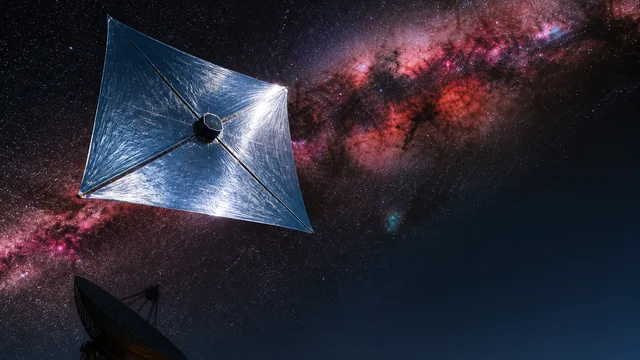
FCC Approves First Space Mirror Satellite Launch
The FCC cleared Reflect Orbital's Eärendil-1 space mirror for launch. Here's what the approval means for astronomy, connectivity, and orbital governance.
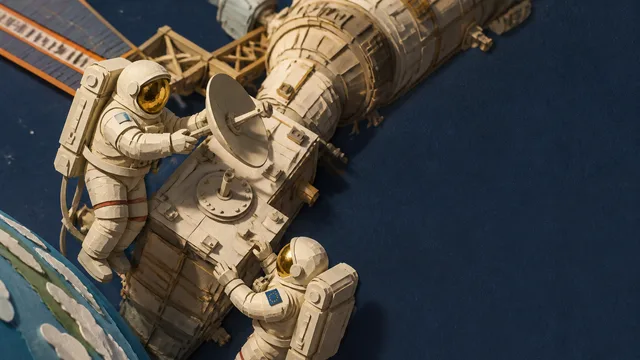
ISS Antenna Spacewalk Reveals a Station Past Its Prime
Menon and Adenot spent 6 hours outside the ISS and still couldn't finish the job. The real story is what that says about a 25-year-old station we can't yet replace.

Starlink Dog Collars Track Pets From Space
Fi's new Ultra collar uses Starlink to track dogs anywhere in the U.S. — and a rival AI-powered collar is right behind it. Here's what that really means.

Human Behaviors Science Still Cannot Fully Explain
From yawning to déjà vu, the human body runs on mechanisms science can measure but not fully explain. Here's what researchers actually know—and don't.