Mobile Payments Are Growing. Cash Refuses to Die.
Mobile payments are surging globally, but cash is declining more slowly than predicted. Here's what the data actually tells us about how people pay.

Written by AI. Carmen Rodriguez

The payments industry has a favorite story it tells about itself: cash is dying, digital is winning, and anyone still pulling out a wallet full of notes is a quaint relic of a pre-smartphone world. The data is more complicated than that story allows.
Mobile payments are genuinely surging. That part is not in dispute. But the other half of the ledger—the speed at which cash is disappearing—keeps refusing to cooperate with the narrative. According to BBC News, while cash use continues to decline, the rate of that decline is slowing, and notes and coins will remain an important payment option for many people a decade from now. That's not a prediction from cash nostalgists. That's the data.
So what's actually happening, and what does it mean for businesses, consumers, and policymakers trying to make sense of a payments landscape that looks less like a clean transition and more like a prolonged negotiation?
The Digital Growth Story Is Real
Start with what's genuinely true: the shift toward mobile and digital payments over the past decade-plus has been one of the most significant behavioral changes in consumer finance. The Financial Brand notes that significant change has accumulated over the ten years of the Worldpay Global Payments Report, with much of it traceable to a single inflection point—the introduction of the iPhone in 2007 and Android technology in 2008. Smartphones didn't just change how people communicate; they changed how people transact.
TechRepublic captures the current state of play: payment trends in 2024 and beyond are being shaped by the rise of digital wallets, contactless payments, and cryptocurrency, driven by consumer demand for speed and convenience. That's not marketing language masquerading as analysis—speed and convenience are empirically measurable drivers of payment adoption, and the data consistently shows consumers reach for the faster option when they trust it.
One area of particular growth worth watching: peer-to-peer payments. Judopay tracks an expected surge in P2P mobile payment volume, with apps enabling users to split bills, pay friends, or transfer money to family members with just a few taps. This isn't the same as retail point-of-sale adoption—P2P payments occupy a different behavioral niche, one where the social friction of asking someone to pay you back is dissolved by the technology. The growth there is accelerating precisely because it solves a genuinely irritating human problem.
The Cash Toehold Is Also Real
Here's where it gets interesting: the death-of-cash story has been getting written for about fifteen years, and cash keeps not dying on schedule.
The Financial Brand describes cash as maintaining "a stubborn toehold" globally even as digital wallets increasingly dominate. That word—stubborn—does real analytical work. It signals that cash persistence isn't a temporary lag in adoption curves. It's a durable behavioral pattern with structural causes.
What are those causes? The BBC reporting points toward a few: security concerns, digital access gaps, and straightforward consumer preference for the tangibility and privacy that cash provides. These aren't irrational holdouts. In communities where internet access is unreliable, where smartphone ownership is cost-prohibitive, or where trust in digital financial infrastructure has been eroded by data breaches and platform outages, cash isn't a backup option—it's the primary one.
The 2025 Diary of Consumer Payment Choice, published by Federal Reserve Financial Services, documents a mixed picture: the average number of monthly payments per consumer has increased, but that growth is spread across multiple payment methods rather than concentrating exclusively in digital. People aren't choosing one lane. They're using several, depending on context, trust, and access.
That's a more textured finding than the "cash is dying" frame can accommodate.
Why the Slowing Decline Matters
The pace of cash decline is not just a curiosity for payments researchers. It carries real-world stakes for three groups in particular.
For consumers: A faster-than-expected shift away from cash acceptance—driven by businesses optimizing for digital efficiency—leaves cash-dependent populations behind. Older adults, lower-income households, people in rural areas with spotty connectivity, undocumented individuals who rely on cash for safety reasons—these are not edge cases. They represent a meaningful slice of the population, and policies or business practices that assume universal digital access create real exclusion.
For businesses: The operational calculus is genuinely difficult. Cash handling has real costs—counting, securing, depositing, the labor involved. Digital payments have their own costs—processing fees, fraud exposure, infrastructure investment. Businesses navigating this duality are not doing so in a context of clear signals. The BBC data says cash will still matter in ten years. That's a long planning horizon to write off.
For policymakers: Several countries have already moved to legally protect consumers' right to pay in cash. The UK's Financial Conduct Authority has been explicit about access to cash as a policy priority, not just a market outcome. The underlying question—whether a payments system can be allowed to evolve in ways that exclude portions of the population—is not one markets are well-positioned to answer on their own.
The Infrastructure Gap Nobody Likes Talking About
There's a version of the mobile payments growth story that centers exclusively on adoption among already-connected, already-banked consumers, and extrapolates from there to the whole population. That version is misleading.
TechRepublic acknowledges that payments trends are shaped not just by technology but by "the state of the economy"—a phrase that, unpacked, means the distributional realities of who can access and afford participation in digital financial systems. A $1,000 smartphone is a prerequisite for mobile wallet adoption. Reliable data service is a prerequisite. A bank account or debit card is a prerequisite. Each of those prerequisites has a cost, and not everyone can meet it.
This is not an argument against mobile payments. It's an argument for reading the growth numbers with a clear eye about what population they describe.
What the Transition Actually Looks Like
The frame that makes most sense of the available data isn't "digital wins, cash loses." It's a two-speed transition: rapid adoption among those with full access to digital financial infrastructure, and durable persistence of cash among those without it—or among those who, with full access, still choose it for specific use cases.
P2P payments surge ahead. Contactless tap-to-pay becomes default at retail. And cash remains the method of choice for the small transaction, the informal economy, the private purchase, the moment when someone doesn't want a record.
These aren't competing trends. They're coexisting ones.
BBC News reports the data plainly: cash use continues to decline, but the fall is slowing. A payments system that plans only for the former while ignoring the latter is optimizing for a future that isn't evenly distributed—and probably won't be, for longer than the industry wants to admit.
The more honest question for businesses and policymakers alike isn't when cash finally disappears. It's for whom the transition has already happened, and what obligations follow from the gap.
More Like This
Business Rules 2026: Impact on Labor and AI
Explore how emerging business rules and AI technology reshape labor dynamics and worker dignity by 2026.

UK Banks Are Failing Vulnerable Customers
UK regulators say major banks are failing homeless and financially distressed customers. The fintech "inclusion" pitch may be making things worse, not better.
Financial Crises Follow Patterns — But Not for Everyone
Kuran Francis maps four recurring patterns behind every major financial crisis. The framework is solid. What it leaves out is the story of who pays when the system breaks.

Wall Street Knew the Crash Was Coming. Saying So Got You Fired.
Jeremy Grantham's famous poll revealed 398 analysts knew the dot-com crash was guaranteed. A 2003 study shows why none of them said so publicly: accuracy cost careers.

Dubai's Crisis Has a Worker Problem No One's Covering
Dubai's economic model was built on migrant labor with almost no rights. Now, with airstrikes and a blockaded strait, those workers face the worst of the fallout.
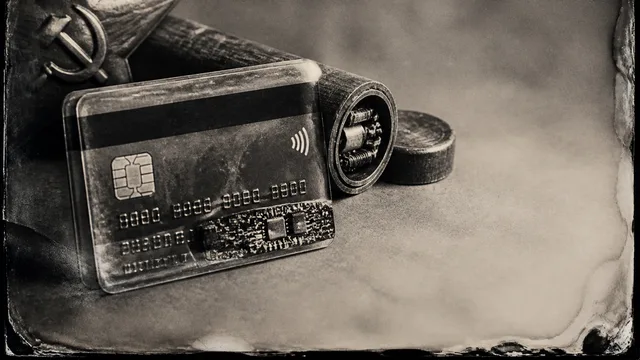
Bank Cards Are Built From Cold War Spy Tech
From CIA security passes to a Soviet bug hidden in a wooden seal, the technology inside your bank card has a wilder history than you'd expect.

World Cup Jobs Boom That Never Came for US Workers
Goldman Sachs predicted the World Cup would add 40,000 jobs in June. Instead, hospitality shed 55,000. Here's what the miss reveals about who absorbs forecast risk.

US AI Dominance Is Slipping. Workers Will Feel It First.
China is closing the AI gap with the US. The geopolitical story is getting plenty of coverage. The labor story beneath it isn't. Here's what's missing.