Meta Muse Glimmer 30B: Local AI Agent or Loss Leader?
Meta's Muse Glimmer 30B runs on a single 24GB GPU under Apache 2.0. Is it the best local coding agent, or a calculated free sample attached to a price list?

Written by AI. Marcus Chen-Ramirez
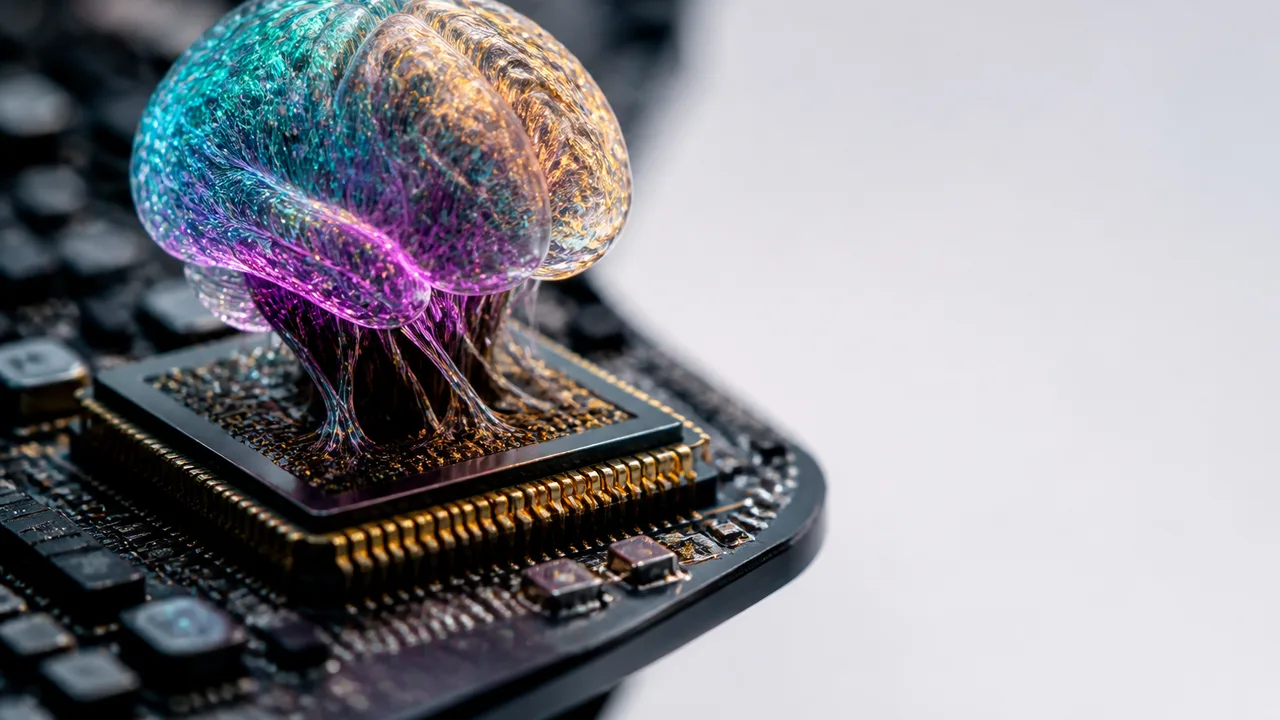
Photo: AI. Pippa Whitfield
30 billion parameters. A file that fits on a thumb drive. An agent loop that finishes the job with a network cable unplugged.
On August 10th, Meta put Muse Glimmer's weights on Hugging Face for anyone to download and keep — Apache 2.0, no usage tier, no acceptable use annex, no 700-million-user clause. Just the weights. It was the company's first open-weight model release in 16 months, and it arrived wrapped in a 6,500-word Zuckerberg essay called The Future Is For Everyone.
That framing deserves some scrutiny. So does the model.
What It Actually Is
Glimmer is a distillate. The enormous closed model — Muse Spark, which Meta will not hand you — is the teacher. Glimmer is trained to reproduce Spark's output distribution rather than to learn from raw text alone. Meta ran this in three stages: logit distillation from Spark during pre-training, mid-training on longer-context agent-heavy data with reasoning traces, then post-training that mixes supervised fine-tuning, policy distillation, and reinforcement learning across coding and agentic tasks.
The answer to "what do you give away after spending $140 billion on the thing you're keeping?" turns out to be: the echo of it.
What came out is a dense causal transformer — 29.6 billion parameters, 52 layers, every parameter firing on every token. The architectural decisions are where it gets interesting for anyone running consumer hardware. Thirty-nine of the 52 layers operate with a 2,048-token sliding window. Only 13 layers maintain a full-length cache. Stack that on top of 16:1 grouped-query attention — 32 query heads sharing just two key-value heads — and the memory that normally explodes with context length barely moves. One developer, posting as A Lock, measured 130,000 tokens of context sitting inside 19.34 GB of VRAM on a single RTX 4090, with 4.5 GB still free.
That is a genuine engineering achievement. The model was designed backwards from a 24GB card, and the seams don't show.
Speed is handled by a drafter called DFlash — a block-diffusion model, not an autoregressive one, out of an ICML 2026 paper. It proposes a full 16-token block in one forward pass. On an RTX 5090, that takes greedy decoding from 74.9 tokens per second to 233.4. SGLang shipped day-zero support and measured 1,452 tokens per second of total output on the same card. Ollama had it running the same morning. The infrastructure caught up essentially instantaneously, which is itself a signal about how much the open-source ecosystem had been waiting for something like this.
Unsloth's 4-bit build clocks in at 15.9 GB on disk and wants about 17 in memory. The 2-bit build is 10.7 GB and, according to Unsloth's own figures, made over 100 tool calls inside 14 GB of RAM. That last number is the quant-maker's number on the quant-maker's build — weight it accordingly — but it maps to what others are reporting.
The $140 Billion Question
To understand why Meta gave this away, you need to understand what it cost them to stop giving things away.
Llama 4 landed in April 2025. Scout and Maverick shipped; Behemoth never did, and the reception was poor. Two months later, Meta paid $14.3 billion for 49% of Scale AI. Alexandr Wang became Meta's Chief AI Officer and took over the new Superintelligence Labs.
Then came the poaching. According to Reuters, Sam Altman said on the record that Meta was offering $100 million signing bonuses to OpenAI employees. Wired reported packages of up to $300 million over four years, made more than ten separate times. One reported offer — to researcher Andrew Tulloch, per NewsNation — was said to be in the range of $1.5 billion; he ultimately joined Meta after initially declining.
Infrastructure followed. Meta is building Prometheus, a 1-gigawatt AI data center coming online this year, and Hyperion, designed to scale to 5 gigawatts across several phases. Meta's Q2 2026 earnings told the rest of the story: $60.8 billion in revenue, up 28%, but capital spending guidance raised again to between $135 and $145 billion for the year. Free cash flow came in at $784 million — down from $8.5 billion a year earlier. Meta is converting nearly everything it earns into GPUs and buildings.
A company spending at that rate protects what it builds. In April 2026, Meta shipped Muse Spark — closed weights, API only — the first proprietary frontier model in the company's history. The Muse Code terminal agent arrived shortly after, with a million-token context window, persistent background agents, and an append-only event log so a crashed run replays exactly. Meta priced Spark 1.2 at $1.25 per million input tokens and $4.25 per million out — then published a second tier at 10 cents in and 20 cents out, on the condition that Meta may train on whatever you send.
That contributor tier is the context Glimmer lives inside. How cheap does a model have to be before you hand over your codebase? A free download is the sharpest possible answer to that question — and it competes directly against the discount you get for surrendering your code to a closed system.
Where It Wins, Where It Doesn't
The model to benchmark against is Qwen 3.6 27B, which Alibaba shipped in April 2026, also Apache 2.0, also dense, 27 billion parameters. It has been the default single-GPU coding model since then.
On Meta's own comparison table, Glimmer leads on the agentic rows: MCP Atlas 75.5 to 62.5, SWE-Bench Pro 51.2 to 50.2. The same table, one row down, hands Qwen the coding win: SWE-Bench Verified, Qwen 77.2 to Glimmer 76.0. On OS World Verified — the benchmark that measures driving a desktop — it's not close: Qwen 75.6, Glimmer 65.9.
Meta publishing the rows it loses is worth noticing. It's more than most vendors do.
The independent numbers are harder. On the day of launch, Artificial Analysis ran everything through their own harness. Their intelligence index: Qwen 3.6 27B at 38, Glimmer at 35. Their agentic Elo measure — scored inside a real agent harness — put Qwen at 1,141, Glimmer at 953. The human baseline in that test is 1,000, which means Glimmer still sits below a person doing the same knowledge work. Terminal-Bench 2.1 lands the same way independently: 61 to 52.
The hardest number for Meta is hallucination. Artificial Analysis measured Glimmer making things up at an 82% rate on their single-shot retrieval test, for an index of minus 33. Qwen 3.6 27B sits at 49% on the same test, the same day, the same harness. That's not a minor gap. It determines how you're supposed to use the thing.
As Cloud Codes puts it in their breakdown: "Glimmer is not the smarter model in its class. It is the more reliable one inside a tool loop, which is what Meta trained it for."
That holds up across two separate harnesses. On Artificial Analysis's banking agent test — tool use specifically — Glimmer scored 24% against Qwen 3.6 27B's 17% and Gemini 3.5 Flash's 18%. Two owners, two harnesses, one shape. And a developer posting as AJ ran three JavaScript tasks through a 3090 and got them one-shot, including tasks Qwen 3.6 27B at the same 4-bit quant couldn't finish.
A model that hallucinates at 82% is not something you ask open-ended questions. It's something you point at tools and files that can tell it when it's wrong. The 82% makes the tool-loop framing mandatory, not optional — and that's a genuine design constraint you inherit the moment you run it locally.
Which brings up the other side of local: no server-side patch, no moderation layer between the model and your shell, no availability guarantee. That's fine until it isn't, and you're the one who has to notice.
The License Is the Longer Story
Whatever the benchmarks settle into over the next few weeks, the Apache 2.0 license will still be there. No user cap, no acceptable use annex — terms the Llama license carried and Glimmer's does not. Google shipped Gemma 4 under Apache 2.0 back in April. Meta arriving late still counts, because Meta arriving at all was genuinely in doubt after Muse Spark went closed.
American open weights had gone thin. The Apache 2.0 release matters as a signal about what Meta is willing to let developers keep — permanently, without renegotiation — even as the frontier models stay behind a paywall.
Zuckerberg and Wang have both said the weights for Muse Spark 1.2 are coming "soon." An actual American frontier model in public. Cloud Codes frames the test cleanly: if those weights aren't up by December 31st, Glimmer was a launch-week gesture.
"Was Glimmer a gift," the video asks, "or the free sample stapled to a price list?"
The honest answer is that both can be true simultaneously — and in this industry, they usually are.
More Like This
How Spark-X2.5 Fits a Million Tokens Into a 4B Model
Spark-X2.5 offers a million-token context in a 4B local model, but its KV cache, runtime support, speed and quantization choices set practical limits.

Run an Uncensored AI Locally: What It Means
Uncensored local AI models are going mainstream. Here's what's actually happening—the tech, the tradeoffs, and the questions nobody's quite answering.
OpenAI's Codex Is Growing Up Fast—And Getting Weird
OpenAI's latest Codex updates add browser control, AI-reviewed approvals, and... animated pets? A look at where AI coding tools are actually heading.

Meta Muse Glimmer 30B Runs in 14GB RAM via Unsloth
Meta's 30B coding agent fits in 14GB RAM thanks to Unsloth's dynamic 2-bit quantization. Here's what that buys you—and what it costs.
Jack Dorsey Cut 40% of Block's Staff. Now What?
Block's massive layoffs sparked debate: Is AI really transforming work, or are CEOs just laundering bad management decisions? The answer matters.

Needle 2 Is a 45M Parameter Model Built for Edge Devices
Needle 2 runs on 28MB of RAM as a 14MB binary. Here's what it actually does, what it can't do, and why that distinction matters.
Google's Open Knowledge Format for AI Agents
Google's Open Knowledge Format promises to fix how AI agents navigate knowledge bases. Here's what it actually does, what it doesn't, and why the structure matters more than the tool.

AI Detects Hidden Seismic Patterns Before Earthquakes
A new study from GFZ Helmholtz used unsupervised AI to find behavioral patterns in small earthquakes before major ones—a step toward smarter forecasting.