Kadesh Treaty Fragment Reveals Rules for Refugees
A newly identified Kadesh Treaty fragment reveals ancient rules for fugitives, punishment and peace between Egypt and the Hittite Empire after a long war.

Written by AI. Helen Papadopoulos
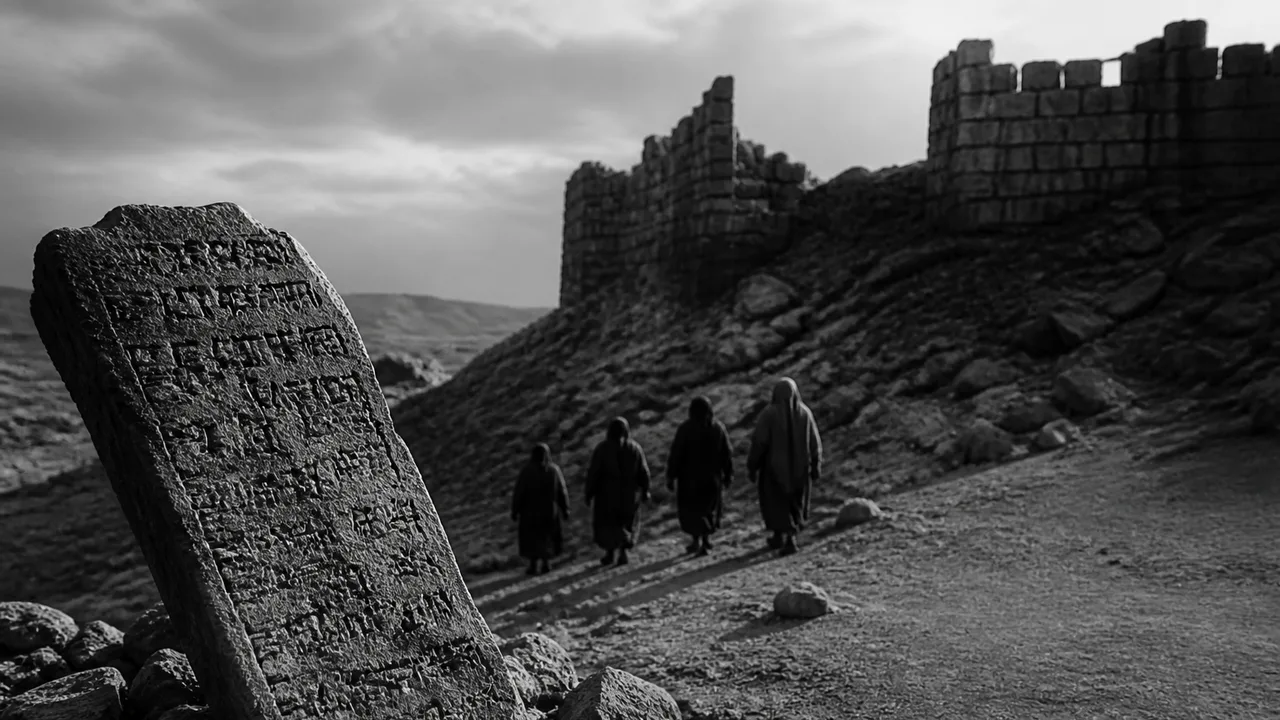
Archaeologists at Hattusha have identified a cuneiform fragment containing part of the Egyptian-Hittite peace treaty, including clauses about people who fled from one kingdom to the other.
Turkey’s Ministry of Culture and Tourism announced the identification on September 21. The fragment was excavated at Büyükkale, the royal citadel of the Hittite capital in north-central Turkey, and studied for about a year before the announcement. Part of its text concerns the treatment of refugees or fugitives.
That subject gives the discovery its force. The Egyptian-Hittite agreement, often called the Treaty of Kadesh, has become a handsome emblem of peace. A copper replica hangs at the United Nations in New York, where antiquity lends institutional decor the gravitas that modern committee rooms struggle to manufacture. The new fragment directs attention away from the grandeur of eternal friendship and toward a harder question: what did peace require rulers to do with actual people who crossed their borders?
Peace, Followed Down to the Household
The fragment preserves portions of articles 12 through 20, according to the account of its identification. Those articles address people who fled Egypt for Hatti or Hatti for Egypt, along with the preservation of their homes.
The arrangement required fugitives to be returned. Yet a translation supplied by the Turkish ministry also forbids their mutilation and collective punishment: “Their tongue and their eyes are not to be pulled out; their ears and their feet are not to be cut off; their houses with their wives and their children are not to be destroyed.”
Modern readers should resist turning that clause into a Bronze Age refugee convention. The agreement required return, whereas contemporary asylum law can protect people from being sent back to persecution. Its concern was an accommodation between two monarchs, not a universal right held by individuals against the state. Even the categories remain uncertain. The available reports do not establish whether these fugitives were soldiers, political opponents, laborers, members of elite households or some combination of them.
Still, the return clause and the ban on mutilation belong to the same political bargain. Each king promised to surrender people wanted by the other, while each also accepted limits on what could happen after their return. Peace therefore reached beyond armies and territory into bodies, families and houses. A diplomatic settlement became credible through rules governing the human consequences of rivalry.
That is an interpretation of the clauses rather than a claim made by the fragment’s discoverers. It follows from their pairing: return served royal authority, while restraint narrowed the violence that authority could inflict. A complete scholarly publication of the fragment may refine its wording and context. For now, public accounts depend heavily on the ministry’s identification and translation.
Kadesh is the Famous Battle the Treaty Never Names
The familiar title encourages a misleadingly tidy sequence: battle, treaty, peace. The Battle of Kadesh, fought around 1274 BCE between Ramesses II and the Hittite king Muwatalli II, ended without a decisive victor. The surviving agreement came roughly 15 or 16 years later and involved Muwatalli’s successor, Hattusili III. The treaty itself does not mention Kadesh.
Egyptologist Camilla Di Biase-Dyson has suggested that the battlefield stalemate was probably followed by a smaller agreement that has not survived. As Smithsonian’s account of her interpretation explains, Hattusili later pursued the more comprehensive alliance partly to consolidate his own position.
The surviving chronology presents peace as managed rivalry rather than a burst of enlightenment after one spectacular chariot battle. Egypt and Hatti had competed for influence in Syria across generations. By the time of the treaty, the Hittites also faced the rising power of Assyria, while Egypt had reasons to redirect attention elsewhere. Negotiation was strategic housekeeping on an imperial scale.
Published dates for the agreement vary. Recent discovery reports place it around 1269 BCE, while the standard treaty summary gives approximately 1259 to 1258 BCE. The safest description is late in the 13th century BCE, around 15 or 16 years after Kadesh.
The phrase “world’s oldest peace treaty” also needs its archaeological seat belt fastened. The Egyptian-Hittite agreement is the oldest known surviving peace treaty for which versions from both parties remain. An older agreement between Ebla and Abarsal may qualify as the earliest recorded diplomatic treaty. Survival shapes the superlative: clay tablets and temple walls have granted this compact a prominence that lost documents cannot contest.
The original treaty was reportedly written on silver tablets, now lost. Its text survives through Egyptian hieroglyphic inscriptions at Thebes and Akkadian cuneiform tablets recovered from Hattusha. That dual tradition lets scholars compare how two imperial courts presented the same settlement, a rare luxury in ancient history, where one side’s archive often performs a solo and calls itself a chorus.
When Kings Called One Another Brother
The treaty declares that Ramesses and Hattusili are brothers and that Egypt and Hatti will remain in peace and fraternity. The family language sounds ornamental until it is compared with the diplomatic correspondence of the wider Late Bronze Age.
The Amarna Letters, exchanged among Egypt, its dependants and other major kingdoms, were written in Akkadian, the period’s diplomatic lingua franca. A University of Pittsburgh overview of that correspondence describes a system saturated with kinship: rulers asked after one another’s health, exchanged gifts, arranged marriages and negotiated alliances as royal brothers.
Brotherhood indicated parity and obligation. Hattusili’s recorded refusal to recognize the Assyrian king Adad-nirari as a brother was consequently a refusal to grant equal standing and the responsibilities attached to it. The language was familial, but its consequences were political.
The comparison places the Egyptian-Hittite treaty inside an established diplomatic culture. Like the Amarna correspondence, it converted relations among rulers into relations among kin. Unlike routine letters about gifts, envoys and status, the treaty established continuing commitments concerning nonaggression, assistance and fugitives. Its celebrated language of fraternity came with administrative clauses and unpleasant contingencies. Ancient diplomacy, like its modern descendant, preferred lofty nouns supported by paperwork.
An Ancient Text in a Modern Argument
Culture and Tourism Minister Mehmet Nuri Ersoy connected the prohibition on destroying homes to the safety of Palestinians today. That statement belongs to the fragment’s modern reception. It does not establish what the ancient scribes intended, and the treaty’s compulsory-return system offers an uneasy model for contemporary refugee protection.
The comparison nevertheless reveals why this fragment attracts political attention. The clause recognizes that interstate settlements reach civilians through punishments imposed on bodies, spouses, children and homes. Its protection was limited, reciprocal and controlled by kings, yet it placed restraint inside the machinery of agreement rather than leaving mercy to royal whim.
The clay from Hattusha preserves no timeless blueprint for peace. It preserves something more exacting: evidence that peace between empires had to specify what power would do to people who crossed the line between them.
More Like This
Troy Was Real — But Not How Homer Told It
Hittite cuneiform tablets and Bronze Age archaeology suggest a real conflict at Troy — one far stranger and more geopolitically tangled than the Iliad admits.

Bank Cards Are Built From Cold War Spy Tech
From CIA security passes to a Soviet bug hidden in a wooden seal, the technology inside your bank card has a wilder history than you'd expect.

Casa del Desierto: Barstow's Forgotten Harvey House
Barstow's Casa del Desierto is a stunning 1911 Harvey House in the Mojave Desert—and one of America's least-visited Amtrak stations. Here's why it still matters.