Johnny Knoxville, Risks, and the Evolution of Stunts
Exploring Johnny Knoxville's daring career, societal trends in risk-taking, and the future of stunt performance.

Written by AI. Priya Sharma
In the world of entertainment, few figures have pushed the boundaries of physical risk quite like Johnny Knoxville. Known for his role in creating the 'Jackass' franchise, Knoxville has carved a niche that blends humor with the palpable danger of stunt performance. His journey from a struggling actor to a household name is marked by an audacious willingness to embrace risk—a theme that resonates with broader societal trends.
The Genesis of 'Jackass'
Knoxville's path to stardom began with a mix of necessity and creativity. As he recounted on the Joe Rogan Experience, the impending responsibility of fatherhood spurred him to pursue unconventional avenues. "I was living next door to Antoine Fuqua... and he set me up with a casting director," Knoxville explained. This serendipitous connection led to his infamous self-defense equipment article, which involved testing gear on himself—culminating in shooting himself while wearing a bulletproof vest. Such stunts laid the groundwork for 'Jackass,' a show that would redefine stunt performance.
Risk and Creativity
Knoxville's approach to risk reflects a broader cultural fascination with extreme experiences. As traditional media landscapes shift, audiences have gravitated toward reality-based content that blurs the line between entertainment and authenticity. Knoxville's willingness to endure physical harm for humor speaks to a zeitgeist that values raw, unfiltered experiences.
Yet, Knoxville's career isn't just about reckless abandon. His stunts, while dangerous, are meticulously planned—a dance of calculated risk-taking. "I had to do something quick," he said, highlighting how desperation often ignites innovation. This philosophy aligns with the notion that risk-taking, when harnessed wisely, can lead to creativity.
The Evolution of Stunt Performance
Stunt performance has evolved significantly since the 'Jackass' era. While Knoxville's antics appear chaotic, they underscore a deeper understanding of fear management and physical resilience. His claim of being "hyper limber"—though more anecdotal than empirical—suggests a physical adaptability that has likely contributed to his survival through numerous close calls.
The future of stunt performance may very well hinge on the integration of new technologies and methodologies that prioritize both safety and spectacle. While Knoxville's stunts have left a lasting impression, emerging trends in digital effects and virtual reality might redefine what audiences consider daring.
Gene LeBell and Grappling Legacy
A particularly intriguing segment of the podcast involved Knoxville discussing Gene LeBell, the legendary martial artist reputed to have taught Bruce Lee grappling techniques. While this claim has circulated widely, its veracity remains debated among martial arts historians. What is clear, however, is LeBell's influence on the martial arts world, reinforcing the importance of grappling—a skill Knoxville himself appreciates.
Societal Reflections
Knoxville's career invites reflection on society's relationship with risk. In an era where digital platforms amplify every daring act, Knoxville's legacy serves as both a cautionary tale and an inspiration. His ability to transform personal adversity into creative success underscores a fundamental human drive: to push boundaries and redefine possibilities.
As stunt performance continues to evolve, Knoxville's journey offers valuable insights into the balance between danger and discipline—a dance that will undoubtedly shape the next wave of performers.
More Like This
Gödel's Time Machine: A Universe That Defies Causality
Kurt Gödel's solution to Einstein's equations reveals time loops, challenging our understanding of spacetime and causality.

Uncontacted Tribes and the Amazon's Perilous Future
Paul Rosolie discusses Amazon deforestation and its impact on uncontacted tribes and global ecology on Joe Rogan's podcast.
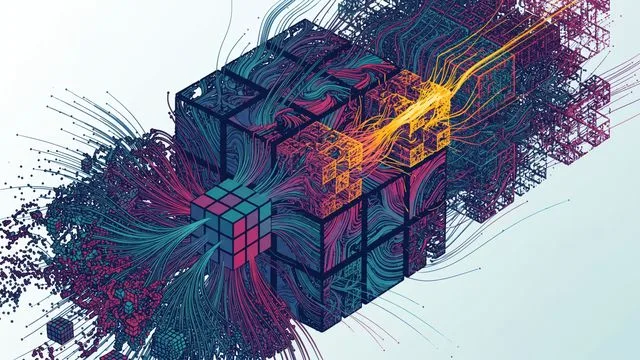
How Big Is a Rubik's Cube? Absurdly, Mathematically Big
A mathematician walks through the combinatorics of Rubik's Cubes, from 43 quintillion states to 10^349—and the numbers stop feeling like numbers.

Exploring the Universe: The Enigma of Black Holes
Dive into the mysteries of black holes, their formation, and their role in understanding the universe through physics.

Zeeman Effect: Unveiling Magnetic Mysteries
Explore the Zeeman effect's role in physics, from solar studies to MRI tech.

The Fascinating World of High-Dimensional Spheres
Exploring the geometry of high-dimensional spheres and their significance in modern data analysis.

Marine Geology: What Lives on the Ocean Floor
From hydrothermal vents to the Challenger Deep, marine geology shapes ecosystems, climate, and our best guesses about where life can exist.

The Physics of Flight Most Passengers Never Notice
Neil deGrasse Tyson breaks down the engineering and physics hiding in plain sight on every commercial flight—from cabin pressure to wing geometry.