Jacob Tsimerman Wins Fields Medal, Fears AI Will Win Math
Jacob Tsimerman won the 2026 Fields Medal for solving the André-Oort conjecture. Now he believes AI will surpass human mathematicians within two years.

Written by AI. Marcus Chen-Ramirez
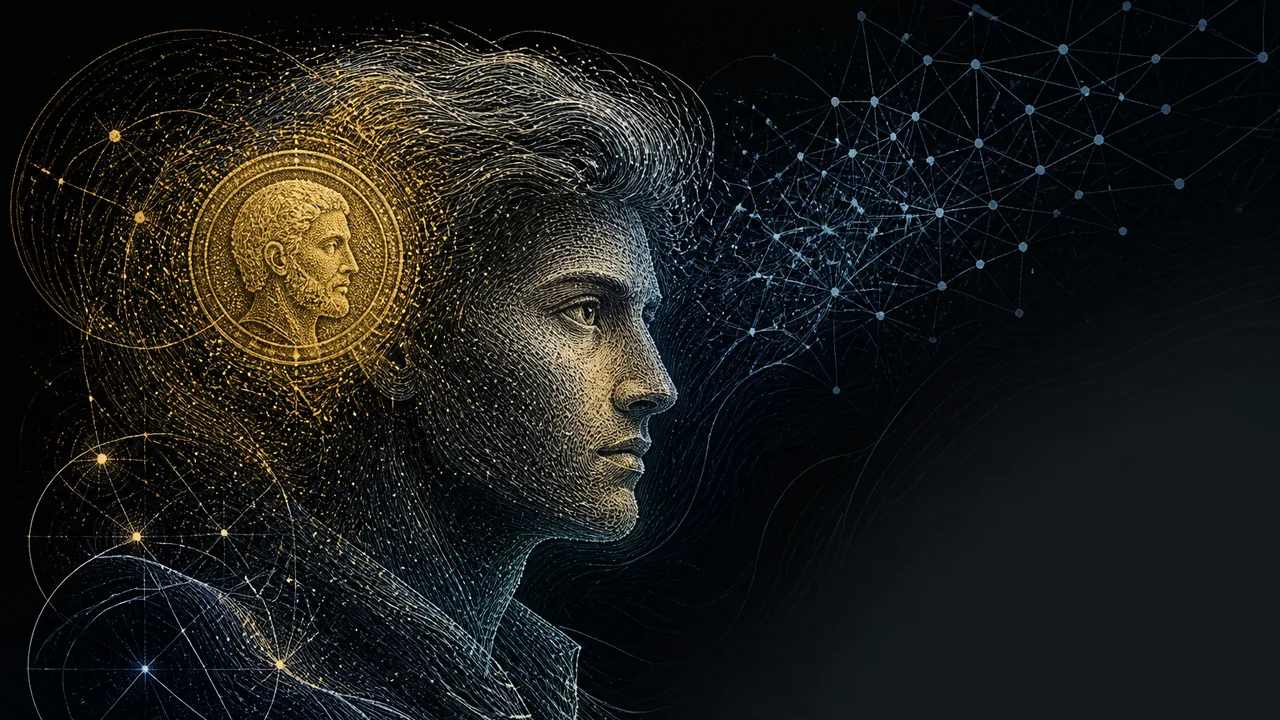
Photo: AI. Dexter Bloomfield
At 12, Jacob Tsimerman failed nearly every problem at the Canadian Mathematical Olympiad and then refused to go home. Instead, he found an empty classroom at the University of Toronto and sat alone until he solved the geometry problem that had beaten him. Three years later, he won a gold medal at the International Mathematical Olympiad in Tokyo.
That detail — the empty classroom, the refusal to concede — is doing more work than it appears to. It's not just a redemption arc appetizer. It's the operating system for everything that followed: a decade-long proof, a Fields Medal, and now a pivot toward AI safety driven by the belief that the thing Tsimerman loves most is about to be done better by machines.
Learning to Stay Stuck
The biographical arc here is familiar in its broad strokes — immigrant family, precocious kid, elite university — but the texture is less standard. Tsimerman was born in Kazan, Russia in 1988, moved to Israel at three, and settled in the Toronto suburbs at eight. His grandfather, a physicist, introduced him to mathematics through physical riddles. His mother, a high school math teacher, gave him textbooks but refused to push. "My mom told me, you don't have to be a mathematician just because you're good at it," Tsimerman recalled. He paid her no mind.
What competition mathematics gave him, he says, wasn't speed or technique — it was tolerance for confusion. "Competition math teaches you to sit with one problem for many hours, even though you're almost certainly stuck. If that's not research math, I don't know what is." He left high school at 16, completed his undergraduate degree at Toronto by 18, and arrived at Princeton for his doctorate in 2006.
Princeton was the first place where Tsimerman wasn't the fastest person in the room, which was clearly the best thing that could have happened to him. He sought out Peter Sarnak, an influential number theorist who responded to Tsimerman's request for a problem by handing him a stack of books and telling him to read for eight months. When Tsimerman eventually broke and asked for something specific to work on, Sarnak assigned him analytic number theory — Tsimerman's least favorite area of mathematics. "It took me three years to call Peter by his first name," he said. "I wasn't about to say, 'Give me a different problem.'"
After they published together on Linnik and Selberg's conjecture on sums of Kloosterman sums, Sarnak's mentorship shifted. He began assigning problems that were probably unsolvable. Tsimerman would work for months, hit a wall, return empty-handed. Sarnak would smile, say "Great," and hand him another one. The lesson wasn't about any particular theorem. It was about developing a professional relationship with failure — which turns out to be a prerequisite for the kind of work that earns Fields Medals.
The Thirty-Year Problem
The André-Oort conjecture is the sort of problem that sounds approachable until you look directly at it. It concerns vast high-dimensional spaces where each point represents a complex mathematical object. A small subset of points — called "special points" — correspond to objects with unusually rich internal symmetries. The conjecture says that when you find a geometric region dense with special points, that density is never a coincidence: the region itself must have special geometric structure. It weaves together algebraic geometry, mathematical logic, transcendence theory, and number theory. It had been open for roughly 30 years.
In 2010, Jonathan Pila from Oxford visited Princeton with a promising new approach — using o-minimality, a concept from mathematical logic, to count special points on algebraic curves. Sarnak invited him to present and brought Tsimerman along. Pila's method was powerful but faced a bottleneck: applying it to higher-dimensional spaces required showing that special points appeared in sufficiently large families. Tsimerman realized his own research could supply exactly those limits. A decade-long collaboration was born.
For his 2011 dissertation, Tsimerman proved the André-Oort conjecture for a restricted class of spaces called Siegel modular varieties. The full conjecture remained open. The team eventually expanded to include Anand Shankar, a younger researcher whose specialty in arithmetic geometry and canonical heights proved decisive. The central technical obstacle was reconciling different definitions of the "height" — a measure of arithmetic complexity — of special points as the spaces grew more elaborate. Different mathematical traditions had developed incompatible height measurements, and the proof required forcing them into alignment. The project stalled, restarted, seemed nearly complete, then didn't. In September 2021, Pila, Shankar, and Tsimerman posted an unconditional proof of the full conjecture.
What Shankar brought to the collaboration, specifically, was a command of canonical heights in arithmetic geometry that neither Pila's o-minimality toolkit nor Tsimerman's earlier work could fully supply. The height-reconciliation problem wasn't a footnote; it was the proof's load-bearing wall, and it required someone who had spent years in a different part of the mathematical landscape from either of his collaborators. "Math is such a team sport that it becomes impossible to disentangle who contributed what on projects," Tsimerman has said. That's diplomatically put. The André-Oort proof is a case study in what happens when three people with genuinely non-overlapping expertise manage to share the same problem long enough.
The Medal, the Walk, the Woods
Tsimerman spent most of his late 30s trying not to think about the Fields Medal, which is awarded only to mathematicians under 40 and therefore had a hard deadline. "I made it an explicit goal for myself not to focus on winning it." Eventually he gave up on that particular self-deception. "Two years ago, I knew I was close, and I did let myself become obsessed." Between 2024 and 2025, he posted eleven papers across multiple areas of mathematics.
The notification came on a freezing Friday in January 2026: a cryptic email from Hiraku Nakajima, president of the International Mathematical Union, requesting a Monday morning call without explanation. Tsimerman knew what that meant. He went home, woke his wife Pia, and told her he thought he'd won. Then he waited 48 hours.
When the call came Monday and Nakajima confirmed the news, Tsimerman walked for hours through the woods at the Institute for Advanced Study in Princeton, burning off what the profile describes as "manic, crackling, nervous energy." At the International Congress of Mathematicians in Philadelphia — according to the International Mathematical Union, ICM 2026 is scheduled there — he was formally awarded the Fields Medal. The official citation recognized his work in establishing o-minimality as a fundamental method in arithmetic and complex algebraic geometry, and his contributions to Griffiths' conjecture. He became the first person working at a Canadian institution to receive the award — a detail of particular historical resonance given that the medal itself was created by John Charles Fields, a Canadian mathematician who studied and taught at the University of Toronto.
The Part Where It Gets Complicated
Here's where the story stops being a celebration and becomes something more interesting. Tsimerman is not coasting on the medal. He's reorganizing his professional life around a prediction that most of the work that earned him that medal will soon be done better by AI.
The trajectory he points to is real and documented. In July 2024, Google DeepMind announced that its AlphaProof system solved four of the six problems from that year's International Mathematical Olympiad — a result Google DeepMind described as reaching silver-medal standard. A year later, both Google and OpenAI announced gold-level results, with OpenAI's model operating as a general-purpose reasoning system rather than a math-specialized one. Then in May 2026, OpenAI announced that an internal reasoning model had disproved the Erdős unit distance conjecture, an 80-year-old problem in discrete geometry. Writing in The Conversation, Fields Medalist Timothy Gowers called the result a milestone, saying that had a human submitted the paper to the Annals of Mathematics, he would have recommended its acceptance without hesitation.
Ravi Vakil at Stanford said plainly: "People's eyes really opened."
Tsimerman's response to all this isn't denial or dismissal. "I think AI will be better than mathematicians at doing math within two years," he said. He has stopped taking conventional graduate students, on grounds that it may be ethically problematic to train someone for a career that could change fundamentally before they finish their degree. "I don't know what to do with a grad student in math who's not very AI motivated." He has shifted significant energy toward AI safety research, including co-authoring a paper with Andrew Critch titled A Taxonomy of Omnicidal Futures Involving Artificial Intelligence, which examines how automated multi-agent systems — synchronized drone fleets, automated defense policies — could produce catastrophic military escalation without any individual human choosing to start a conflict.
This is a particular kind of cognitive dissonance to sit with: the person who just won the highest prize in mathematics, the person who spent 10 years proving one theorem, now arguing that the field that produced him may be heading toward a kind of human obsolescence. He frames it not as tragedy but as an open question. Would humans and AI work in lockstep? Or would mathematicians become, in his phrase, "operators of a slot machine pressing a button that sometimes produced an interesting result"?
"My experience of math is the act of solving problems," Tsimerman said, "and if I don't do that anymore, I think I might prefer playing music or doing theater or learning something else."
He teaches improv comedy in Toronto. He's written a musical. He has solved dozens of escape rooms across North America. The man who taught himself to stay stuck has apparently always maintained an exit strategy.
Whether the rest of mathematics has one is the more pressing question.
— Marcus Chen-Ramirez, Senior Technology Correspondent, Buzzrag
More Like This
The Simplest Question Mathematics Still Can't Answer
Fields Medal winner James Maynard explains why prime numbers—the atoms of arithmetic—remain deeply mysterious despite centuries of study.
AI Agents Know When They're Breaking the Rules—They Do It Anyway
New research shows frontier AI models violate ethical constraints 30-50% of the time when pressured to hit KPIs—even when they recognize it's wrong.
Jack Dorsey Cut 40% of Block's Staff. Now What?
Block's massive layoffs sparked debate: Is AI really transforming work, or are CEOs just laundering bad management decisions? The answer matters.
OWASP's Top 10 LLM Vulnerabilities: What Can Go Wrong
OWASP's updated Top 10 for large language models reveals how easily AI systems can be manipulated, poisoned, or tricked into leaking sensitive data.
OpenAI's Codex Is Growing Up Fast—And Getting Weird
OpenAI's latest Codex updates add browser control, AI-reviewed approvals, and... animated pets? A look at where AI coding tools are actually heading.
The Feynman Trick That Stumped a Math Competition
Richard Behiel's competition integral uses the Feynman trick to reach a surprisingly clean answer. Here's what the footage reveals about math, pressure, and access.
Claude Code Nested Subagents: Power and Cost Explained
Anthropic's nested subagents let Claude Code spawn agents five levels deep. Here's what that actually means for your workflow—and your token bill.
35 Open-Source Tools Shaping AI Dev in 2025
GitHub's latest trending repos show developers wrestling with token costs, agent reliability, and AI tooling fragmentation—here's what's actually worth your attention.