IBM Releases Granite Speech 5.0 2B Under Apache 2.0
IBM's Granite Speech 5.0 2B offers open multilingual transcription and translation. English scores impress; language accuracy and running costs still need tests.

Written by AI. Yuki Okonkwo
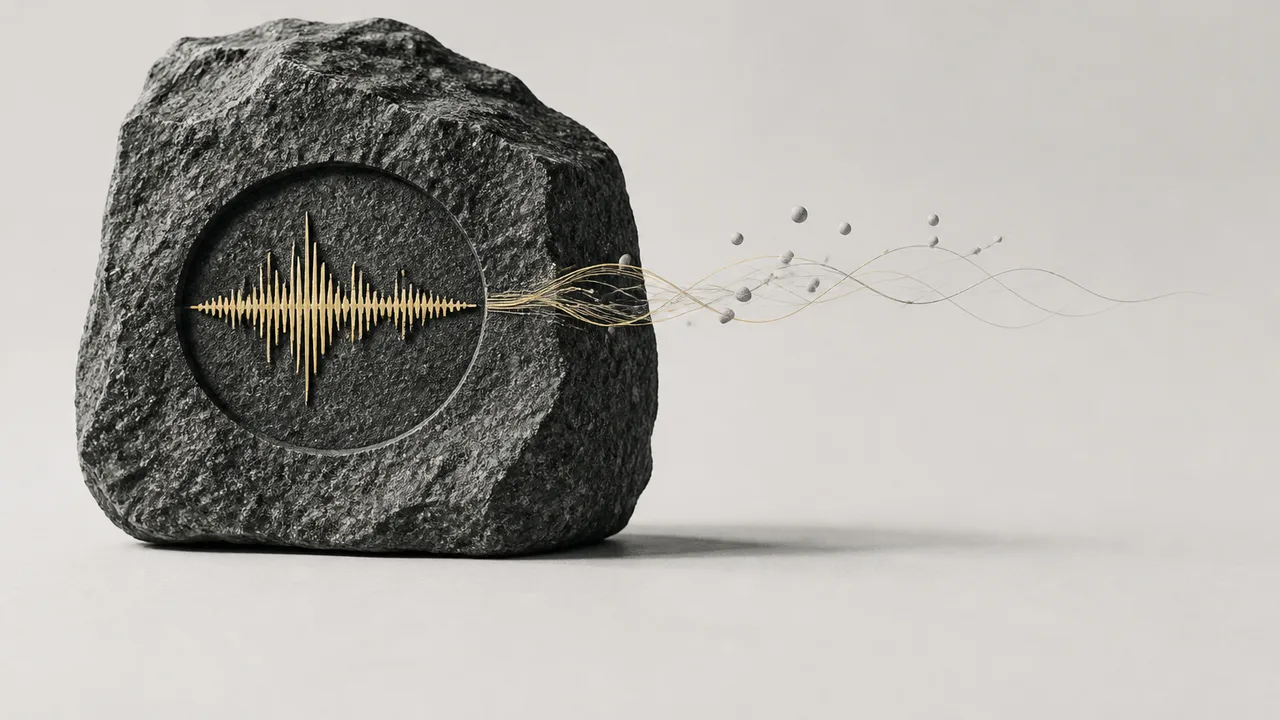
IBM has released Granite Speech 5.0 2B, a model for transcribing and translating speech, under the Apache 2.0 license. For a team deciding where recorded conversations go and who gets to adapt the software processing them, that license may be as interesting as the accuracy numbers. It creates an option to run and modify the model in the team's own environment, rather than sending every audio file through someone else's hosted service.
The headline benchmark is strong: Granite Speech 5.0 2B placed second on the Open ASR Leaderboard with a 5.68% average word error rate on English. Word error rate, or WER, counts transcription mistakes against the words in a reference transcript. Lower is better. The score tells readers something useful about English speech recognition; it doesn't score translation, nor does it describe performance in every language a multilingual team might need.
This release also has more going on than one new model. IBM has updated its Turbo CTC and Granite 4.1 2B Plus speech models. Together, those announcements put accuracy, speed and meeting transcription on the same menu. The sensible question for anyone considering those models: which model works best for your audio, at your acceptable cost?
The Appeal of a Model You Can Run Yourself
Granite Speech 5.0 2B's name gives away its scale: roughly 2 billion parameters, the adjustable values a model learned during training. Parameter count helps frame deployment planning, although it won't tell you how fast a model transcribes an hour of audio. Hardware, software setup, audio length and the way requests arrive all affect that calculation.
Apache 2.0 gives organizations broad permission to use, modify and redistribute software covered by the license, subject to its conditions. That makes the release relevant to teams that want to customize a speech system or keep the processing of recordings inside their own infrastructure. They still have to do the work: obtain the model, operate it, maintain it and check the terms that apply to their use. An open license doesn't configure a server or pay its electricity bill. Rude, honestly.
Why take on that work? Consider a company transcribing internal meetings or a public-service organization processing calls. Running a model in an environment it controls could give it more choices about where audio is handled and how transcription fits into existing systems. A hosted service could be simpler to set up and maintain. The trade-off depends on the organization's staffing, privacy requirements and workload, rather than on an abstract preference for either open or hosted AI.
That choice also affects who can experiment. A team with access to model weights can test its own recordings and try adaptations for its vocabulary. A team using a hosted service may depend on the provider's customization options and release schedule. Neither route makes recognition errors disappear, but the routes offer different ways to find and fix them.
Reading the English Scores Without Squinting
The 5.68% leaderboard figure deserves attention because speech recognition is an error-prone first step. Every missing name, invented word or misplaced negation can travel into search results, meeting notes or whatever downstream tool consumes the transcript. WER is useful precisely because it counts those substitutions, deletions and insertions.
A second number is circulating. Granite Speech 5.0 2B has a 5.06% English word error rate. That differs from the 5.68% Open ASR Leaderboard result; the two percentages need matched test sets and scoring rules before anyone can compare them as measures of the same performance. A leaderboard place is a ranking under that leaderboard's evaluation, not a promise that the model will make roughly five mistakes in every hundred words of your next call.
For a multilingual deployment, the English result is a starting point. Zeniteq describes transcription and translation across six languages, along with keyword biasing for up to 2,000 terms. Keyword biasing is a way to steer recognition toward supplied words, such as product names or specialized vocabulary. A hospital name and a person's surname are exactly the sorts of words that can turn a fluent-looking transcript into a frustrating one when the model gets them wrong.
Testing those features calls for several separate checks: transcription accuracy in each intended language, recognition of locally important names, and the quality of translations produced from speech. Teams handling conversations that switch languages may also want to test that pattern directly. An English WER score cannot answer those questions for them, however impressive its leaderboard position looks.
Translation brings its own failure modes. A transcript can preserve the words while a translation loses the intent; a translation can read smoothly while dropping a qualification. If translated text will feed summaries or decisions, a spot check by someone who understands the languages involved is more informative than an English transcription score. The model's multilingual capability makes that evaluation possible, not optional.
IBM's Other Speech Updates Answer Different Problems
IBM's accompanying releases suggest that it is treating speech work as several jobs rather than one race for the lowest WER. A faster multilingual Turbo CTC model targets speed, while the updated Granite 4.1 2B Plus addresses problems familiar to anyone who has tried to reconstruct a meeting from a transcript: who said what, when they said it and whether a long recording stayed accurate.
The Granite 4.1 2B Plus updates include reported 7% drops in WDER and cpWER, a timestamp shift cut by more than half, and a 24% drop in long-form WER. WDER and cpWER are measures used to assess transcription with speaker attribution. In practical terms, a transcript that correctly recognizes a sentence but assigns it to the wrong participant can still make a meeting record unreliable. Better timing can help someone find the moment in the recording when a decision was discussed.
Those percentages describe improvements for the updated Granite 4.1 model, not the new Granite Speech 5.0 2B leaderboard score. Keeping the models and tasks straight prevents an accidental Franken-benchmark: the best English transcription ranking from one model, the meeting improvements from another, and a speed claim from a third, all stitched together as though one download delivered every advantage.
A useful comparison would put the candidates through the same workflow. For meeting notes, that means long recordings with multiple speakers, interruptions and names the system hasn't seen before. For captions, timing and turnaround may matter as much as the final transcript. For translated calls, reviewers need to check meaning across the actual language pairs in use. The hardware and operating cost belong on the same worksheet as the error rates; a small accuracy gain can look different once a team has to run the system at scale.
IBM has given teams another option under a permissive license, plus an English benchmark that earns a closer look. Test Granite Speech with a recording that resembles Tuesday's busiest call, then check the words, the language, the speaker labels and the bill.
More Like This
AI Agents Are Getting Persistent—And That Changes Everything
Anthropic's Conway, Z.ai's GLM-5V-Turbo, and Alibaba's Qwen 3.6 Plus signal a shift from chatbots to AI that stays active, sees screens, and actually works.
VEED's AI Video Platform Reviewed: One Tool or Five?
VEED promises to replace your entire AI video stack with one platform. We break down what it actually does, what it doesn't, and who it's really built for.

GPT-6 Astra Leaks, Opus 5.1 Signals, and HY4
GPT-6 Astra demo leaks show one-shot game generation. Anthropic quietly tests Opus 5.1 while angering users with a rate limit cut disguised as a raise.

Perplexity Opens SPACE Agent Sandbox Under Apache 2.0
Perplexity has released SPACE, an open-source sandbox for AI agents. Its microVM design puts task isolation, credentials and network controls in focus.

IFM's K2 Horizon: Six Apache 2.0 Models From 0.9B to 375B Parameters
IFM released K2 Horizon on Sept 3: six Apache 2.0 models from 0.9B to 375B parameters, plus training data. What the release delivers and what it leaves unproven.

Prompt Compression: Smarter LLM Input, Lower Costs
Prompt compression cuts LLM token costs without gutting context. Here's how the main techniques work, what they actually trade off, and where to start.
Running the Mythos Coding Model Locally with llama.cpp
The Mythos Enhanced Coding Model can now run locally via llama.cpp and Pi. Here's what that setup actually means for developers and the broader local AI shift.