Running the Mythos Coding Model Locally with llama.cpp
The Mythos Enhanced Coding Model can now run locally via llama.cpp and Pi. Here's what that setup actually means for developers and the broader local AI shift.

Written by AI. Yuki Okonkwo
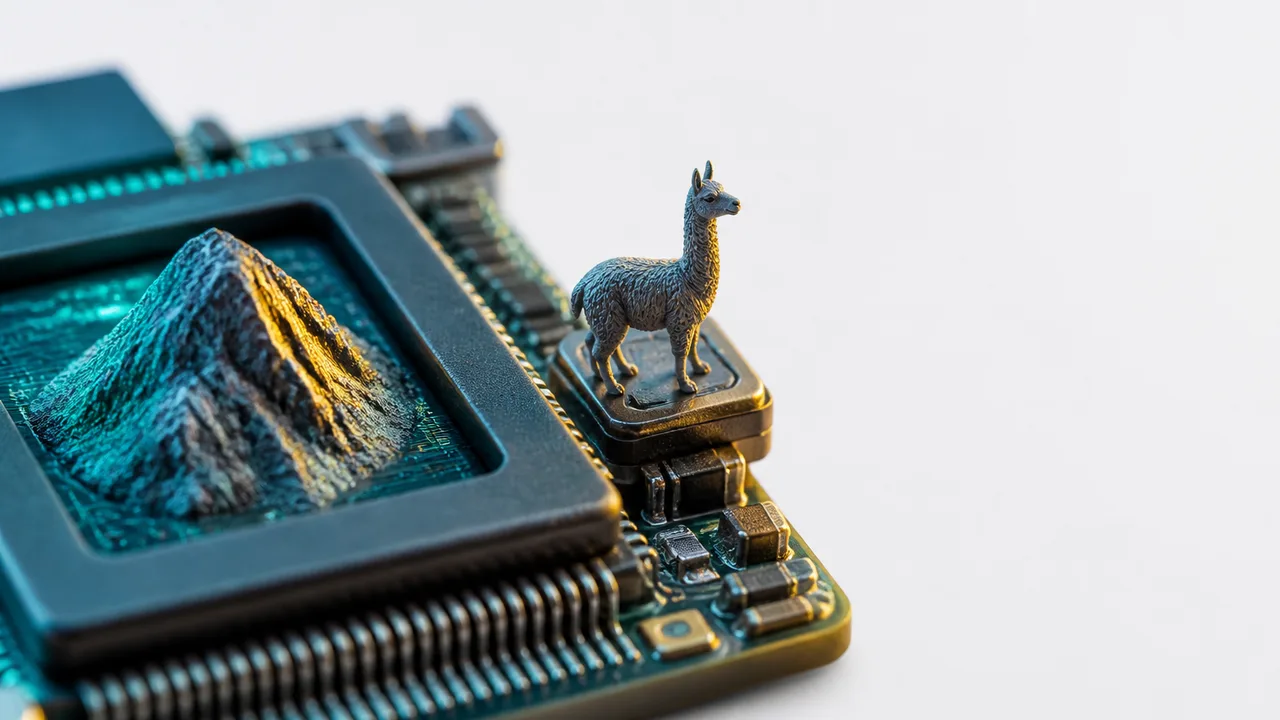
There's a certain irony in the fact that some of the most capable AI coding tools available right now don't require an internet connection. The cloud-or-nothing era of AI tooling is quietly ending, and the Mythos Enhanced Coding Model going local is one more signal that the shift is real.
According to KDnuggets, you can now run Qwythos-9B-Claude-Mythos-5-1M — the specific model at the center of this — locally using llama.cpp, then connect it to the Pi coding agent to build fast local coding workflows. The setup uses MTP speculative decoding and an OpenAI-compatible API, meaning it slots into existing dev environments without a painful migration.
Let's slow down on that model name for a second, because it tells you something about how fast this space moves: Qwythos-9B-Claude-Mythos-5-1M is a merge/fine-tune in the style that's become common in open-weights circles — a base model (in this case Qwen-derived), layered with fine-tuning and merge techniques to produce something optimized for a specific use case. "9B" refers to the parameter count (nine billion, which is on the lighter end of capable models). The "1M" almost certainly refers to the context window — one million tokens, which is genuinely enormous and means the model can hold an entire large codebase in context at once. The sources don't detail the exact training methodology, so I'll leave it there rather than speculate.
What llama.cpp actually does here
If you're not already familiar with it, llama.cpp is the C++ inference library that made running large language models on consumer hardware practical in the first place. As tech-insider.org explains, because llama.cpp can run on a Raspberry Pi, a phone, or a mini-PC, it powers assistants that ship inside hardware products with no cloud dependency at all. The common thread, they put it plainly, is sovereignty: when the model runs on hardware you control, the data never has to leave.
That's not a small thing for developers working on proprietary codebases. Every API call to a cloud-hosted coding assistant is, technically, a data transmission event. Most commercial providers have policies saying they won't train on your code — but "technically shouldn't" and "definitely can't" aren't the same thing. Running locally closes that gap entirely.
The MTP speculative decoding piece is worth understanding too. Speculative decoding (sometimes called "draft-model decoding") is a speed technique: a smaller, faster "draft" model generates candidate tokens, and the larger model only has to verify them rather than generate from scratch. This can dramatically increase effective throughput without sacrificing output quality. Kyle Howells' macOS local coding agent setup guide shows exactly this architecture in practice — a main model plus a separate MTP draft model passed as --model-draft in the llama-server command. It's a bit more setup overhead upfront, but the inference speed payoff is significant.
Pi as the agentic layer
The Pi in "llama.cpp and Pi" refers to the Pi coding agent — not the Raspberry Pi hardware (though llama.cpp does run on those too, which is a separate and delightful fact). Pi is the agentic layer that takes the model's raw capabilities and turns them into a workflow: planning tasks, executing code, checking outputs, iterating. The combination means you're not just running a chatbot that can write functions on request; you're running something closer to an autonomous coding collaborator on your own machine.
DataCamp's tutorial on running a Mythos-enhanced Qwen model locally with a similar agent setup (Hermes, rather than Pi) gives a concrete sense of what this looks like in practice. Their test case: building a portfolio website from scratch. The result, they write, was "a polished, working portfolio website with a strong layout and clean styling." Their assessment of the output quality was direct — "for a locally running 9B model, the output quality was genuinely impressive." That's not a throwaway qualifier. A 9B parameter model running on local hardware producing output that clears a real bar is a meaningful data point.
The API compatibility angle is actually the sleeper story
Here's what I find more interesting than the model itself: the OpenAI-compatible API layer.
KDnuggets notes that Claude Code sends requests in the Anthropic Messages API format, and by default those go to Anthropic's servers — but setting ANTHROPIC_BASE_URL redirects them to any server speaking the same format, which now includes Ollama, LM Studio, and llama.cpp natively. In other words, a developer can take a workflow they built around Claude Code and redirect it to a local model without changing their code. The local model becomes a drop-in.
This is the infrastructure detail that makes the whole local AI story more durable than it might otherwise look. It's not just that you can run things locally — it's that the API surface has standardized enough that switching between local and cloud is becoming a config change, not a rewrite. That's a different world than two years ago.
KDnuggets' roundup of the top coding models you can run locally in 2026 lists the Mythos setup alongside several others, which tells you the ecosystem isn't a one-horse race. There are options, and the tooling to run them is mature enough that someone compiling a top-seven list in 2026 isn't scraping the bottom of the barrel to fill spots.
What "local" means for who gets to build
The MacBook Air massive model story explored one edge of this — running 480B parameter models from 16GB of RAM via LM Studio's remote access feature, which rewrites what "local" even means when you can offload compute to a nearby machine. The Mythos setup is a different point on the same curve: a 9B model with a million-token context window running on a developer's own machine, no cloud required, no monthly API bill accumulating.
The practical implications branch in a few directions. For individual developers, the cost math changes — a one-time hardware investment versus ongoing inference costs. For teams working in regulated industries (healthcare, finance, legal), local deployment isn't a preference but a compliance requirement; tools that make this easier directly expand who can use capable AI coding assistance. For open-source contributors in places with unreliable internet or expensive data, local models aren't a preference either — they're the only realistic option.
None of this means cloud-hosted coding AI is going away. The frontier models — the ones doing the hardest reasoning tasks — still require datacenter-scale hardware to run at useful speeds, and that's unlikely to change soon. But the capability tier that handles a large percentage of real-world coding tasks has clearly crossed the threshold where "run it yourself" is viable, and the tooling has caught up enough to make that practical rather than just theoretically possible.
The interesting open question is whether the model quality gap between local and frontier narrows fast enough that the tradeoff calculates differently in another year. Right now, local wins on cost and privacy; frontier wins on ceiling. How long until the ceiling question is mostly moot for everyday coding work?
More Like This
Google's Gemma 4 Turns Claude Code Into a Free Local Tool
Google's new Gemma 4 models let developers run Claude Code locally for free. Here's what works, what doesn't, and who this actually serves.
Google's Gemma 4 Makes Powerful AI Run on Your Phone
Gemma 4 brings multimodal AI models to phones and laptops with clever architecture tricks that make 5B parameters perform like much larger models.

Local AI's Inflection Point: Useful, Not Just Interesting
A panel of local AI builders at NVIDIA, Roboflow, Exo Labs, and r/LocalLLaMA maps where the movement stands—and what still needs solving.

Llama.cpp Gets MTP: Local AI Just Got Faster
Llama.cpp just merged Multi-Token Prediction, giving local AI a ~25% speed boost. Here's why that matters for your privacy—and how to use it.

Claude Mythos, GPT-5.6, and DeepSeek's Pricing Bomb
Claude Mythos 1, Opus 4.8, and GPT-5.6 are all pointing toward a chaotic June. Plus: DeepSeek just repriced the entire API market. Here's what's real.

DiffusionGemma Generates Text Like an Image Model
Google DeepMind's DiffusionGemma borrows from image diffusion to generate 700–1,000+ tokens/sec. Here's how the architecture works—and where it falls short.
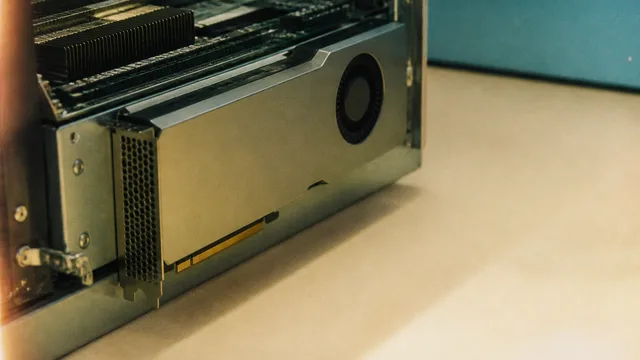
AMD Instinct MI350P: 144GB HBM3E in a PCIe GPU
AMD's Instinct MI350P brings 144GB of HBM3E and 3.6TB/s bandwidth to standard PCIe servers. Here's what it means for the mid-market AI infrastructure gap.

How Optimization Powers Modern AI and Engineering
From training ChatGPT to imaging black holes, optimization is the hidden engine behind modern AI and engineering. Steve Brunton's lecture explains how.