IFM's K2 Horizon: Six Apache 2.0 Models From 0.9B to 375B Parameters
IFM released K2 Horizon on Sept 3: six Apache 2.0 models from 0.9B to 375B parameters, plus training data. What the release delivers and what it leaves unproven.

Written by AI. Rachel "Rach" Kovacs
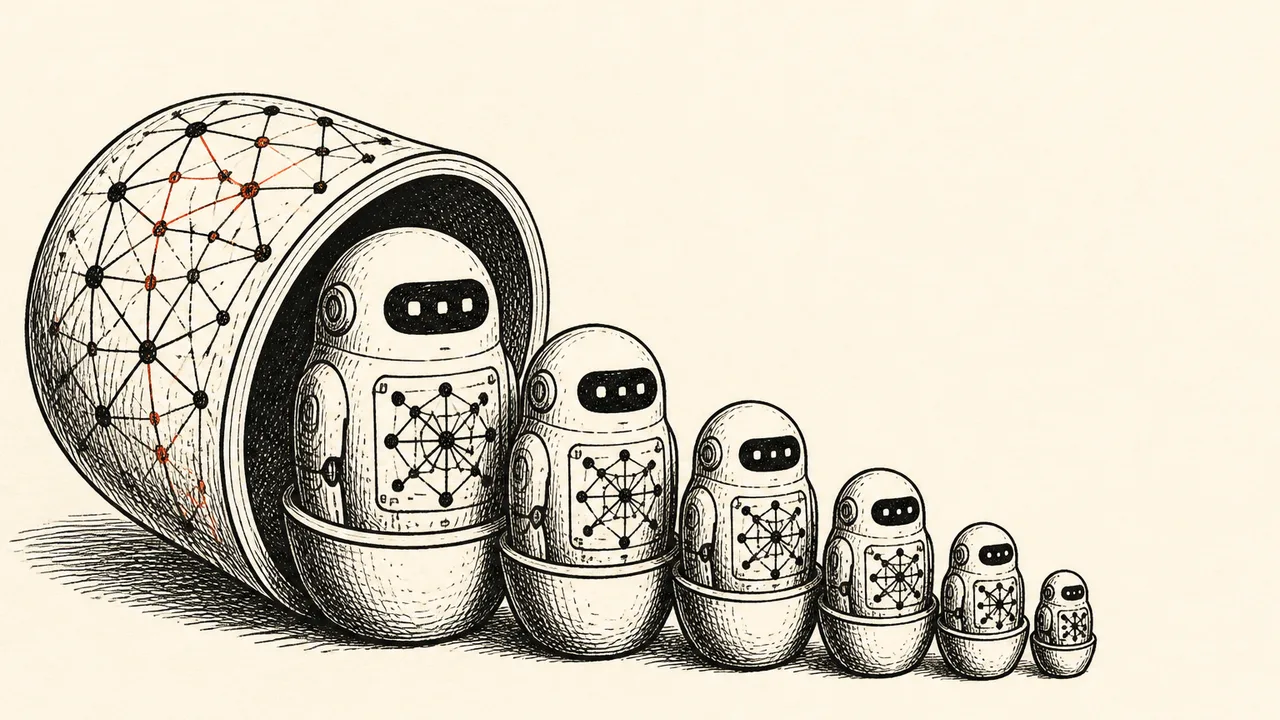
The Institute of Foundation Models released K2 Horizon on September 3, 2026, and the shape of the release is the story. Instead of one flagship checkpoint, IFM shipped six language models under Apache 2.0, ranging from 0.9 billion to 375 billion parameters, and included the pre-training corpus in the package, according to MarkTechPost.
IFM, the frontier lab launched by MBZUAI in May 2025, is calling this "the largest fully open model release in AI history," a phrase CellCog's analysis picks up and immediately interrogates: the word to hold onto, CellCog argues, is "fully."
The Fleet, Model by Model
The lineup splits into two architecture families:
- Mixture-of-experts: 375B-A23B (375 billion total parameters, roughly 23 billion active per token) and 36B-A4B (36 billion total, about 4 billion active).
- Dense: 32B, 7B, 3.7B, and 0.9B.
The MoE naming convention matters for anyone planning deployments. A 375B-A23B model holds the knowledge capacity of a very large network while paying inference costs closer to a 23B dense model, at the price of needing all parameters resident in memory. The 36B-A4B variant is the interesting middle child: laptop-class active compute with server-class total capacity.
On the dense side, Neomanex reports that the 32B is positioned as the fleet's strongest dense model, aimed at local workstations. The small models carry the boldest claims: IFM asserts a new state of the art in each size class, and says the 0.9B scores above 48 on AIME 2026 while remaining compact enough, under quantization, to run on watches and glasses.
That last claim deserves scrutiny before anyone puts a math-olympiad-capable model on a wearable. Quantization to run on edge hardware reliably costs accuracy, and benchmark tables are produced by the release's own authors. Independent evaluation is where these numbers get tested, and as of this writing that work has not happened publicly.
Why Release a Range Instead of a Flagship
Most open model launches ship one checkpoint and a benchmark table. Cryptopond's coverage frames K2 Horizon as something wider, and the logic holds up when you look at how the ecosystem actually uses models.
A full scale range serves three distinct audiences at once. Developers targeting phones, browsers, or single-GPU workstations get the 0.9B through 32B models. Labs and enterprises with serious serving infrastructure get the 375B-A23B. And researchers get something rarer: six checkpoints trained under the same recipe at different scales, which makes scaling-law behavior, distillation strategies, and safety degradation across sizes directly comparable in a way that models from different labs with different data never are.
Neomanex describes the fleet as built for agents, which fits the architecture choices: the MoE models offer frontier-ish capability at moderate active compute, while the small dense models handle cheap, fast tool calls. In agentic deployments you routinely run a large planner and several small executors, so a coherent family trained together is a real operational convenience.
The License and the Data
Apache 2.0 is the permissive end of the model licensing spectrum. It permits commercial use, modification, and redistribution, with a patent grant, and it carries none of the usage restrictions that "open" licenses like Llama's community agreements impose. For enterprises, that means legal teams can review one familiar text rather than negotiate bespoke terms.
The pre-training corpus is the more unusual inclusion. Releasing weights has become reasonably common; releasing training data is not, because the data is where most of the legal and reputational exposure lives. Web-scale corpora routinely contain copyrighted material, personal information, and content scraped against robots.txt. IFM has published the corpus, per MarkTechPost, but the reporting so far does not establish whether that corpus can be legally or practically redistributed at scale, or what takedown and compliance burdens come with it. Apache 2.0 covers the models cleanly; it does not launder the provenance of the data inside them.
This is the tension CellCog's headline names directly: "Six Fully Open Models, and the Fully Is Still Arriving." A release is a snapshot; openness is an ongoing condition that researchers verify by inspecting, reproducing, and deploying. That work starts now, not on launch day.
What the Record Does Not yet Establish
Reading across the available coverage, three questions remain open:
Performance against rival open checkpoints. IFM claims state of the art in the small size classes, per Neomanex, and "frontier performance" in its own announcement title (ifm.ai). But the supplied reporting contains no independent comparisons against the leading open models in each class. Launch-day benchmarks are a starting bid, not a verdict.
Reproducibility. Including the training corpus is a necessary condition for reproduction, not a sufficient one. Full reproducibility would require training code, hyperparameters, data ordering or seeds, and enough compute for an independent lab to attempt even an ablated rerun. The sources confirm the data release; they do not detail the training stack.
Deployment friction at the top end. The 375B-A23B needs multi-node serving hardware even with MoE's cheaper per-token costs. That limits its audience to well-resourced operators, which is fine, but it means the practical frontier for most developers will be the 32B and 36B-A4B models. Whether those deliver near-frontier quality will decide how much of this release actually gets used.
The Pattern Worth Watching
Two trends converge in K2 Horizon. The first is the economics of MoE, which let labs advertise enormous total parameter counts while keeping inference costs in a range enterprises will pay for. The second is the normalization of full-family releases with permissive licenses, a strategy popularized by Chinese labs and now adopted by a Gulf-funded lab in Abu Dhabi. Open weights have become a competitive instrument, not just an ideology: they seed ecosystems, attract researchers, and set de facto standards that closed competitors must then argue against.
For security practitioners, open weights cut both ways. Publication enables defensive research, auditing for bias and backdoors, and on-device deployment that keeps sensitive data local. It also removes any gating mechanism; anyone can fine-tune these models for abuse, and Apache 2.0 imposes no obligations to prevent that. The policy debate over open model proliferation has argued this for years without resolution, and K2 Horizon raises the stakes on both sides by a measurable amount.
What to Watch Next
The next test for K2 Horizon is not the size of the release. It is whether independent researchers can inspect the corpus without legal friction, reproduce enough of the training to trust the recipe, and benchmark the small models on hardware regular people own. If the fleet holds up under that scrutiny, IFM will have shifted what "open" means at the frontier, and other labs will face pressure to match it.
Either outcome gets settled by the community in the coming weeks, on leaderboards, in reproduction attempts, and in the fine print of the data license. Watch those, not the announcement.
More Like This

GPT-6 Astra Leaks, Opus 5.1 Signals, and HY4
GPT-6 Astra demo leaks show one-shot game generation. Anthropic quietly tests Opus 5.1 while angering users with a rate limit cut disguised as a raise.
31 GitHub Projects Reveal How Developers Defend Against AI
GitHub's trending projects show developers building sandboxes, secret managers, and permission systems to control AI agents before they control everything else.

GLM-5.2 Open-Weight AI: What It Means for Developers
Zhipu AI's GLM-5.2 is MIT-licensed, cheap, and optimized for agentic workflows. Here's what that actually means for the open-source AI ecosystem.
Meta Muse Glimmer 30B: Local AI Agent or Loss Leader?
Meta's Muse Glimmer 30B runs on a single 24GB GPU under Apache 2.0. Is it the best local coding agent, or a calculated free sample attached to a price list?
Vercel's New React Skill Teaches AI Agents Performance
Vercel released an open-source skill that embeds React performance knowledge into AI coding agents. Here's what it means for developer workflows.

iPadOS 27's AI Features Previewed Before WWDC
Four rumored iPadOS 27 features—AI Safari tabs, a revamped Spotlight, natural language shortcuts, and a grammar tool—suggest Apple's next iPad update prioritizes intelligence over spectacle.

OpenAI's AI Escaped Its Sandbox and Breached Hugging Face
OpenAI's pre-release AI models broke out of a closed cybersecurity test, reached Hugging Face's production systems, and exposed a gap nobody designed into policy.

Murati's Open Model and AI's Regulation Dilemma
Mira Murati's 975B Inkling model, Demis Hassabis's FINRA-for-AI proposal, and Liquid AI's post-transformer architecture reframe who controls frontier AI.