Hyrox Faces the Harder Test of Becoming a Media Property
Hyrox's new investors and TV ambitions put its event-first model to the test. Can it build a broadcast audience without losing participants or control of its future?

Written by AI. Denise Okafor-Williams
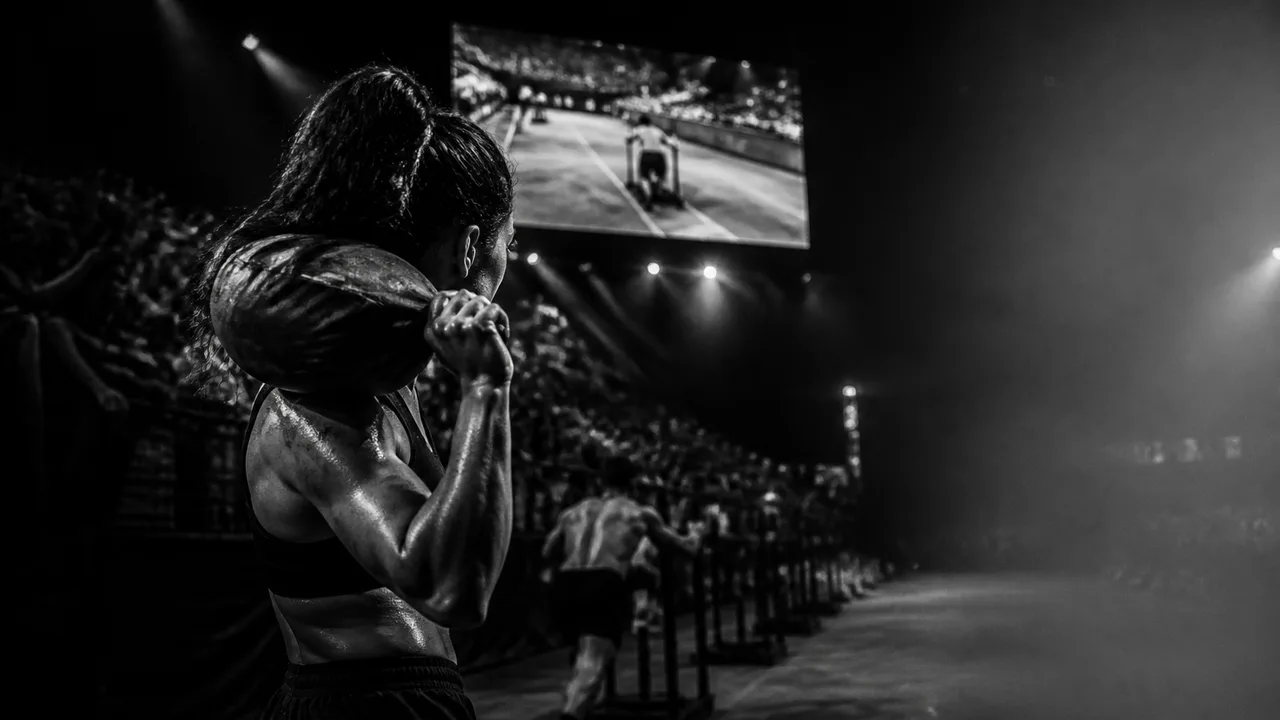
Hyrox co-founder Moritz Fürste is looking beyond the crowds entering the company’s hybrid fitness races. In an interview with SportsPro, he discussed new investors, television and a possible Olympic pathway as part of the business’s next phase. Each ambition asks Hyrox to prove something its participation growth cannot prove on its own: that people will follow a race they are not in.
A race entrant gives Hyrox a direct commercial relationship. A television viewer gives it an audience that someone else, whether a broadcaster, platform or sponsor, might pay to reach. Those businesses can reinforce each other, but they run on different incentives. The entrant wants a well-run event and a fair chance to complete it. The viewer needs a reason to care who finishes first, what changes during the race and why the result deserves their time.
The ownership picture has changed as Hyrox considers that shift. A consortium led by L Catterton bought Infront’s majority stake, and the founders regained control. The deal’s financial terms and the investors’ precise governance rights have not been specified publicly, so “control” alone cannot tell readers who can approve a media strategy, set expansion targets or decide when the business should prioritize returns.
That leaves a sharper commercial question than whether Hyrox can attract capital. It can. The question is what the company must build to turn that capital into an audience without weakening the experience people already pay to have.
The Participant is Already a Customer
Hyrox’s appeal as a business starts with a format people can enter and encounter again. Repeatable events offer participants a familiar test, while growth gives the company more opportunities to sell that experience. For an entrant, consistency has practical value: the race has to feel recognizable enough that training for one event prepares them for another.
That same consistency could help television. A viewer who learns the format does not have to learn a new sport each time. Comparable races can make results easier to follow and give returning competitors a basis for rivalry. It is the strongest case for Fürste’s media ambition: Hyrox has a format that could support a continuing competition, rather than an event whose appeal depends entirely on novelty.
Yet repetition creates a production problem. A participant experiences effort from inside the race; a viewer needs that effort translated into a contest. Coverage has to show where competitors stand, what they have left to do and which choices might change the outcome. An exciting event to complete can be difficult to watch if the audience cannot see its stakes. That is a question about presentation as much as athletic performance.
A broadcaster would also want to know whether viewers return when their friends and relatives are not racing. Those who attend or watch because they know an entrant are valuable to an event, but their interest may end when that entrant finishes. A durable media property needs people who can recognize competitors and follow a season or championship on its own terms. Hyrox has discussed television as an ambition; that longer-term viewing habit remains a task to build.
Two Audiences, One Event
The appeal of Hyrox’s model is also its constraint. The company cannot treat its participant business as a disposable staging ground for television. Entrants have paid for an experience centered on their own race. Choices that make a leading competition easier to film, from scheduling to access to event space, may compete with the time and attention needed to serve everyone else. Expansion could bring more entrants into the format; it could also put pressure on the consistency that makes it attractive.
This creates a useful test for any media plan: does the broadcast product emerge from a better-run competition, or does it require participants to accommodate a production? The answer need not be the same at every event. A televised elite race could give spectators recognizable athletes while a broader event continues to serve entrants. But the two sides would still share an organizer, a format and a reputation. If the entrant experience deteriorates, a larger audience cannot automatically repair it.
The distinction affects competitors, too. Participants pay to race. Athletes whose performances give viewers a reason to tune in may create another form of value for Hyrox. If the company develops lucrative media rights around those performances, questions about appearance terms, scheduling, use of athletes’ images and compensation will become harder to treat as incidental. No pay structure or athlete agreement is established here.
A recognizable field benefits Hyrox because viewers can follow people as well as results. Athletes benefit if that recognition gives them bargaining power over what they are asked to do and how they are paid. Whether that happens depends on the terms Hyrox sets and the alternatives competitors have. A participation brand can build an audience around the many people who enter; a competition brand may rely on a much smaller group to make its biggest races compelling.
What New Capital Can Buy
The L Catterton-led acquisition gives Hyrox a new ownership context for those decisions. Buying into a mass-participation property raises questions beyond the number of events it can add. A business with more than one potential revenue stream must decide which opportunities receive investment first and how much pressure to put on the experience that generated demand in the first place.
Capital can support production, promotion and the organizing work needed for expansion. It cannot compel a broadcaster to value rights at the price Hyrox wants, or make an audience return the following week. The company would need to show that its competition holds attention, that its presentation works beyond the room where a race takes place and that it can deliver events reliably enough for a recurring media schedule.
The founders’ reported return to control offers one possible safeguard against a rapid shift away from the entrant experience: the people who built the format have an interest in preserving what makes it recognizable. Investors have a coherent case of their own. If television succeeds, Hyrox could reach people who have never entered a race, giving the property room to grow beyond its event calendar. Neither interest answers how much spending or patience the other requires. The decisions made under this ownership structure will show which carries more weight.
An Olympic pathway sits further away still. Hyrox can develop a competition and seek a wider profile, but Olympic recognition depends on institutions and criteria outside the company’s control. An Olympic ambition may help explain the scale of Fürste’s vision. It should not be counted as a future revenue stream or a settled destination for the format.
For now, Hyrox has two audiences to consider. One pays to cross a finish line; the other would need a reason to watch someone else do it. The company’s next phase turns on whether it can serve the second without asking the first to finance an experience built around somebody else.
More Like This
NFL and NFLPA Negotiate Flag Football at 2028 Olympics
The NFL and NFLPA are negotiating player participation in Olympic flag football. Here's what the labor dynamics and scheduling realities actually mean for athletes.

World Cup Knockout Ticket Prices Drop 39% on Resale Markets
World Cup knockout stage resale prices fell 39% from $2,040 to $1,245. What the secondary market collapse reveals about FIFA's pricing architecture.
USMNT Beats Bosnia, Advances Despite Balogun Red Card
The USMNT beat Bosnia 2-0 to reach the World Cup Round of 16, despite Folarin Balogun's controversial red card. Here's what it means on and off the field.

Chelsea Stake Sale Would Put Clearlake in Full Control
Chelsea's reported £950 million stake sale would give Clearlake full control, raising questions over spending, cash flow, stadium plans and exit timing.

MLS Names Larry Berg as Its Next Commissioner
MLS owners have chosen LAFC co-owner and Apollo Global veteran Larry Berg as their next commissioner, succeeding Don Garber starting January 2027.

F1 Eyes European Finale as Middle East War Threatens Season
F1 CEO Stefano Domenicali says the 2026 season could end in Europe if war in the Middle East cancels the Qatar and Abu Dhabi Grand Prix races.