How Ancient Athens Actually Invented Democracy
Mass graves, marble lottery machines, and a reformer with divine backing: NOVA's Athens documentary reveals democracy's stranger-than-expected origins.

Written by AI. Nadia Marchetti
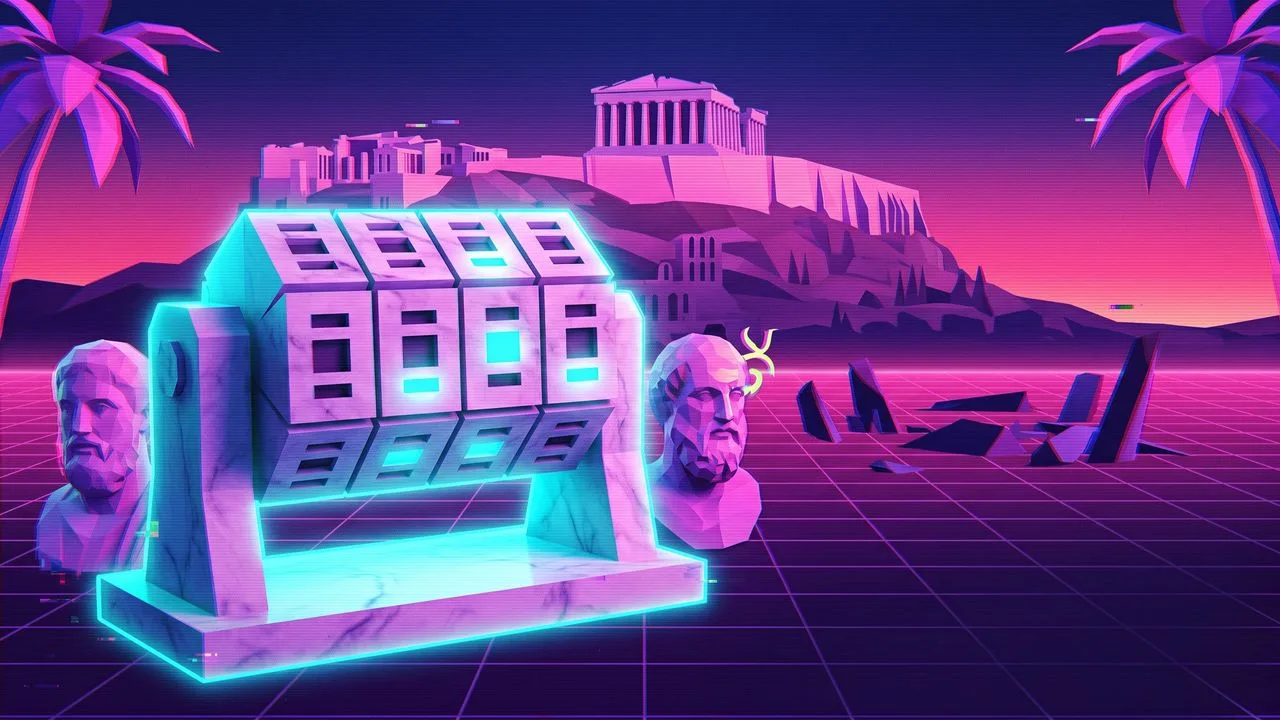
Photo: AI. Roxanne Vex
Eighty skeletons. Young men, mostly. Shackled at the wrists, killed with blunt force to the skull, arranged side by side in three trenches in the sandy soil southwest of Athens. Excavation director Stella Chrysoulaki had spent years digging through Athens' ancient dead. She'd never seen anything like this.
"It was something we had never seen before," she says in the new NOVA documentary Athens: Birth of Democracy. "Why were they handcuffed? Why were there fractures at this specific spot on the skull on most of the individuals in this mass grave?"
This is where the film opens its argument, and it's a smart move—not because mass executions are lurid, but because the question who did this, and why turns out to be the same question as how did democracy get invented? The answer, it seems, runs straight through blood.
The documentary's central claim is that Athenian democracy wasn't born from enlightened ideals floating above the agora. It was hammered out of civil war, tyranny, paranoia, and the desperate need to stop powerful men from destroying each other and everyone around them. The archaeology keeps confirming this. You want the origin story of your governing philosophy? Start with a mass grave.
The Faleron burial ground, dated to the second half of the 7th century BCE, aligns with accounts of a failed coup by an Olympic champion named Kylon, who attempted to seize power and ended up with his followers trapped in Athena's temple, starving. The archons—the oligarchic magistrates running Athens—promised to spare them if they surrendered. A rope attached to Athena's statue was supposed to extend the goddess's protection. Then, allegedly, one of the archons cut the rope, and the surrendering men were killed anyway. The chained skeletons at Faleron might be those men. Might be. The salt content of the soil destroyed the organic material that would allow precise dating, so the connection remains suggestive rather than certain.
That measured uncertainty is one of the film's better qualities. It doesn't oversell the finds. It lets the gaps stay gaps.
Seventy years after Kylon's failed coup, a tyrant named Peisistratos actually succeeded. He ruled, passed power to his sons Hippias and Hipparchos, and the family held Athens for decades. It ended in 514 BCE when two men—Harmodios and Aristogeiton—stabbed Hipparchos to death during Athens' biggest religious festival, the Panathenaia, in the chaos of the procession to the Acropolis.
Both assassins died for it. One was killed immediately. The other was tortured and executed. And the tyranny didn't fall—Hippias, the surviving brother, became more paranoid and more brutal. The assassination that Athenians later mythologized as the founding act of their democracy actually made things worse before it made them better.
Historian Vincent Azoulay, examining the site where John Camp—excavations director at the Athenian Agora for nearly three decades—believes he's found the sanctuary next to which the murder happened, gets visibly moved. "That's quite emotional for me," he says. Camp has found inscriptions pointing to the Leokoreion, a sanctuary dedicated to the hero Leos and his daughters, exactly where ancient texts place the assassination. Camp calls the inscriptions "a smoking gun." Azoulay calls himself convinced.
It's a good scene—two scholars standing in ruins, piecing together a murder from stone. The thing about archaeology is that it keeps insisting history was physical, that it happened to actual bodies in actual places, not in the abstract space where we tend to keep it.
The tyranny fell not through Athenian heroism but through Spartan intervention. In 510 BCE, Sparta invaded and drove Hippias out—he fled to Persia, eventually serving the Persian king Darius I, which made him the kind of traitor Athens talked about for centuries. Sparta's king then tried to install his own preferred strongman. The Athenians revolted and demanded instead the return of an exiled aristocrat named Kleisthenes.
This is where the documentary gets genuinely interesting, because Kleisthenes is a complicated figure to explain. He was an aristocrat, from one of Athens' powerful families, who turned around and built a system designed to break aristocratic power. Historian Paul Cartledge, examining Aristotle's Athenian Constitution—the sole surviving copy, now at the British Library, incomplete at both ends—frames it this way: Kleisthenes "comes back apparently with a plan right away."
The plan was structural. Athens was divided into three geographic zones—city, countryside, coast—each split into ten districts. Kleisthenes created ten new tribes, each pulling members from all three zones, with the district assignments drawn by lot. The result was that your tribe included people from entirely different parts of Attica, different social backgrounds, different economic relationships. You couldn't build a political machine out of people who owed you favors if those people were now randomly distributed across other tribes.
"It was an absolutely extraordinary mixing of people," the documentary explains, "which had the effect of breaking up the aristocratic block."
Kleisthenes also got divine cover for this scheme. He traveled to Delphi, consulted the Oracle of Apollo, and asked her to randomly select ten names from a list of a hundred Athenian founding heroes—one for each tribe. The Oracle's endorsement meant the new tribal structure carried religious legitimacy. Smart politics, or genuine piety, or both. The historical record doesn't let you separate them cleanly.
The piece of this democracy that probably most challenges modern intuitions is the lottery system itself.
Over 1,200 civic positions were filled annually by random draw. Not by election. By lottery. Military officers and treasurers were elected—competence was acknowledged as relevant in those domains—but judges, council members, magistrates? Random selection from the citizen pool. The council of 500 (fifty from each tribe, citizens over thirty) drafted legislation. A rotating group of fifty lived in the Tholos, the circular executive building next to the council chamber, on-call for a month at a time, then handed off to the next tribe.
The instrument of this randomization was the kleroterion—a marble machine that has puzzled archaeologists since an incomplete version was first excavated in 1830 (the original excavator suggested it might be a clock). French archaeologist Lilian Lopez Rabatel and architect Nicolas Bresch have been reconstructing how it worked, collaborating with sculptor Panagiotis Zestanakis to build a functioning replica using only ancient techniques.
The mechanism: citizens' name tags—small strips of bronze or wood—were inserted into slots on the machine. Black and white cubes were fed through a funnel and dropped into a tube. A black cube eliminated a row; a white cube selected it. Row by row, the machine worked through the pool until a randomized subset was chosen. It was, as the documentary puts it, a "democratic technology"—engineered specifically to prevent anyone from gaming the selection.
What's still not fully understood is the exact extraction mechanism for the cubes. The papyrus describing it is ambiguous. The reconstruction is ongoing. Some things about how this machine actually worked remain genuinely open.
The deeper point, though, is the philosophy behind it. As historian Paul Cartledge notes, Athenians would have found our idea of democracy strange: "Election according to the ideas of democrats was oligarchy because it favored the well-known who would therefore be wealthy, wellborn, politically active. Whereas the lottery randomizes the process and it doesn't advantage anybody on grounds of their birth or their wealth."
That's not a comfortable observation to sit with. It doesn't resolve cleanly into a lesson or a takeaway. It just sits there, pointing at something real about how elections actually function—and inviting you to decide what you think about it.
The citizenship that all of this applied to was, of course, restricted to adult males with Athenian parents. The documentary acknowledges this—slavery and the exclusion of women get their own chapter marker—without dwelling on it at feature length. That's a legitimate editorial choice for a film focused on the mechanics of what democracy was, but it's worth naming: the revolutionary expansion of power that Kleisthenes enacted was still an expansion within a sharply bounded circle.
The question the NOVA documentary keeps returning to—what does this ancient experiment have to offer us now?—doesn't get a clean answer. Which is probably honest. What it does offer is a detailed, evidence-grounded picture of a society trying to solve a specific problem: how do you stop powerful individuals from taking everything, while still running a functional city?
The tools they built—randomization, tribal redistribution, rotating office, term limits, public information posted in the agora for any citizen to read—were responses to real failures they'd already lived through. The mass graves were the syllabus. Democracy was the exam.
Whether any of that transfers across 2,500 years is, genuinely, a question worth asking yourself.
More Like This

The KGB's Cyanide Newspaper Gun That Almost Worked
How a KGB poison weapon hidden in a rolled newspaper killed Ukrainian nationalist Stepan Bandera in 1957—and why one mistake unraveled the whole operation.
Unveiling Rome's Gladiator Underworld
Explore the hidden world beneath ancient Rome's arenas, unveiling gladiator training, underground tunnels, and cultural practices.
When the Dead Were Headed for the Stars
Ancient burial sites from Peru to Egypt share a striking obsession with the cosmos. What does that convergence actually mean—and for whom?
Did Rome's Elite Destroy It From Within?
A viral video argues Rome was "auctioned off" by its ruling class. The history is real—but the argument deserves a harder look than it gets.
Why Galactic Empires Are Doomed to Collapse
Explore why galactic empires in sci-fi often fall apart. Discover the challenges of leadership, communication, and governance.

Netflix's Bold February: A Visual Culture Dive
Explore February's Netflix lineup through a design lens, from heists to satire.
Do DMT Entities Point to Alien Consciousness?
Cognitive scientist Donald Hoffman claims DMT entities may be real alien minds. The math is real. Whether it proves anything about consciousness is a different question.

Viking Landers and the Unsolved Mars Life Debate
Fifty years after Viking landed on Mars, one experiment's positive result remains unexplained. Here's what the science actually shows—and what we've learned since.