How a Morning Coffee Can Make Gratitude More Concrete
A coffee gratitude practice can start by noticing the people behind your cup. AJ Jacobs' idea offers a pause, while raising questions about work and access.

Written by AI. Samir Patel
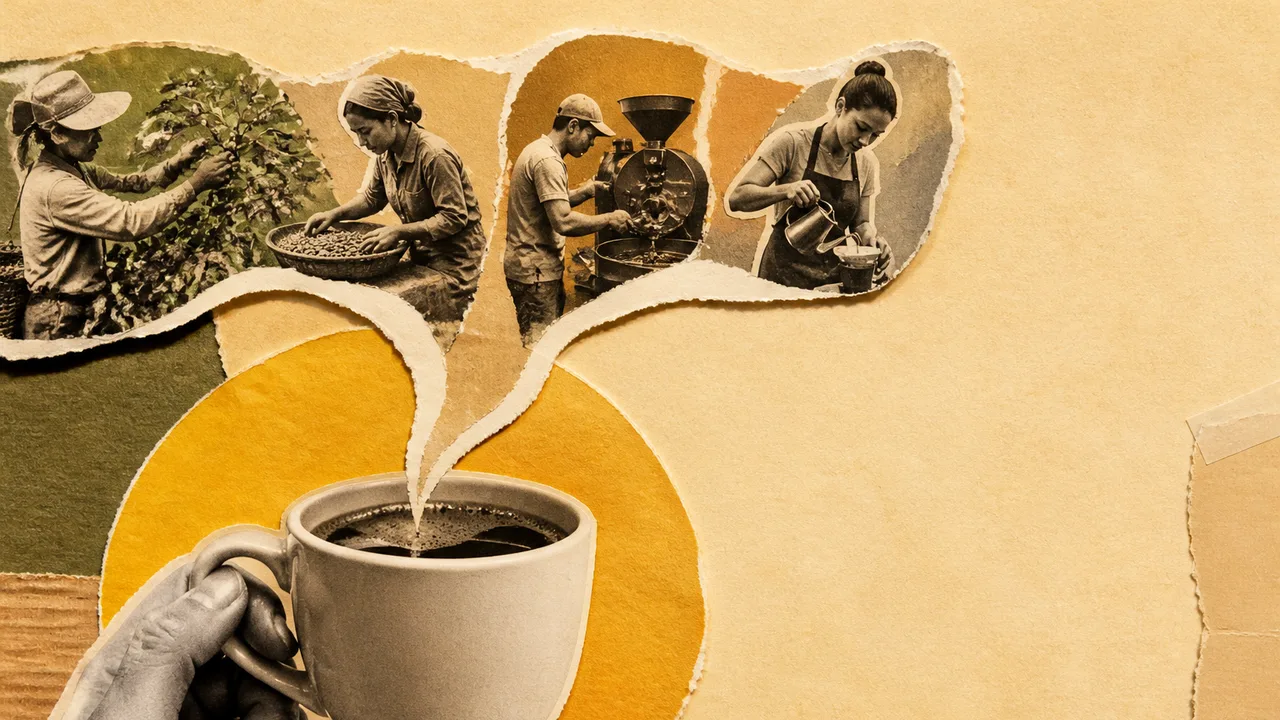
AJ Jacobs tried to thank the people responsible for his morning coffee. The writer’s coffee gratitude experiment begins with a cup most drinkers could prepare while thinking about three other things. Follow it backward, though, and the routine becomes a question: Who had to do something before this could happen?
You can ask that question without adopting Jacobs’s more ambitious plan. Notice the person who handed over the cup, then the work farther from view: growing the beans, moving them, preparing the place where coffee gets served. A cup holds a chain of decisions and labor that a hurried morning rarely makes room to see.
That gives gratitude a task. “Be more grateful” can sound like an instruction to produce a feeling on demand, especially when the day has already made demands of its own. Asking who helped make something possible directs attention toward people and work. It leaves room for the answer to be complicated.
Follow the Cup, Keep the People in View
Start with the part you can see. If someone made your drink, their work is immediate. If you made it yourself, you still depended on others before you opened the bag or switched on the kettle. The exercise widens from an interaction you might remember to labor you usually encounter only through a finished product.
You do not need an accurate roster of every person involved. Most coffee drinkers could not name the people who grew their beans or handled their shipment, and guessing names or working conditions would turn attention into fiction. The narrower observation holds up: many people contributed to an ordinary convenience, whether or not you can identify them.
That is also where a small practice becomes more interesting than a checklist. A conventional thank-you usually goes to someone close enough to hear it. Coffee asks you to consider people whose contribution reaches you without bringing you into contact. The person taking payment may get your thanks; someone farther along the chain probably will not. Both may have made your morning possible.
The Coffee Bean & Tea Leaf suggests thanking the people responsible for a morning coffee or tea as a simple place to begin. That suggestion has an obvious appeal: it attaches reflection to a routine instead of requiring a new appointment with yourself. A retailer also has a reason to present buying a drink as a pleasant ritual. Its invitation is useful as an idea, rather than evidence that the exercise changes anyone’s mental health.
What Happens When Gratitude Meets Work?
Coffee makes an awkward object for uncomplicated appreciation because it is also something people produce and sell. Someone may enjoy serving customers; someone else may be exhausted. The person drinking a cup cannot infer either experience from the drink. Gratitude can recognize that labor without pretending it was freely given as a personal favor.
This is one tension in Jacobs’s approach. Thanking people draws attention to them, but the person doing the thanking controls the story. A customer might leave a warm interaction believing everyone involved had a good morning. The workers involved may have different accounts. If the exercise prompts a question about who did the work and what conditions they work under, it can make the cup less automatic. It cannot answer those questions on its own.
There is no obligation to track down a stranger to complete the practice. A brief thanks to someone you actually meet can be appropriate. Trying to contact every person connected to a purchase could turn other people’s work into a project they never asked to join. For the workers you cannot reach, an honest acknowledgment may be enough: I benefited from work I did not see.
That thought can travel beyond coffee. Tea, breakfast, the bus that gets you to work: each routine offers a way to notice dependence on other people. Coffee is a useful starting point because the cup has a clear beginning in the morning and an endpoint in your hands. You can spend thirty seconds tracing it or keep thinking after the cup is empty. Neither choice requires a performance of cheerfulness.
A Pause Has Limits
For someone under strain, gratitude advice can arrive as one more assignment. Notice the good. Write it down. Feel better. The morning-cup exercise has a gentler use if it makes no demand for a particular mood. A person can notice the people behind a drink and still feel anxious, angry, lonely or worn out. No amount of attention to a supply chain settles a rent bill or creates an open therapy appointment.
That is a practical boundary. A pause may give someone a moment of perspective. Its value depends on the person and the morning; Jacobs’s exercise is a reflective prompt, not a demonstrated treatment for stress or a replacement for care. People dealing with persistent distress deserve support that meets the problem, including professional help when they want or need it.
Access to that help is uneven. Cost, insurance rules, waiting lists, geography and stigma can shape whether someone can get care at all. Those barriers make it especially important to avoid presenting an inexpensive personal ritual as a solution to a problem rooted in circumstances a person cannot change over breakfast. A coffee practice can sit alongside support, practical help and efforts to improve access. It cannot take their place.
It also need not involve coffee. Some people do not drink it; some mornings leave no time for a leisurely cup. The object directs attention. Pick a routine you already have and ask who helped make it possible. If the answer brings appreciation, let it. If it brings questions about work or fairness, those belong at the table too.
The next time Jacobs’s question reaches an ordinary cup, it need not end with a list of names or a better mood. It can end with a more accurate account of breakfast: someone else’s work helped put it there.
More Like This

Breaking Free from Limiting Cognitive Scripts
Explore how cognitive scripts impact decision-making and learn strategies to break free from limiting patterns in life, career, and relationships.

Maladaptive Daydreaming: When Fantasy Becomes Escape
Maladaptive daydreaming is vivid, hours-long fantasy that disrupts real life. Here's what psychology knows—and doesn't—about this under-researched experience.

When Feeling Stuck Is Actually Feeling Safe
The Art of Improvement argues comfort—not laziness—is what keeps people stuck. The idea is compelling. It's also worth examining carefully.

The Science Behind Becoming an Early Riser
Discover the neurological and behavioral strategies to make early rising effortless, not forced.

Gratitude Meditation: What the Science Supports and What It Doesn't
Gratitude meditation is everywhere, from Calm to Headspace. We look at what the research actually supports, where the apps oversell, and how to try it.

AHA Says 5 Cups of Coffee a Day Is Safe for Your Heart
The American Heart Association says up to 5 cups of coffee daily is safe and may lower heart disease risk. Here's what that actually means—and what it doesn't.

The Psychology Behind Intense Sports Fandom
What drives intense sports fandom? Research on identity, belonging, dopamine, and grief explains why devotion to a team runs far deeper than a game.

What Meditation Actually Is—and Isn't
Meditation's benefits are real, but so is the confusion around it. Here's what the evidence says about how it works, who it helps, and what it can't fix.