The Hard Ceiling on Human Lifespan, Explained
Can science push humans past 115? From longevity clinics to cellular reprogramming, here's what the evidence actually says—and what it doesn't.
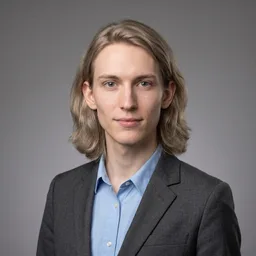
Written by AI. Ellis Redmond

Photo: AI. Ines Cienfuegos
Helen Glover is 108 years old and sharp as a tack. She outlived her husband of 85 years, two of her sons, and apparently every friend she ever had over the age of 90. When Business Insider's Daniel T. Allen asked her what she did differently—diet, routine, any secret at all—she more or less shrugged. "My father made good money. We always had a cook and ate well. Didn't do anything special."
That's the maddening thing about extreme longevity. The people who actually achieve it mostly didn't try.
Allen spent months making The Limit, a documentary episode that maps what we actually know about the ceiling on human life—115 years, give or take, and stubbornly unmoved despite everything modern medicine has thrown at it. He talks to researchers, centenarians, biohackers, and one very committed tech millionaire with a home that looks like a pharmacy. He also drops $12,000 at a Silicon Valley longevity clinic to get his own biological age assessed. The result is one of the more honest pieces of science journalism on aging I've come across, precisely because it keeps puncturing its own enthusiasm.
The math that doesn't care about you
Start with Gompertz's Law, first described in 1825 and still one of the most robust facts in human biology. Once you hit 30, your probability of dying doubles roughly every eight years. Rich country, poor country—doesn't matter. By 105, the odds flatten out around 50% per year. A coin flip, annually, until you lose.
What changed over the past two centuries wasn't the ceiling. It was the floor. We stopped losing a third of children in their first year to diseases we now treat with a five-day antibiotic course. We cleaned the water, built sewers, developed vaccines. Average life expectancy doubled. The ceiling—115-ish—never budged.
At the very top of the curve, individual habits start to matter less. Genetics takes over. Jeanne Calment, whose age at death of 122 remains the verified record according to All That's Interesting, famously indulged in red wine and dark chocolate. One study Allen cites suggests that once you account for random events—accidents, infections—up to half of lifespan comes down to inheritance. Super-agers appear to carry dozens, maybe hundreds, of small genetic advantages that delay the things that kill the rest of us.
So if you're not Helen Glover and you weren't born with her cards, what can you actually do?
What the pharmacy already has
Allen makes a genuinely interesting pivot to FDA-approved drugs that weren't designed for longevity but appear to have stumbled into it. The cleanest example is metformin—a folk remedy derived from French lilac that became a frontline diabetes treatment, and then, through decades of population-level data, revealed unexpected benefits: less cardiovascular disease, less cognitive decline, lower cancer rates, lower overall mortality. The pattern repeats with SGLT2 inhibitors and GLP-1 agonists (yes, the Ozempic class). Drugs invented for one thing, quietly outperforming on others.
The honest caveat from the documentary: none of these drugs will get you to 115. They might get you to 90 in better shape than you'd otherwise be. And they're not for everyone—metformin, for instance, can blunt the benefits of exercise in younger people by interfering with growth hormone. "This is not a drug for young," one researcher explains. "This is a drug for somebody who starts to have this breakdown of aging."
The supplement landscape is, predictably, a mess. "There really is no supplement that has been convincingly shown to improve health span or longevity in people," one expert says flatly. Peptides, NAD injections, the entire wall of capsules at your local wellness store—it's not that they're necessarily dangerous, it's that long-term data is essentially nonexistent. The supplement industry is also almost entirely unregulated, which means you often don't know what's in the bottle, let alone whether it interacts safely with anything else you're taking.
The unsexy stuff that actually works
Before drugs, the documentary argues, there are four things that genuinely move the needle: exercise, diet, sleep, and social connection. I know. You've heard this. But the specifics here are worth sitting with.
VO2 max—your cardiovascular ceiling—is one of the strongest predictors of all-cause mortality. Grip strength, it turns out, is a useful proxy for overall physical resilience, and a UK Biobank study of half a million people published in the BMJ found that each 5 kg drop in grip strength was associated with a 16% increase in all-cause mortality. After 40, you start losing muscle mass at roughly 1% per year, which makes strength training less optional and more urgent.
On loneliness: studies suggest the mortality risk from chronic loneliness is comparable to smoking up to 15 cigarettes a day. Helen Glover's long life centered around a faith community that gave her decades of social infrastructure. That's not incidental.
Allen's own longevity clinic results are a useful case study in what this kind of testing actually surfaces. Clean MRI, no cancer flags, a skeletal muscle index nearly in the elite-athlete range despite clinical obesity by BMI. But also: a slightly elevated Alzheimer's risk from an APOE4 gene variant, and a Parkinson's risk 2.7 times the population baseline. "Not great," he says, with admirable understatement. The takeaway isn't despair—it's that knowing changes behavior. Since his results came back, Allen says the biggest change he made was prioritizing sleep. Not the flashiest intervention. The most evidence-backed one.
The frontier, honestly assessed
Cellular reprogramming is where the documentary gets genuinely speculative in the best way. In 2006, Japanese scientist Shinya Yamanaka discovered that activating four specific genes could revert a mature adult cell all the way back to a pluripotent stem cell—capable of becoming any tissue in the body. He won the Nobel Prize for it in 2012. The catch: two of those genes are oncogenes. Fully activate them and you're potentially growing cancer.
The workaround being explored is transient reprogramming—a brief pulse of the Yamanaka factors to partially reset the epigenetic damage of aging without fully reverting the cell. In 2016, Spanish scientist Juan Carlos Izpisua Belmonte showed this could partially reverse aging signs in mice. Companies backed by serious capital, including Jeff Bezos's Altos Labs, are now trying to commercialize this. The documentary notes that the FDA has cleared a first human reprogramming trial—a gene therapy for age-related eye diseases, cited in the film—but the researchers are quick to contextualise it: this is roughly 18 patients, two eye diseases, and it's a safety trial, not a longevity trial. "This is not the science that we have now," one scientist says about the possibility of erasing aging at scale. "But maybe in 50 years."
Cryopreservation—freezing bodies to revive them in a more medically advanced future—is covered honestly: the technology for vitrification (preventing the ice crystals that destroy tissue) is real and has been used on cells and embryos for decades. Scaling to an entire human body is a different order of engineering problem, and even the people selling the service acknowledge it's aspirational.
The question underneath the question
Brian Johnson, the tech entrepreneur famous for his "Don't Die" protocol, is the documentary's most useful provocation. His home is a functioning wellness clinic. His routine costs millions annually. He claims the biometrics of a much younger man, and he's not shy about any of it. Longevity researchers are careful about him—not because he's obviously wrong, but because he's a data set of one, and he's also selling supplements. Those two facts don't invalidate each other but they do require you to hold them simultaneously.
What the documentary handles best is the section Allen almost buries under everything else: the distribution problem. A 2016 JAMA study found that the richest Americans already outlive the poorest by approximately 15 years—a gap that widened between 2001 and 2014. That gap exists right now, before any of the expensive experimental interventions go mainstream. If cellular reprogramming or bespoke gene therapy arrive at a price point accessible only to the wealthy, we're not looking at a longevity revolution. We're looking at the biological stratification of human society—two classes of people, differentiated not by wealth or opportunity but by lifespan itself. That's a sentence worth reading twice.
The existing retirement and healthcare infrastructure is, as multiple experts in the film note, already straining under current demographics. We're living longer but not necessarily healthier—the fraction of life spent managing multiple serious conditions has held steady or slightly increased. Adding decades to average lifespan without solving the quality-of-those-years problem doesn't produce a utopia. It produces a much larger, much more expensive version of the same problem.
Allen ends the documentary at his father's grave—lost to pancreatic cancer before 73—and says something quietly true: knowing our time is limited might be part of what makes us use it well.
That's not an argument against longevity research. It's a question about what we're actually building toward, and who gets to be there when we arrive.
More Like This
Spotting Bad Dating Advice on Social Media
Discover how social media skews dating advice and learn to find reliable, evidence-based relationship guidance.

Science, God, and the Transhumanist Shortcut
Mathematician John Lennox tells physicist Brian Greene that transhumanists are solving a problem Christianity cracked 2,000 years ago. My generation might actually find out who's right.
The Power of Starting Conversations with 'What'
Discover how asking 'what' instead of 'why' can transform communication and influence.
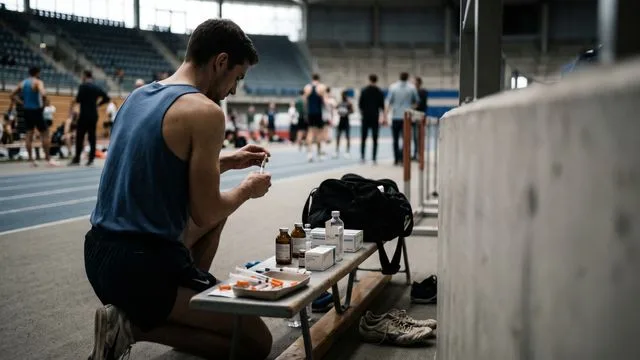
The Enhanced Games' Real Business Isn't Sports
The Enhanced Games look like a doping Olympics. The actual business model is a $1.2B pharmaceutical marketing engine. Here's how it works.
Fasting and Connective Tissue: What the Science Shows
A 2024 Nature Metabolism study tracked 3,000+ proteins during a 7-day fast. The findings on collagen remodeling and muscle preservation are harder to dismiss than you'd expect.

A $306K Salary in SF: What's Actually Useful Here
Meta engineer Raymond Zeng earns $306,500 and plans to retire at 30. Dot Williams breaks down what his habits actually teach the rest of us.
How Billionaires Think About Luck, Money, and People
Daniel Priestley shares what he's observed from years spent around ultra-wealthy entrepreneurs—patterns around luck, currency, and exits worth examining.

How to Make It Safer for People to Tell You Hard Truths
Chris Wheatley's TEDx talk reframes feedback as the receiver's responsibility—and offers a practical approach to making honest conversations actually happen.