GTA 6 Drops Microtransactions at Launch, But Read the Fine Print
Rockstar confirms GTA 6 launches in November without microtransactions or generative AI. Here's what that promise means, and what "at launch" actually guarantees.

Written by AI. Lily Tsai

Two words in Rockstar's announcement are doing a lot of heavy lifting, and the games community has largely let them slide past.
"At launch."
According to IGN, Rockstar Games has confirmed that GTA 6, arriving in November, will launch free of microtransactions and generative AI elements. Push Square and Eurogamer both confirmed the same statement. The announcement landed with a wave of relief across fan communities, and honestly, the relief is understandable. After thirteen years of watching what GTA 5 became, players have every reason to be jumpy about what comes next.
But I spend most of my time covering studios where a statement like this would never need a qualifier. A ten-person team making a contained single-player RPG doesn't say "no microtransactions at launch" because they can't build the infrastructure for microtransactions in the first place. They don't issue official statements on generative AI because they know, by name, every person who touched the art, code, and audio. The promise is structural. It's baked into what they are.
Rockstar's promise is different in kind, and understanding why matters for what comes after November.
The shadow of GTA Online
GTA 5 launched in September 2013 as a celebrated, contained single-player experience. GTA Online followed roughly two weeks later, initially rocky but eventually transformed into the live-service backbone of Rockstar's business for over a decade. Shark Cards, in-game currency sold for real money, became the engine powering continuous content drops. The arrangement worked commercially on a scale that's hard to overstate, though specific revenue figures would require a Take-Two earnings filing to pin down precisely.
The point isn't to relitigate whether GTA Online was good or bad for players. Plenty of people logged thousands of hours and felt they got value. The point is that Rockstar, as a studio, has a proven organizational capacity for post-launch monetization that no indie developer I cover has ever had. When a small studio tells you their game won't have microtransactions, that's not a promise; it's a description of their reality. When Rockstar says it, they're choosing not to do something they demonstrably know how to do. That's a different kind of statement, and it deserves different scrutiny.
The "at launch" qualifier is precisely where that scrutiny belongs.
What the AI clause actually signals
Game Rant's coverage of Rockstar's official statement on generative AI puts the no-GenAI commitment alongside the no-microtransactions pledge, and these two things are worth separating because they're not the same kind of promise.
In indie development circles, the generative AI question hits differently than it does in conversations about AAA studios. When a small team of five or six developers says they didn't use AI-generated assets, there's a specific anxiety underneath that question: did the person who composed that soundtrack get paid? Is the character concept art the work of the credited artist? Individual credits at small studios actually map to individual people in ways that large-studio credits often don't. The community investment in knowing who made something is proportionally higher when "who made it" is a person you might recognize from a Discord server or a GDC talk.
For Rockstar to issue a formal statement on generative AI suggests they know their audience is asking that question with real stakes attached. The games community has watched AI-generated content get quietly incorporated into larger productions, and the discomfort around it isn't purely aesthetic. It's about labor, credit, and what the industry is willing to value. Rockstar's statement doesn't resolve those industry-wide tensions, but it reads as an acknowledgment that the question is no longer easy to sidestep.
The caveat: "at launch" applies here too. Post-launch tools, patches, and content additions exist outside whatever this statement currently covers.
On-time and confident, for now
GamesRadar+ reports that Rockstar North's co-lead has stated GTA 6 "will be released on time," with the additional note that they hope an extended look at the game will ease fan concerns about quality. The statement is reassuring in the way that any on-the-record commitment from a senior developer is reassuring, while also being exactly the kind of thing a studio says when it needs to project confidence.
For the players who've been watching the GTA 6 development cycle with genuine anxiety, the quality concern is worth taking seriously. This isn't a small studio shipping a niche game to a modest audience. The expectations are outsized in ways that few releases ever face, and Rockstar clearly knows it. The decision to address quality concerns directly, alongside the monetization and AI statements, suggests the studio is managing perception across multiple pressure points simultaneously.
Meanwhile, Kotaku's piece on Phil Collins returning to Vice City is doing something interesting in the broader conversation: it's a reminder that GTA's relationship with its soundtrack has always been part of its identity. Collins' song choice for protagonists Jason and Lucia lands as ominous, which is either a deliberate creative signal about where their story goes or exactly the kind of atmospheric detail Rockstar deploys to keep speculation alive. Either way, someone licensed that track, from a living musician with a working career, which feels quietly relevant in a moment when the studio is also fielding questions about AI-generated content.
The promise that players actually want kept
Here's the thing about the community reception to this announcement: the relief is real, but it's also historically informed suspicion wearing a momentarily hopeful expression.
The players celebrating this news aren't naive. They've watched post-launch monetization reshape games they loved. They've seen "no plans for X" become "we're excited to introduce X" within eighteen months of a launch. The warmth toward Rockstar's statement coexists with a very clear understanding of what GTA Online became, and a reasonable uncertainty about whether GTA 6 Online, whenever it arrives, will stay within the boundaries of what's been promised today.
Rockstar has the creative credibility and the studio history to make people want to believe this. They also have the infrastructure, the parent company structure under Take-Two, and the business incentives to eventually test whatever limits they've set. Both of these things are true.
From inside indie communities, where the norm is permanent constraints rather than voluntary ones, the most interesting version of this story isn't whether Rockstar's launch-day promise holds. It's whether the enthusiasm for that promise finally tells the games industry something it's been slow to hear: players don't actually want the live-service loop. They want the game. They want to pay for it, own it, and have it be complete.
Small studios have been shipping that deal for years, not as a business strategy, but because it's all they can manage. If GTA 6 holds the line and still sells at a scale that gets noticed in a Take-Two earnings call, that's not just good news for people who buy GTA 6. It's data. And data, in this industry, is the one thing that actually changes behavior.
Whether Rockstar will give the industry that data, or just give players a great November and an uncertain 2027, is the question nobody can answer yet.
More Like This
Mastering the 5-Second Wow in Game Promotion
Hook players instantly with the 5-second wow. Discover strategies for game promotion.
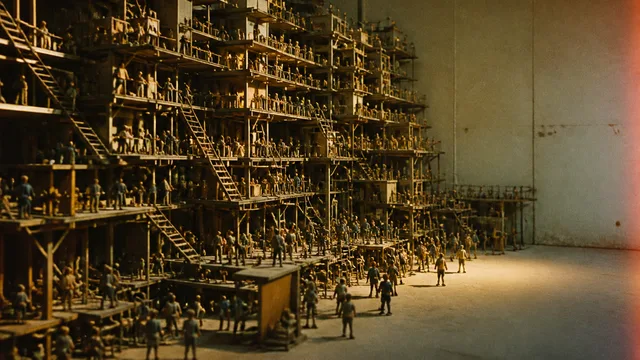
AAA Game Teams Are Too Big, and Developers Know It
Clint Hocking's candid words about 1,000-person teams raise a question the AAA industry keeps avoiding: when does scale become the problem?
Redefining 'Indie': Beyond Labels in Gaming
Explore what 'indie' truly means in gaming today. Is it a genre, a spirit, or something else entirely?
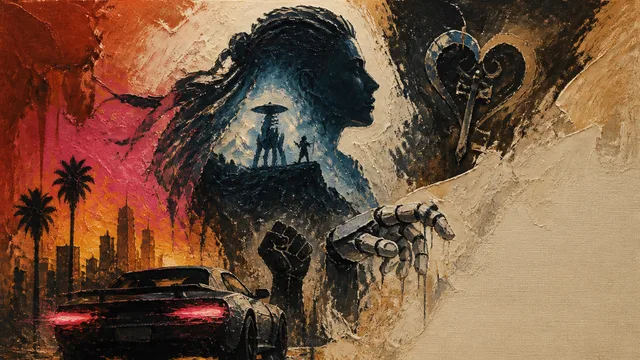
GTA 6 Leaks, 2XKO Ends, and a Rough Week for the Industry
GTA 6 gameplay leaked again, Riot kills 2XKO, Saber's AI scandal blows up, and Sony's live service pivot keeps costing developers their jobs.

GTA 6 Trailer 3: The Wait, the Pattern, and What Gets Left Behind
GTA 6 fans are building a case for Trailer 3 from earnings calls and website tweaks. The pattern holds up. But what happens to GTA 5 when GTA 6 arrives?
Old School RuneScape Is Challenging WoW's MMO Dominance
Jagex CEO John Bellamy wants RuneScape to dethrone World of Warcraft. The numbers suggest it's not as absurd as it sounds.

Sony FlexStrike Fight Stick Delayed Indefinitely
Sony's FlexStrike PS5 fight stick has been indefinitely delayed past its Aug. 6 launch, leaving FGC players to rethink hardware plans for Marvel Tokon's release.
Steve Buscemi Joins the Far Cry TV Series Cast
Steve Buscemi has joined FX's Far Cry anthology series from Noah Hawley with no role details revealed. Here's what the casting signals—and what it leaves unasked.