Grok Bot Review: Capable Agents, Costly Lock-In
Grok Bot delivers plug-and-play AI agents at $200/month — but the lock-in terms may cost you more than the subscription. Here's the full picture.

Written by AI. Bob Reynolds

Photo: AI. Wren Sugimoto
Grok Bot arrived this week, and it landed with more force than most product launches in this space. Built by xAI — which now includes the team behind Cursor — it pairs the company's Grok models with a cloud-based agent infrastructure that non-technical business owners can actually use without reading documentation. That combination turns out to be rarer than it sounds.
The pitch is straightforward: instead of spinning up remote servers, wrestling with APIs, and configuring automation stacks, you talk to your agents the way you'd message a colleague on Slack. Each agent gets its own cloud computer — a persistent Linux environment with a browser — and you assign them roles. Your inbox manager handles email. Your account manager coordinates campaigns. They can work together on group tasks, hand off jobs between each other, and keep running while your laptop is closed. As Authority Hacker's Gael Breton put it, "it's the closest thing to a plug-and-play AI employee." The Grok Bot agent workflow has been demoed across a range of tasks, and the interface holds up.
The appeal is real. Plenty of business owners have wanted this kind of always-on automation for years but bounced off the technical barrier. Grok Bot removes that barrier. The question is what it puts in its place.
What You're Actually Buying at $200 a Month
The minimum entry is $200 per month, and the usage limits attached to that are reportedly generous — Grok's underlying model runs cheaper than GPT-5 class alternatives, so xAI has room to be liberal with compute. But there's a structural constraint worth understanding before you build anything on this platform: you cannot bring your own API key. There is no way to swap in a different model if something better ships next month. Every piece of agent infrastructure you construct — the roles, the memory, the tool access — is built inside a walled garden.
Breton is direct about the implications: "It's a cool thing — they basically made it a lot easier — but you're going to pay for it via the fact that they can do whatever they want with the pricing." That's not a hypothetical risk. The AI model landscape has reshuffled meaningfully every few months. If you'd bet heavily on Gemini infrastructure twelve months ago, you'd be renegotiating your setup right now.
The lock-in economics are worth mapping carefully. Once you've built complex agent workflows — with tailored memory, custom tool permissions, and workflows that span multiple agents — exporting that setup is not a clean process. You can ask the agents to produce summary reports, but you cannot migrate the plumbing.
Hermes: The Option That Costs You Technical Overhead, Not Flexibility
Hermes Agent — the open-source framework, not the bag company — released a "bot mode" this week that does most of what Grok Bot does at a fraction of the price. You connect whatever model you want: OpenAI, Anthropic, DeepSeek through OpenRouter, whatever makes sense for your budget or the task. Hermes Cloud starts at around $20 a month and still lets you plug in your own model provider.
What you give up is the polish. Breton walked through the Hermes desktop interface on the podcast, and the visual gap between it and Grok Bot is significant. The Hermes website looks like it was designed in 2019. The configuration options are extensive to the point of being daunting. Maintenance falls on you. It's closer to WordPress than Webflow — which is precisely the analogy Breton reached for, and it's accurate.
But here's what that comparison obscures: you don't necessarily have to touch the server yourself. Breton's own setup involves using Codex to provision and configure Hermes on a DigitalOcean VPS entirely through natural language instructions. He never logged into the server directly. Codex handled the install, the API configuration, the permissions. The authentication was the only step that required human interaction. After that, he manages the agents by telling Codex what he wants changed.
This is the approach that narrows the gap. You trade Grok Bot's seamless onboarding for a setup process that still requires a competent AI coding tool — but once it's running, you have model flexibility, lower monthly costs, and no vendor holding the exit door. As Breton noted, when OpenAI releases a new model, he can just buy that subscription and swap it in. Grok Bot users will be wishing they could do the same thing.
For small businesses with a shared team, the value case for this category of tool sharpens considerably. These agents living in Slack or Notion — handling social posts, preparing GitHub PRs, fielding team requests — function as genuinely shared infrastructure rather than a personal productivity layer. That's a different use case than Claude Code or Codex, which Breton describes as an "exoskeleton" you put on yourself. The agents are employees. The coding tools are augmentation.
ChatGPT Computer History Is Surveillance That Actually Works
OpenAI shipped a feature this week that deserves more attention than it's getting, and not because it's comfortable. According to OpenAI's feature documentation, Computer History — available as an opt-in on the Mac app — records your clicks, app switches, and accessibility context as you work. It excludes screenshots, audio, and private browsing activity, and stores a rolling window of activity data locally before passing summaries to OpenAI's servers. The feature then surfaces automation suggestions based on what it observes.
The automation payoff is legitimately interesting. You go about your work, and ChatGPT behaves like a consultant watching over your shoulder — flagging repetitive tasks and offering to codify them as skills you can schedule. A report you read every Monday morning becomes a scheduled automation. A workflow you repeat across apps becomes a reusable prompt. Breton's suggested use case: turn it on for a week, identify what can be automated, build those skills, then turn it off.
What the feature does not promise, per its own documentation, is that it will filter out sensitive data — banking credentials, private communications, anything you wouldn't want logged. Per OpenAI's data usage policy, enterprise API customers are not subject to training on their data. But individual plan users operate under different terms, and Breton's skepticism about where this data eventually travels is well-founded: "Who knows what's actually going on behind that — is there some loophole?"
The corporate application is the part that will generate the real argument. Breton floated it plainly: a manager with 5,000 employees could turn this on, let it run for a month, identify what's automatable, and restructure headcount accordingly. That's not a dystopian fantasy — it's a reasonable projection of how enterprise software procurement decisions get made when efficiency metrics are the performance target.
OpenAI knows this. They're reportedly trailing Anthropic on enterprise revenue right now, and Computer History is exactly the kind of feature a sales rep brings to an executive briefing. The pitch writes itself.
Two Other Things Worth Noting
OxAlpha, an anonymous model that appeared on OpenRouter and other API platforms this week, is being offered for free with what's reportedly a one-million-token context window — a claim circulating widely, including in coverage of the model's OpenRouter debut. On coding benchmarks run against Claude Opus and GPT-class models, it reportedly outperformed both in one developer's tests, though the sample sizes are small. Nobody knows who built it. That's probably deliberate — the mystery-drop strategy generates disproportionate attention for smaller labs, and the reveal tends to come once the buzz has peaked. If you have batch tasks that need a capable model this week, it's worth running some tests while it's free.
And LinkedIn quietly added an "AI slop" reporting button to posts — ironic for a platform that spent the last year aggressively shipping AI writing and commenting features. Breton's read is correct: this is a user-sentiment data collection exercise more than an enforcement mechanism. Microsoft, which owns LinkedIn, sells AI infrastructure through Azure. The button is a gesture. The platform's long-term direction — AI-generated content feeds, creator revenue displacement — is a separate and more consequential question.
The Decision That Actually Matters
Grok Bot works. That's not in dispute. What's in dispute is whether paying $200 a month to lock your agent infrastructure to a single model provider — at a moment when the model rankings shift every quarter — is the right trade for your specific situation.
If you're non-technical and you need something running this week without help, Grok Bot is the answer. If you're willing to spend a few hours getting Codex to set up Hermes on a VPS, you get most of the same capability, model portability, and a much smaller monthly bill.
The tech is genuinely good. The terms are where you earn your money back — or don't.
More Like This
Five AI Models Dropped This Week—Here's What Changed
Anthropic's Claude Sonnet 4.6, Google's Gemini 3.1 Pro, and xAI's Grok 4.2 all launched this week. What do these updates actually mean for users?
Hermes Agent Hit 100K GitHub Stars Faster Than Any Project Ever
Hermes Agent reached 100,000 GitHub stars faster than any project in history. Here's what's driving the growth—and what it means for AI agents.

How Agent Operating Systems Handle Always-On AI Tasks
Julian Goldie's Agent OS community session reveals how scheduled tasks, token management, and model orchestration work—and where the friction actually lives.
AgentZero's Sub-Agents: Self-Modifying AI Delegation
AgentZero demonstrates AI agents that create and manage specialized subordinates on demand. The system modifies itself—which raises practical questions.
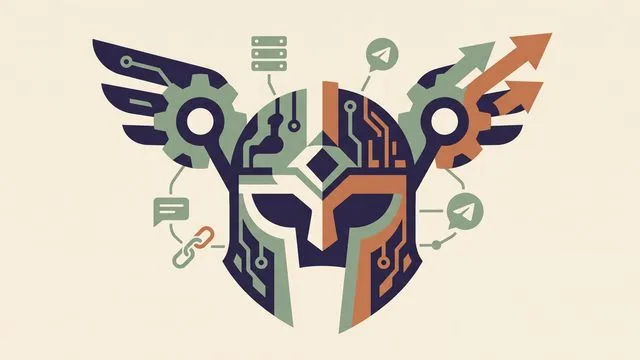
Hermes Agent: The Self-Improving AI on Your Own Server
Hermes Agent is an open-source AI assistant that runs on your own infrastructure, learns from your workflows, and automates tasks via Telegram. Here's what it actually does.

Grok Bot Review: AI Agents for Business Automation
Grok Bot pairs Cursor's coding infrastructure with xAI to deliver cloud-based AI agents for business automation. Here's what it does and what it costs.

Automattic's 30-Day AI Experiment Changed How Designers Work
Automattic paused its product roadmap for 30 days and let teams build freely with AI tools. What a designer shipped — and what it means for how software gets made.

How Theo Cut a $2,000 AI Coding Run Down to $150
Developer Theo shows how configuring Claude's Fable 5 as an AI orchestrator—not just a chatbot—cleared a month of backlog in three days for around $150.