Five AI Models Dropped This Week—Here's What Changed
Anthropic's Claude Sonnet 4.6, Google's Gemini 3.1 Pro, and xAI's Grok 4.2 all launched this week. What do these updates actually mean for users?

Written by AI. Yuki Okonkwo
The AI labs had a busy week. Five new models dropped between Tuesday and Friday, which sounds exciting until you realize that most casual users probably won't notice the difference. That's not a criticism—it's just where we are in the model release cycle.
Matt Wolfe walked through the releases in his latest video, and the pattern is clear: we're in an era of incremental improvements targeted at developers and API users, not flashy demos that make headlines. Let's map what actually changed.
The Anthropic Update Nobody Asked For (But Developers Will Love)
Claude Sonnet 4.6 landed this week, and Anthropic's positioning is interesting. They're not claiming it's smarter than their flagship Opus 4.6 model—it's not. Instead, they're saying "hey, you can now get almost Opus-level performance at Sonnet pricing."
The benchmarks back this up. On SWEBench verified (a coding benchmark), Sonnet 4.6 scores 79.6% compared to Opus 4.6's 80.8%. On agentic computer use tasks, it's 72.5% versus 72.7%. The differences are marginal enough that for most API use cases, you'd be paying significantly less for nearly identical results.
Wolfe tested it himself and was refreshingly honest: "Most people that are using Claude on a day-to-day basis are probably not going to notice a huge difference in how it was performing before and after this update."
The real wins are behind the scenes. Sonnet 4.6 gets a 1 million token context window (though only for API users, not in the chatbot interface). It also includes improved web search with "dynamic filtering"—basically, it reads websites and only pulls relevant chunks into context instead of dumping entire pages, which saves on token costs.
For regular users, the most tangible update might be Claude's integration with PowerPoint. If you're on the Pro plan ($20/month), you can now generate entire slide decks from descriptions or create charts based on data you feed it. But the feature I find genuinely clever is the Claude-to-Figma integration. Developers can send production code directly to Figma, edit the design collaboratively, then round-trip it back to code. That workflow—code to design to code—feels like it could actually change how small teams work.
Google's SVG Flex
Google released Gemini 3.1 Pro, and similar to Anthropic, they're targeting specific use cases rather than claiming general superiority. The model dominates in scientific knowledge benchmarks and abstract reasoning (it tops the Arc AGI 2 benchmark by a notable margin). But if you're doing general coding work, you're probably still reaching for Claude Opus 4.6 or GPT-5.3.
The party trick everyone's sharing is animated SVG generation. Wolfe tested it by asking for "an animated SVG of a greywolf playing basketball," and after about three minutes, the model produced... well, a recognizable greywolf playing basketball. The headband covered the eyes and the jersey number was in the wrong spot, but it worked. Google's own examples—a pelican on a bicycle, a giraffe in a tiny car—show noticeable improvement over previous versions, largely because Gemini 3.1 Pro uses gradients more effectively.
If you're building web interfaces and need animated graphics, this could be your model. For everything else, you're probably model-hopping based on the task.
Google also shipped Lyria 3, their music generation model (basically their answer to Suno). It's free to use in the Gemini app, but limited to 30-second clips. Wolfe prompted it for "an upbeat dubstep song about the San Diego Padres" and got exactly that—including lyrics about Petco Park and way too many instances of "let's go Padres." It's fun, not serious.
More interesting for businesses: Google's Pomelli tool analyzes your website, extracts your brand DNA (colors, fonts, values), and generates studio-quality product photos. Wolfe fed it an image of fictional glass-shard cereal he'd made in a previous video, and within 45 seconds, Pomelli produced multiple product shots—cereal box on a table, someone holding it over a bowl, studio lighting variations. If you're running an e-commerce operation without a big photo budget, this seems genuinely useful.
NotebookLM also got an update that lets you revise slides by prompting changes. Want the background to be grid paper instead of solid color? Just ask. It's a small feature that Google barely announced (just an X post), but it's the kind of quality-of-life improvement that compounds if you're using the tool regularly.
The Four-Agent Council
xAI's Grok 4.2 launched with minimal fanfare—Elon tweeted about it, and that was basically it. No blog post, no benchmark page from xAI themselves.
The architecture is different: when you prompt Grok 4.2, it consults four specialized agents (Harper for research/fact-checking, Benjamin for logic/code, Lucas for creative thinking, and Grok as coordinator). They think in parallel, debate, and reach consensus before responding.
According to Grok itself—and this is where things get fuzzy because there's no official xAI documentation—the model describes its agents as working "in real time" to "cross-check each other" before delivering responses. Wolfe noted that the benchmarks floating around X are all user-reported, not officially published by xAI, which makes it hard to evaluate performance claims.
It's an interesting approach to model architecture—consensus-based reasoning could reduce hallucinations and improve reliability. But without transparent benchmarking or third-party validation, we're basically taking xAI's (and Grok's own) word for it.
What This Week Actually Tells Us
We're in a phase where model improvements are real but narrow. Sonnet 4.6 is genuinely better at financial analysis and office tasks than Opus 4.6, but the average ChatGPT-style conversation won't reveal that. Gemini 3.1 Pro excels at scientific reasoning and animated SVGs, but you need to be doing that specific work to care.
The pattern across all three releases is similar: marginal benchmark improvements, API cost optimization, and features that matter more to developers than end users. That's not a bad thing—better models at lower prices compound over time—but it does mean the "wow" moments are getting rarer.
The real question is whether we're hitting a ceiling on what current architectures can do, or whether we're just in a consolidation phase before the next leap. Grok 4.2's multi-agent approach suggests labs are experimenting with different paradigms, but the results so far are... fine. Not revolutionary.
For now, if you're a developer, this was a solid week. If you're everyone else, you probably didn't notice.
More Like This
Teaching Claude to Remember: The SKILL.md Workflow Revolution
Creator Hamish turned 45 minutes of daily thumbnail work into a 10-minute AI workflow. Here's how SKILL.md files are changing what's possible with Claude.
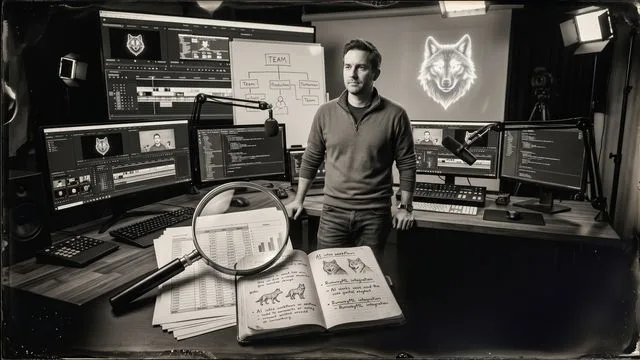
Inside Matt Wolfe's AI Creator Operation
Matt Wolfe breaks down the real costs, team structure, and AI workflows behind one of YouTube's biggest AI channels. The numbers are surprising.

How Optimization Powers Modern AI and Engineering
From training ChatGPT to imaging black holes, optimization is the hidden engine behind modern AI and engineering. Steve Brunton's lecture explains how.
ChatGPT Ads Are Here—and the Playbook Looks Familiar
OpenAI is testing ads in ChatGPT. The current version looks fine. But if you've seen how Google and Facebook evolved, you know where this could go.
Grok 4.2: The Fast, Furious Future of AI Coding
Explore Grok 4.2's cutting-edge AI advances in coding and reasoning. Stealth models like Quantumcrow are making waves.
AI Productivity Tools Are Making Workers Exhausted, Not Efficient
Research shows AI tools intensify workloads rather than reduce them, leading to cognitive exhaustion researchers are calling 'AI brain fry.'

David Patterson on CPUs, GPUs, TPUs, and 50 Years in Computing
Turing Award winner David Patterson breaks down RISC vs. CISC, the GPU-to-TPU shift, Moore's Law's real status, and what 50 years in computing actually taught him.

OpenAI Launches GPT-5.6 Sol, Terra, and Luna Models
OpenAI's GPT-5.6 family—Sol, Terra, and Luna—is rolling out globally. Real users, real tasks, real questions about what "capable" actually means.