Grok 4.2: The Fast, Furious Future of AI Coding
Explore Grok 4.2's cutting-edge AI advances in coding and reasoning. Stealth models like Quantumcrow are making waves.

Written by AI. Yuki Okonkwo
Grok 4.2: The Fast, Furious Future of AI Coding
Picture this: Elon Musk, coffee in one hand, a vision of the future in the other. His brainchild, Grok 4.2, is about to drop like the surprise album of the year. 🚀 This next-gen AI model has been secreted away in early stealth tests, and the buzz is real.
The Grok Awakens
Early tests on platforms like LMArena reveal Grok 4.2's potential to reshape the AI landscape. These stealth models—Quantumcrow and Vortexshade—sound like characters from a superhero comic, but they're flexing some serious muscle. They're not just fast; they're efficient, and they’re about to make a splash in the AI pool.
"Grok 4.2 will significantly be stronger in several key areas: coding, multimodal output, video understanding, and advanced reasoning," Musk has publicly stated.
So, why should we care? Well, imagine an AI that can handle complex coding tasks, reason like Sherlock Holmes, and understand videos. This isn’t just another model—it's a potential leap forward, kind of like when smartphones went from flip phones to full-screen touch.
Speed vs. Quality: The Eternal AI Battle
The stealth models—Quantumcrow (4.20) and Vortexshade (4.20 Heavy/Thinking)—are already impressing with their speed and quality. Users can test these models on platforms like Design Arena and Alamarina, and the feedback? Mostly positive. But there's a catch: they require a few nudges (read: multiple prompts) to get the best results. It's like asking your cat to pose for a photo—sometimes you get a majestic lion, and other times, a blur of fur.
The Coding Conundrum
While Grok 4.2 shines in efficiency, it’s still playing catch-up with the coding quality of models like Gemini 3.0 and Opus 4.5. Yet, it holds a trump card: pricing. Grok models are competitive, making them accessible for developers who want to harness cutting-edge AI without selling a kidney.
"These stealth models are definitely a clear step forward from Grok 4.1," notes an early tester. "They shine in efficiency, which is great, outperforming many competitors in speed to quality ratio."
The Future is Dense (In a Good Way)
The buzz around Grok 4.2 is also due to its dense architectural optimizations—think of it as upgrading your car’s engine without adding extra weight. This means better performance without guzzling more compute power. Grok 4.2 might just be the eco-friendly powerhouse of AI models.
But here's where things get spicy: despite these advancements, Grok 4.2 isn't quite the state-of-the-art leader. Yet. It's like the new kid on the block who's just learned to moonwalk—impressive, but still figuring out how to breakdance.
Let's Talk Pop Culture
If Grok 4.2 were a movie, it’d be that cult classic you heard about before it blew up. Early tests show promise, but like any good superhero origin story, there's room for growth. The model’s ability to handle real-world tasks and video understanding could make it the daily driver for many developers—if it nails the execution.
Grok's Speed Edge in a Crowded Field
So, is Grok 4.2 the AI model we've all been waiting for? In the words of the internet: "Maybe." With its blend of efficiency and potential for greatness, it’s like the AI equivalent of a meme stock—volatile but exciting.
For those curious about the nitty-gritty, the original tests and more detailed info are available through LMArena and Design Arena. Dive in, explore, and maybe, just maybe, you'll find that Grok 4.2 is the AI sidekick you never knew you needed.
More Like This
Five AI Models Dropped This Week—Here's What Changed
Anthropic's Claude Sonnet 4.6, Google's Gemini 3.1 Pro, and xAI's Grok 4.2 all launched this week. What do these updates actually mean for users?
AI in Code Debugging: Risks and Rewards Explored
Explore AI's role in coding: from regression tests to debugging, balancing innovation with potential risks.

Claude Jupiter Leaks and a Gemini Flash Upgrade Point to May 6
Anthropic's mysterious Claude Jupiter model surfaces in testing while Google quietly upgrades Gemini Flash. Plus: OpenAI adds pets to Codex, and AGI benchmarks humble everyone.
2025: AI Transforms Coding with Reasoning Models
Discover how AI, reasoning models, and coding agents reshaped coding in 2025, boosting efficiency and sparking innovation.
Claude's Agent Teams Let AI Coders Actually Talk to Each Other
Anthropic's new Agent Teams feature lets multiple Claude AI instances communicate directly, cutting code review time from 10 minutes to 2-3. Here's what changes.
Enhancing Gemini 3: The Power of 'King Mode' Prompt
Explore how the 'King Mode' prompt transforms Gemini 3's coding capabilities, enhancing backend logic and instruction adherence.
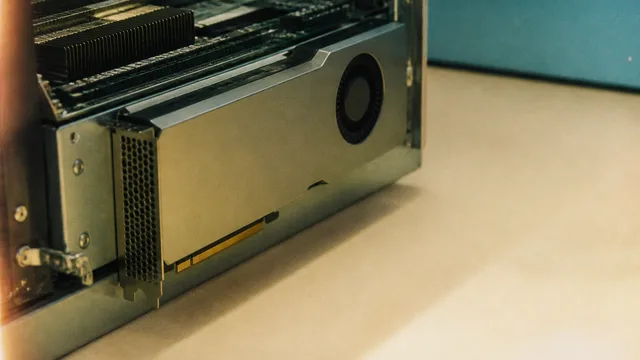
AMD Instinct MI350P: 144GB HBM3E in a PCIe GPU
AMD's Instinct MI350P brings 144GB of HBM3E and 3.6TB/s bandwidth to standard PCIe servers. Here's what it means for the mid-market AI infrastructure gap.

How Optimization Powers Modern AI and Engineering
From training ChatGPT to imaging black holes, optimization is the hidden engine behind modern AI and engineering. Steve Brunton's lecture explains how.