Teaching Claude to Remember: The SKILL.md Workflow Revolution
Creator Hamish turned 45 minutes of daily thumbnail work into a 10-minute AI workflow. Here's how SKILL.md files are changing what's possible with Claude.

Written by AI. Yuki Okonkwo
There's this moment in The Matrix where Neo needs to learn kung fu, so they just... upload it directly to his brain. Hamish from Income Stream Surfers keeps referencing this scene when he talks about SKILL.md files for Claude, and honestly? It's not as ridiculous an analogy as it sounds.
Hamish just demonstrated how he turned a 45-minute daily task—creating YouTube thumbnails—into a 10-minute workflow that Claude handles with minimal supervision. The approach involves creating custom "skill" files that Claude loads like instructions, complete with external tool integrations, image generation capabilities, and learned preferences from successful examples. What makes this interesting isn't just the time savings (though that's substantial). It's what happens when you can teach an AI assistant domain-specific knowledge that persists across conversations.
The Core Concept: Teaching Claude Your Workflows
SKILL.md files are essentially detailed instruction sets stored as markdown documents. When loaded into a Claude conversation, they function like procedural memory—Claude knows not just what to do, but how you specifically want it done.
Hamish's process starts by finding someone who's already excellent at what you're trying to automate. For thumbnails, he grabbed transcripts from Learn by Leo, a creator who "not only talks about how to go viral, has actually gone viral himself." That transcript becomes the foundation—Claude learns thumbnail theory from someone with proven results.
But here's where it gets interesting: the skill file doesn't stop at theory. Hamish layers in:
- Tool integrations (Gina.ai for image scraping, Gemini API for generation)
- Specific prompting instructions for image generation
- Examples of his own high-performing thumbnails and titles
- Environmental variables for API keys
The result is a skill that combines expert knowledge, technical capabilities, and personalized preferences. It's not just "make a thumbnail"—it's "make a thumbnail the way I make thumbnails, using these tools, in this style, with this level of specificity."
The Surprising Problem: Too Much Learning
Midway through the demo, Hamish hits something unexpected. The skill keeps generating the same style of thumbnail repeatedly. The culprit? He'd included example images in the skill file itself.
"You don't want to give it bias in the skill," he explains while removing the examples. "When you give bias to AI, it just does the same thing over and over, right? It just follows what you have as an example."
This is fascinating because it inverts the usual complaint about AI outputs. We're used to outputs being too generic, too "AI-looking." Here, the problem is the opposite—the system learned too well from specific examples and couldn't generalize beyond them.
The fix reveals something about how these skills should be structured: principles over examples, capabilities over templates. Give Claude the tools and the theory, let it synthesize rather than copy.
What Actually Works (And What Doesn't)
Hamish's enthusiasm is genuine, but he's also clear-eyed about limitations. He mentions trying to automate his video editing: "I made it so I could even edit my own videos. Now, I'm not doing that because I actually don't like the result. It felt too inauthentic to be honest with you. You can tell it's edited by AI."
This distinction matters. The thumbnail workflow succeeds because:
- The output is modular: A thumbnail is a discrete deliverable with clear parameters
- Quality is measurable: Click-through rates provide objective feedback
- Style can be learned: The aesthetic follows patterns that AI can recognize and reproduce
- Iteration is cheap: If it's wrong, you regenerate
Video editing fails (for now) because authenticity isn't reducible to parameters. Viewers can feel when pacing is algorithmic rather than intuitive. The uncanny valley still exists for certain creative tasks.
The workflow produces decent thumbnails and excellent titles. Hamish ends up splitting the functionality—using the new skill for title generation where it excels, keeping his earlier (off-camera) workflow for the actual thumbnail design where it performs better. The system isn't replacing human judgment; it's augmenting specific pieces where AI capabilities align with task requirements.
The Broader Pattern
What Hamish stumbled onto extends beyond thumbnails. He mentions potentially building a system to scrape LinkedIn for people at specific companies, then reaching out via Resend or LinkedIn messaging. That's the same pattern: combine Claude's reasoning with external tools (Bright Data for scraping), wrap it in a skill file with your specific outreach approach, execute at scale.
The technique works because it solves a real problem with conversational AI: context window limitations and the lack of persistent, specialized knowledge. Every new Claude conversation starts from scratch unless you reconstruct your preferences manually. SKILL.md files are procedural memory that survives between sessions.
This isn't new in concept—developers have used system prompts and instructions forever. What's shifted is the ease of creation and the sophistication of what these instructions can encompass. Hamish went from problem to working solution in ten minutes. That's the notable part.
The Authentication Question
One thing Hamish breezes past: "This has been about 10 minutes and this has replaced my ability to make thumbnails for myself. So just think about that. That is a skill that was taking me 45 minutes a day I would say."
But has it? The demo shows Claude generating a thumbnail, not necessarily one Hamish would actually use. He's already said his off-camera version works better for the actual design. The time savings might be real, but the measurement is fuzzy.
This matters because the promise of AI automation often outpaces the reality. Yes, the system generates output quickly. Does that output meet your standards? Does it require editing? How much? The 45-minutes-to-10-minutes claim is compelling but incomplete without knowing what percentage of generated thumbnails ship as-is.
I don't think Hamish is being misleading—his enthusiasm feels genuine. But there's a gap between "this is possible" and "this replaces the previous workflow completely." Most automation lands somewhere in the middle: faster, but still requiring human judgment.
What This Means for AI Tool Development
The SKILL.md approach suggests a different direction for AI product development. Instead of building increasingly complex UIs or fine-tuned models for specific tasks, what if the path forward is better primitives for teaching AI your way of working?
Claude (and other models) are already capable of sophisticated reasoning and tool use. The bottleneck isn't raw capability—it's the configuration layer. How do you encode your workflow in a way that persists and executes reliably?
Hamish's answer is markdown files with clear instructions, tool integrations, and learned preferences. It's almost hilariously simple. And it works well enough that he's considering releasing a library of pre-built workflows.
The question is whether this approach scales or whether it's a clever hack that works for specific use cases. My guess: both. Some tasks will always need bespoke human judgment. But there's a larger category than we think where "here's how I do this thing, please do it that way" is sufficient instruction for an AI to provide genuine leverage.
That's the actual insight here—not that AI can make thumbnails, but that you can teach it to make your thumbnails, incorporating your taste, your tools, your proven patterns, in about the time it takes to drink a coffee.
More Like This
Claude Just Got Skills for Excel and PowerPoint
Anthropic released three major updates to Claude's Office integrations, including custom Skills that let you automate workflows in Excel and PowerPoint.
Five AI Models Dropped This Week—Here's What Changed
Anthropic's Claude Sonnet 4.6, Google's Gemini 3.1 Pro, and xAI's Grok 4.2 all launched this week. What do these updates actually mean for users?
Claude Code & Remotion: A Game-Changer for Video
Explore how Claude Code and Remotion transform video creation with AI-driven motion graphics. Dive into the future of content creation.
Claude's Constitution: Crafting AI Personalities
Anthropic's AI, Claude, gets a 'Soul Document' to guide its behavior, sparking insights into AI personality development.
ChatGPT's Codex App Promises Automation Without the Hack Risk
OpenAI's new Codex app offers secure AI automation for tasks like SEO indexing and code deployment—positioning itself as a safer alternative to tools like Cursor.
Google's gwscli: Built for AI Agents, Not Humans
Google's new gwscli tool optimizes Google Workspace for AI agents with nested JSON and runtime docs. But does it signal the end of MCP servers?
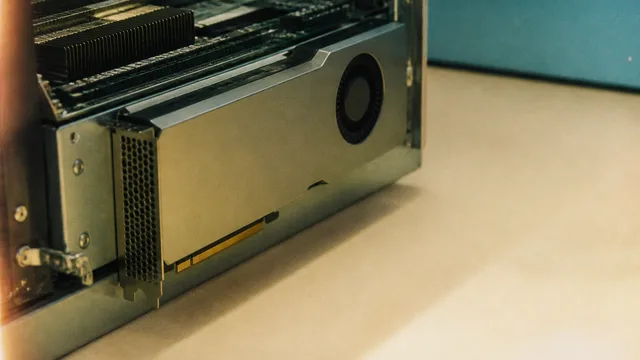
AMD Instinct MI350P: 144GB HBM3E in a PCIe GPU
AMD's Instinct MI350P brings 144GB of HBM3E and 3.6TB/s bandwidth to standard PCIe servers. Here's what it means for the mid-market AI infrastructure gap.

How Optimization Powers Modern AI and Engineering
From training ChatGPT to imaging black holes, optimization is the hidden engine behind modern AI and engineering. Steve Brunton's lecture explains how.