Grok 4.6 and 4.7 Are Weeks Away: What to Know
xAI announced Grok 4.6 and 4.7 weeks after 4.5 launched. Here's what's confirmed, what's speculation, and what it means for your workflow.

Written by AI. Bob Reynolds

Photo: AI. Wren Sugimoto
xAI announced Grok 4.6 and 4.7 via a two-line post on X — no press release, no launch event, no benchmark sheet. Grok 4.5 had landed in mid-July, and before most people had run a single real task through it, the next two versions were already on the calendar. Two upgrades in roughly four weeks.
That cadence is worth pausing on. Most frontier AI labs ship major model updates on a timescale of months. xAI is operating on weeks. Whether that reflects genuine capability jumps or a marketing strategy built around perpetual newness is a question the company hasn't answered — and can't, until the models actually arrive with verifiable benchmarks attached. Julian Goldie, an AI tools educator who tested Grok 4.5 across dozens of tasks for his YouTube channel, put it plainly: "XAI hasn't published benchmarks or a spec sheet for either yet, so anyone showing you scores right now is guessing."
That's the honest framing. Hold onto it.
What Grok 4.5 Actually Does
Before speculating about what comes next, it's worth understanding where the platform stands today.
According to xAI's own account of the training process — relayed by Goldie in his breakdown — Grok 4.5 was built on curated data spanning coding, science, engineering, and mathematics, trained across a large cluster of Nvidia hardware. The training methodology reportedly emphasized data quality over volume, removing duplicates and scoring content before it entered the mix. Reinforcement learning, where the model practices tasks and gets graded on the results, was scaled across hundreds of thousands of tasks, predominantly multi-step software engineering.
The efficiency claims deserve careful scrutiny. Goldie cites token efficiency figures drawn from SWE-Bench Pro, a software engineering benchmark, attributing the comparison to xAI's own data — Grok 4.5 against a competing model. The gap he describes is striking, and if accurate, it matters practically: fewer output tokens means faster completions and lower costs for agent-based workflows that run many tasks in sequence. But SWE-Bench Pro results vary depending on task selection, prompting approach, and how runs are structured, so any single efficiency figure should be treated as directional, not definitive.
What's clearer is the context window: 500,000 tokens, which allows users to pass in large codebases or document sets without chunking. That's a real operational advantage for certain workloads, regardless of how the efficiency numbers shake out under scrutiny.
The Benchmark Test: One Educator's Methodology
Goldie ran Grok 4.5 through 43 scored tasks inside what he calls an "Agent OS" — a workflow framework that runs multiple AI models against identical prompts under identical conditions. The methodology as described has some integrity to it: one shot per task, no retries, single file output, same scoring rubric applied to every model. Grok averaged 8.09 out of 10 across those tasks, with the standout results coming from game development prompts.
The demos he describes are genuinely interesting as capability illustrations. A single prompt produced what he describes as a functional 3D open-world RPG — village NPCs, a combat system, a day-night cycle, weather, and an inventory system — all running in a browser. A Doom-style first-person shooter with pointer-lock mouse control from one sentence. A voxel sandbox in the style of Minecraft. These aren't production applications, but as measures of how much structured output a model can generate from minimal instruction, they're useful data points.
Two caveats apply. First, this is one person's test set, not a peer-reviewed benchmark. Second, Goldie runs a paid community and course platform built around AI tools, which means his incentives lean toward demonstrating capability rather than probing limits. That doesn't invalidate the results, but it's context worth keeping in your back pocket.
The Real Question Underneath the Version Numbers
Here's what I find more interesting than the specific capabilities of 4.5, 4.6, or 4.7: what does it mean for users when a platform iterates this fast?
Goldie's answer is pragmatic, and I think it holds up regardless of his commercial interests: "Models change every few weeks now. Your workflow shouldn't. If you build your process around one specific model, you'll be rebuilding it next month."
The argument maps onto something we've seen repeatedly across platform shifts. The people who built businesses on a specific Twitter API endpoint got burned when the API changed. The developers who tied their products to a particular version of a cloud service got burned when it was deprecated. Abstraction layers — building around a system that can swap the underlying component — are the durable solution. That's not a new idea; it's just newly relevant to AI tooling.
The version-chasing behavior Goldie describes — users waiting for 4.6 while 4.5 sits largely untested on their actual tasks — is recognizable. It's the same psychology that keeps people waiting for next year's phone before they've used this year's camera. The upgrade is more legible as an event than the incremental work of understanding what you already have.
His third tip cuts against this cleanly: measure your baseline before the new model arrives. Pick a task you run repeatedly, run it through the current model, document exactly where it breaks, then run the same task through the new model using the same prompt. That's the only way to know whether an upgrade is worth adopting for your specific use case, rather than for the general case described in a launch announcement.
What's Confirmed About 4.6 and 4.7
Not much, by design — or at least by the nature of xAI's announcement style.
Goldie reports that xAI posted the release timeline on X: Grok 4.6 within two weeks of the announcement, Grok 4.7 two weeks after that. Elon Musk has reportedly described the 4.6 model as an improvement over its predecessor, but without published benchmarks or a technical specification, that claim sits in the category of marketing until verified. This pattern of announcement-before-documentation is worth watching — the rapid-release cadence across the frontier AI field has made it increasingly difficult for users to distinguish genuine capability leaps from version-number momentum.
What we can reasonably expect, based on the trajectory from earlier Grok versions: continued focus on software engineering tasks, likely improvements on the benchmarks xAI has used publicly to position the model, and — if the training methodology described for 4.5 continues — ongoing emphasis on token efficiency rather than raw parameter count.
The Gap Between Launch Day and Useful Day
Every major model release in recent memory has followed the same arc. Launch day generates headlines. Week two reveals the edge cases. Month two is when practitioners actually know whether the thing fits their workflow.
xAI's two-week release cadence compresses that arc in ways that could frustrate as much as they enable. If 4.6 lands before most users have calibrated their prompts for 4.5, the upgrade produces churn rather than progress. The users who benefit most will be, as Goldie argues, the ones who did the baseline work while everyone else was waiting for the announcement.
That's a reasonable prediction — and it applies whether or not his specific benchmark numbers hold up to scrutiny. The underlying principle doesn't require precise token counts to be true.
The more interesting question, one that neither xAI nor its enthusiasts have answered clearly, is where this cadence leads. Faster iteration is only valuable if the iterations are substantive. If 4.6 and 4.7 are meaningful capability jumps, the pace is impressive. If they're incremental refinements marketed as major releases, the pace is noise. We'll know which it is when the benchmarks actually land.
Until then, the most useful thing you can do is probably the least exciting: run your actual work through what's available now, and write down where it fails.
More Like This
Five AI Models Dropped This Week—Here's What Changed
Anthropic's Claude Sonnet 4.6, Google's Gemini 3.1 Pro, and xAI's Grok 4.2 all launched this week. What do these updates actually mean for users?

Grok 4.5: What the Speed Claims Actually Mean
xAI's Grok 4.5 promises faster AI coding and office work. Here's what the efficiency claims actually mean—and what to verify before believing them.

GPT-5.6 Sol, Fable 5, Grok 4.5, GLM 5.2 Compared
Four major AI models dropped within weeks of each other. Here's what actually separates them—and why the open-weight option changes the calculus.
New AI Coding Models Choose Speed Over Perfection
OpenAI's GPT-5.3 Codex Spark and Z.ai's GLM5 prioritize inference speed over raw accuracy. Here's why that trade-off might actually matter for developers.

Claude Opus 4.8: The Agent Upgrade That Actually Matters
Claude Opus 4.8 ships dynamic workflows, multi-agent coordination, and a massive long-context leap. Here's what the benchmarks actually tell you—and what they don't.
Ralph Claude: Revolutionizing AI-Driven Coding Automation
Explore Ralph Claude's AI automation in coding, enhancing productivity and efficiency.
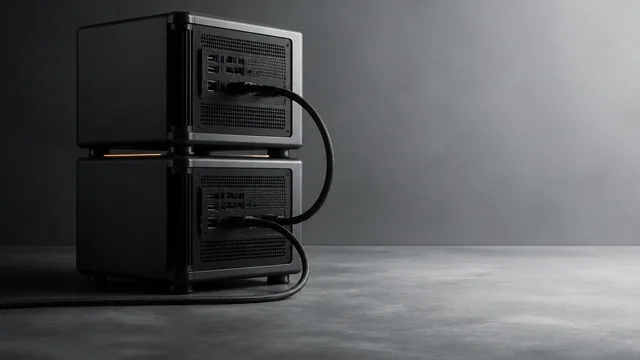
Clustering Two AMD Ryzen AI Halos to Run 400B Models
Can two AMD Ryzen AI Halos act as one AI system? Alex Ziskind tested the cluster setup, performance, and real-world limits of AMD's 400B parameter claim.
DeepSWE Is a Coding Benchmark Built to Resist Cheating
DeepSWE uses 113 original tasks to test AI coding agents without contamination. Here's what Datacurve's benchmark reveals about how top models actually perform.