Graph Engineering Explained: Beyond Loop-Based AI Agents
Graph engineering adds parallel multi-agent coordination to AI workflows. Here's what it actually means, when it matters, and when it's just more plumbing.

Written by AI. Bob Reynolds
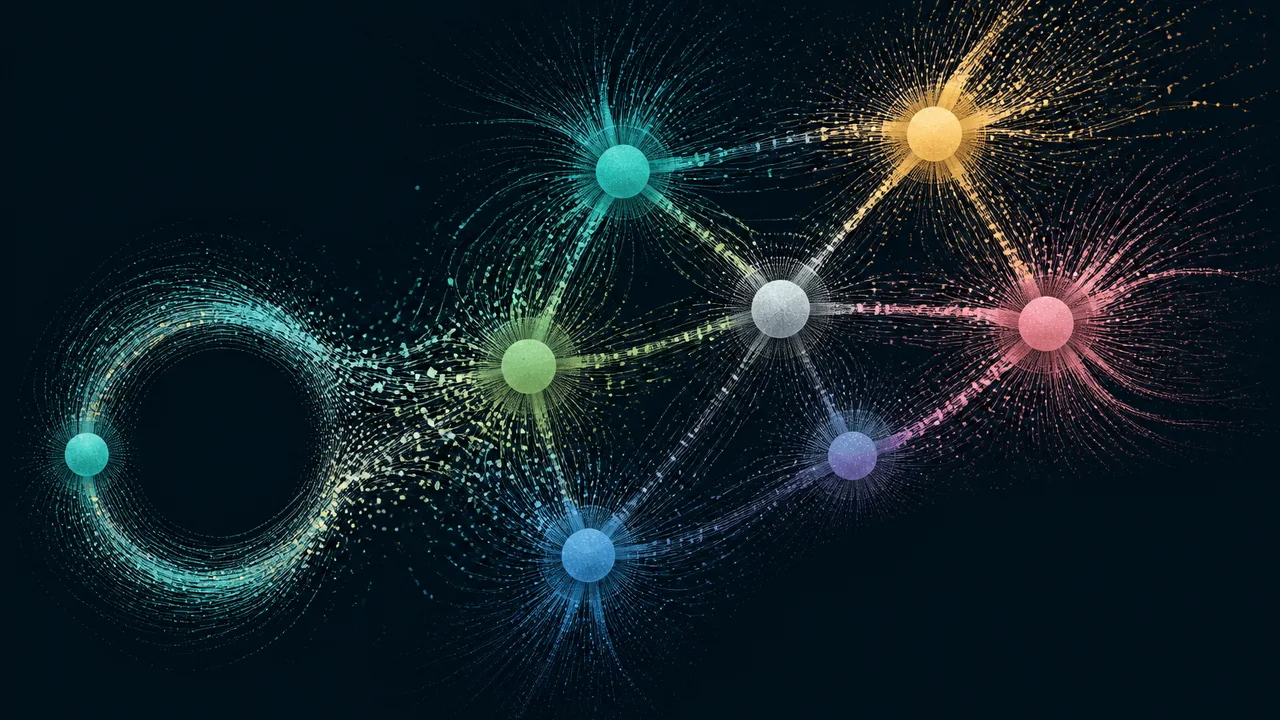
Photo: AI. Dexter Bloomfield
The AI industry has a naming problem, and it's getting faster. Last year we had prompt engineering. Then context engineering. Then loop engineering. Now, roughly every few weeks, a new compound noun arrives trailing the word "engineering" — a suffix that flatters the practitioner and obscures the underlying idea. This month's entrant is graph engineering, and a recent Chase AI video makes a reasonable case that this one is worth your attention, even if the branding isn't.
So what's actually being described? At its core, graph engineering is what happens when you stop asking one AI agent to do everything and start distributing the work across several agents running at the same time, each doing one narrowly defined thing. That description sounds simple because it is. The underlying concept isn't exotic — it's task decomposition and parallelization, which software engineers have been doing for decades. What's changed is that AI agents are now a practical unit of work, which makes the pattern more accessible and, in some contexts, genuinely more powerful.
The Loop Engineering Baseline
To understand what graph engineering adds, it helps to be clear on what loop engineering actually is. A loop, in this framing, has three components: a trigger (the thing that starts the process), a task (the thing the agent does), and a success criterion (the test that determines whether to accept the output or run again). Simple, auditable, repeatable.
The Chase AI video walks through a concrete example: an AI agent that runs every morning at 7 a.m., pulls information from YouTube, Twitter, Reddit, and email, synthesizes everything into a daily report, and checks its own output against predefined criteria — minimum length, required sources, specific formatting — before delivering. One agent, one job, one loop. For a lot of use cases, that's enough.
The problems surface when you push a single agent to do more. When a model's context window fills up with hundreds of thousands of tokens across multiple sequential tasks, the outputs get worse. The agent loses track of details, repeats itself, produces thin results at the end of a long run. A loaded context window is a real constraint, and asking one agent to handle four distinct research tasks before synthesis is exactly the kind of workload that brings it on.
What Graphs Actually Change
Graph engineering addresses this by breaking each task into its own agent, each running its own loop. In the morning report example, instead of one agent checking YouTube, then Twitter, then Reddit, then email, you have four dedicated agents running simultaneously — one per source — each with its own success criteria, each synthesizing only its own slice of information. Those outputs flow into a fifth agent responsible for final synthesis, and optionally a sixth acting as an independent reviewer.
"We've just connected a bunch of loops," is how the video puts it. That's a genuinely useful way to think about it. Each node in the graph is a miniature loop: trigger, task, success check. The graph structure is what connects them, determines their sequencing or parallelism, and handles the flow of outputs between agents.
Three concrete improvements follow from this design. First, quality: an agent with a focused task and a clear context produces better output than one running on fumes at the bottom of a packed conversation. Second, speed: according to Anthropic's guidance on multi-agent systems, parallel execution means four tasks running simultaneously rather than sequentially — that's a meaningful difference at scale. Third, debuggability. This last one doesn't get enough credit. When a single-agent loop produces a bad report, your job is to figure out where in the process things went wrong. When a graph fails, you know which node failed. "I can tell very quickly if this is a YouTube problem versus a Reddit problem," the video notes, and that's not a small thing when you're maintaining automated workflows in production.
When to Actually Use It
The video is notably honest about scope. Most automations you'll build don't need graph engineering. The single-loop approach handles the majority of practical tasks cleanly, and adding more agents when you don't need them just means more infrastructure to maintain when something breaks.
Three situations genuinely warrant the more complex approach. The first is context rot — when a single agent's context window gets so loaded across multiple tasks that output quality degrades noticeably. The second is independent review: in high-stakes scenarios, you may not want the agent that produced an output to be the same one evaluating it. Bringing in a separate reviewer agent — potentially one running on a different model altogether — introduces a second perspective on the work. The third is timing. Sequential tasks take longer than parallel ones by definition, and in time-sensitive automations, the parallelization that graphs enable is a functional advantage, not an architectural nicety.
The video also makes an observation that's easy to miss: the graph pattern is already how sophisticated AI tools operate under the hood. Systems like Claude's deep research capability don't process sources one by one — they deploy multiple sub-agents simultaneously and aggregate the results. The multi-agent graph structure isn't a future architecture. It's the current one for complex AI work, surfacing now as an explicit design choice for people building their own systems.
The Naming Question
Here's where I want to add some friction, because the content deserves it.
The concepts inside "graph engineering" — task decomposition, parallelization, modular success criteria, independent review — are structurally sound. They describe real properties that matter in designing AI workflows. The term "graph" is doing legitimate technical work: a directed graph is precisely the right mental model for a system where outputs from some nodes become inputs to others, with defined edges and optional cycles for retry logic.
But the "-engineering" suffix being bolted onto every new AI practice is doing something else. It's elevating workflow design choices into disciplines, which serves the course-selling side of this ecosystem considerably better than it serves the people trying to build things. "Loop engineering" was context engineering with a trigger and a retry loop. "Graph engineering" is loop engineering with parallelism and node-level success criteria. Both are real ideas. Neither required a new job title.
This isn't a criticism of the video, which is practically focused and avoids the worst of the hype. When the presenter says "if you don't know if you need it for your particular task, the answer is probably no," that's the kind of advice that usually gets buried by people who want you to buy the masterclass. Here it leads the conclusion.
The useful kernel, stripped of the vocabulary: know the properties you're actually engineering for. Context capacity. Parallelism. Isolation of failure points. Independent verification. Those properties have names that predate the current hype cycle by decades, and they'll still matter whatever the industry decides to call them next month.
The AI industry has now named, launched, and partially retired more paradigms in three years than software development managed in the previous twenty. At this pace, "graph engineering" will have a successor before most people finish building their first graph. The terminology turns over. The underlying problems don't.
More Like This
Anthropic's Claude Routines Targets No-Code Automation Market
Claude Routines lets users automate workflows with natural language instead of drag-and-drop builders. Is this the end of traditional no-code platforms?
AutoResearch: AI That Optimizes Itself While You Sleep
Andrej Karpathy's AutoResearch lets AI run hundreds of experiments autonomously. Here's what it means for trading, marketing, and development.
Linear Says Issue Tracking Is Dead. Here's What's Next
Linear, the issue tracker beloved by engineers, just declared its own category obsolete. AI agents are changing how software gets built—for better or worse.
Claude Code's New Routines: Automation Without the Laptop Tax
Anthropic adds cloud-based scheduling to Claude Code. It's cron jobs for AI assistants, with the usual trade-offs between convenience and control.

Claude Code Loop Types: A Practical Breakdown
AI LABS maps five Claude Code agentic loops—from stateless to self-improving—and explains which use case each one is actually built for.

Loop Engineering: Moving Beyond One-Shot AI Prompting
From cron-job automations to multi-day autonomous goals, loop engineering is changing how developers interact with AI. Here's what that actually means.
Selling AI Is a Storytelling Problem, Not a Tech One
Nate B. Jones argues that AI sales stall because of weak storytelling, not weak tools. Here's what that means for agencies, operators, and C-suites.
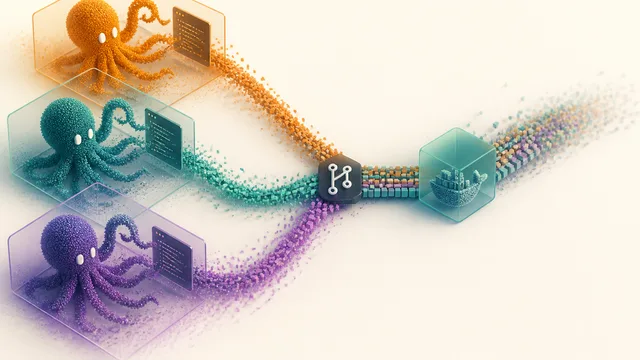
Running Parallel AI Coding Agents Without Chaos
Running multiple Claude Code sessions in parallel creates real coordination problems. Here's the infrastructure stack that actually prevents them from breaking each other.