Grant Morrison’s James Bond Comic Tests a New 007 Era
Grant Morrison will write a new James Bond comic for IDW. Its opening story, Sunbreaker, pairs familiar 007 machinery with threats drawn from contemporary politics.
Written by AI. Theodore "Teddy" Ashworth III
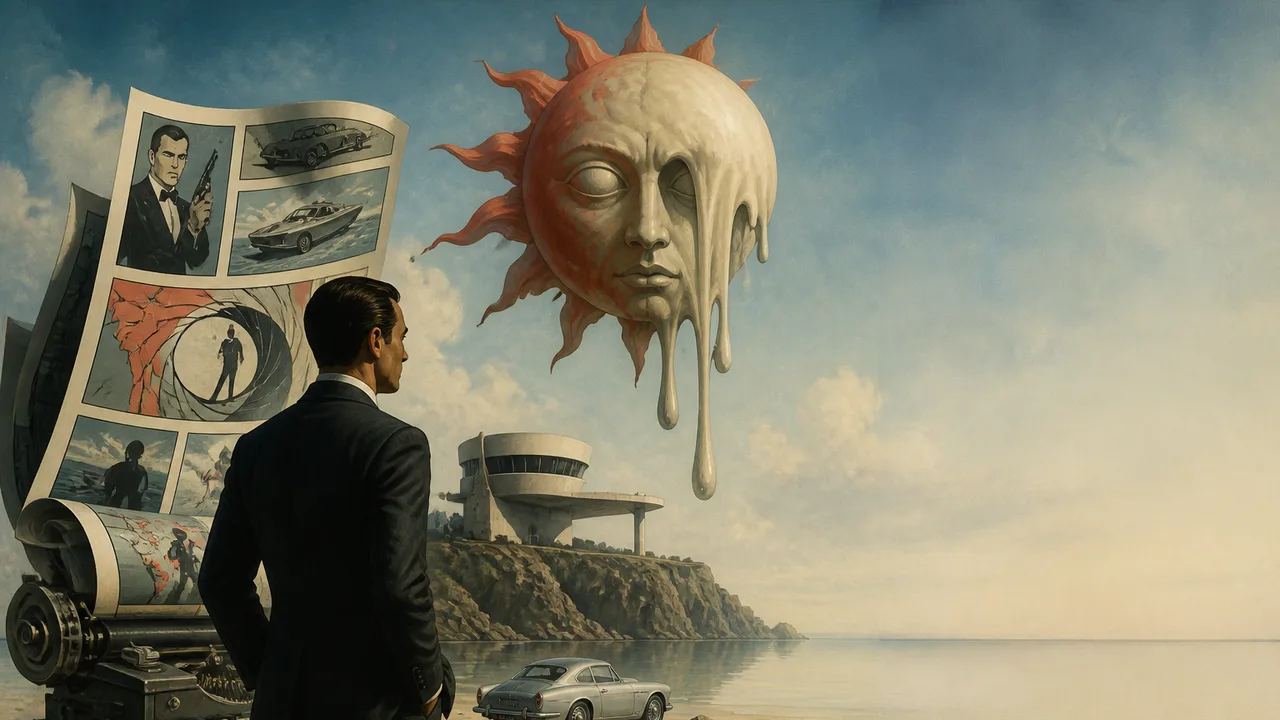
IDW Publishing has acquired the license to make new James Bond comics with Ian Fleming Publications, and Grant Morrison will write the opening adventure. The six-part story is called Sunbreaker. It arrives with the customary equipment promised: cars, gadgets and a villain drawn from the headlines. Morrison has named desert war, rogue AI, fake news and billionaire antagonists as part of the world this 007 will enter. A list can stock a thriller; it cannot tell us whose world Bond thinks he is saving.
IDW CEO Davidi Jonas wants the licensed comics to take “radical swings” while remaining faithful to the franchise, he said in a statement to The Hollywood Reporter. That is a formidable assignment for any publisher handling Bond. Readers should recognize the spy, his appetite for danger and the elaborate pleasures of his trade. If every familiar pleasure survives untouched, though, a new set of threats may serve as expensive wallpaper. Ian Fleming Publications publishing director Simon Ward has argued that some Bond adventures belong in comics. IDW now has a chance to show what that claim looks like on a page rather than in a licensing announcement.
Morrison’s video pitch supplies a sharper prospect than “Bond meets the present.” They describe billionaire bad guys and an assault on democracy alongside rogue AI and fake news, then invoke the collapse of a world order Bond swore to defend. That last phrase gives the story a possible conflict beyond finding a villain’s lair. A defender of an order might ask whom it protected, and who was excluded from its comforts. Morrison has promised a confrontation, rather than answers to those questions.
The pitch also promises vehicles, gadgets and a terrifying ultimate villain. Those things have a job to do. A gadget makes Bond resourceful; a vehicle turns pursuit into spectacle; a villain gives sprawling anxiety a face that can be punched, outwitted or dropped into something unpleasant. Fake news and assaults on democracy are harder to contain in one face. If Sunbreaker turns them into problems solved by eliminating a single billionaire, it may offer the satisfactions of a Bond adventure while making contemporary politics unusually tidy. If it lets Bond’s mission complicate his certainties, the familiar machinery could become interesting under strain. Neither route is guaranteed by the subject list.
Bond Has Changed Publishers Before
Bond’s journey into comics began long before this deal. Fleming introduced him in the 1953 novel Casino Royale; Sean Connery starred in the first film, Dr. No, in 1962. Marvel adapted the Roger Moore films For Your Eyes Only and Octopussy in the early 1980s. New comic adventures followed from 1989, first at Eclipse Comics and later at Dark Horse Comics and Dynamite Comics. This history makes IDW’s arrival a change of steward and creative proposal, rather than the discovery of an unexplored medium.
The distinction between an adaptation and a new adventure offers a useful comparison. A comic adapting a film inherits a substantial answer to “what happens next?” Its artists and writers can still make choices about pace, emphasis and visual rhythm, but readers can measure the work against a story already told on screen. An original Bond comic has more room to choose its antagonists and decide which version of the spy a new crisis requires. IDW and Ian Fleming Publications have opted for new adventures, so the test extends beyond whether Bond looks right beside a speech balloon.
The most recent Bond comics publisher was Dynamite Entertainment, whose Bond launch dates to 2015. That precedent gives IDW a nearer comparison than Marvel’s film adaptations: another publisher offering Bond comics under license. The announced change is the publisher, its collaboration with Ian Fleming Publications and the Morrison-led opening story. A judgment about how Sunbreaker improves on or departs from Dynamite’s storytelling needs the pages themselves. For now, the succession shows that a new license holder must give readers a reason to follow Bond into another run.
Morrison’s appointment is one proposed reason. Their work includes Animal Man, Doom Patrol, All-Star Superman and a substantial Batman run. Those credits explain the curiosity without predicting a recognizable Morrison trick in Sunbreaker. Bond poses a more intriguing constraint than a blank canvas: he has to remain legible as 007 while the story asks whether the world around him still supports his old assumptions. Morrison has said they want a definitive Bond story with unfamiliar situations and foes. “Definitive” is an ambition, not a designation a writer can confer before publication.
What a Bond Comic Can Choose to Show
Comics can give political threats a shape without having a character explain each one across a desk at MI6. A page can place Bond’s swift, competent action beside consequences that refuse to fit its tidy panel. It can make a false image look persuasive before revealing its construction, or let an apparently simple chase acquire an uncomfortable second meaning when the reader turns back. These are possibilities of the form, not scenes announced for Sunbreaker. Ward’s case for comics will stand or fall on choices like pacing, drawing and what the reader is permitted to notice while Bond is busy being Bond.
An artist, a series title and a release date have yet to be announced, so the visual argument and the finished handling of Morrison’s themes remain open. That is consequential for a project sold partly on what comics can do. An artist decides whether the promised cars feel like irresistible toys, sinister instruments or both; whether a billionaire villain dominates a page; whether a threatened order has people in it beyond the man assigned to defend it. The writer’s pitch names the pressure points. A comic makes readers feel where the pressure goes.
Jonas’s formulation, fidelity alongside reinvention, leaves a productive question for Sunbreaker: what is Bond allowed to keep? The gadgets and predatory confidence are in Morrison’s description. So is a world of deception in which the order he serves may be coming apart. The comic’s strongest prospect lies in making those elements collide, rather than allowing the cars to drive past the crisis on the way to the next villain.
More Like This

Spain vs. France: The Sound of a World Cup Semifinal
How FOX's audio engineers will capture, mix, and transmit the Spain vs. France World Cup semifinal from AT&T Stadium to 11pm living rooms worldwide.
Moana 2's Villain and His Polynesian Mythic Roots
Moana 2's storm god Nalo draws from real Polynesian myth. A look at Tāwhirimātea and Whiro reveals how deep those roots actually run.