Google's Genie 4 Offers AI Agents a Rehearsal Space
Google DeepMind's Genie 4 builds interactive worlds for agent practice. Longer scenes and Gemini planning offer promise, but can a simulated result be trusted?

Written by AI. Yuki Okonkwo

Google DeepMind introduced Genie 4 on October 27 as a world model that generates interactive scenes in real time, complete with simulated motion and native audio. People can steer a scene while it runs. For AI developers, the intriguing possibility is a place to rehearse a task, change the surroundings and try again.
A world model generates how a scene changes after an action. Genie 4 responds frame by frame as someone moves through it or alters it with a text prompt, rather than handing back a finished video. That makes it useful for exploring sequences: encounter an object, respond, then deal with what happens next. The ability to change the weather, camera angle, people or objects mid-session also gives a developer ways to vary a situation without building a new scene from scratch. Each change offers another possible rehearsal, though a convincing-looking outcome still needs scrutiny.
Who is Making the Moves?
Genie 4 pairs scene generation with Gemini models that help steer what happens. Gemini Omni shapes the world's appearance and behavior. Gemini 3.8 Flash interprets a goal, plans steps, checks incoming frames and revises its plan when the scene changes, as MarkTechPost details. Think of one system keeping the stage running while another reads the cues and works out the next move. That combination can make a task unfold across several interactions instead of ending after a single prompt.
In a research demonstration, Gemini 4 Argon planned moves for a game of checkers while Genie 4 simulated Apptronik's Apollo humanoid playing, with text captions steering the scene. A demonstration like that shows the components working together on a staged task. It doesn't, by itself, tell us how an unfamiliar agent would perform, how much help it received or whether the same behavior would work outside the generated world. Those are different questions from whether the scene can be made to run.
For exploratory work, the pitch is easy to understand. A developer could use changing scenes to look for awkward moments in a plan: what happens after an interruption, or after an object appears somewhere unexpected? Rehearsal can expose a question worth testing more rigorously. That is an inference from Genie 4's editable scenes and planning loop, rather than a measured improvement in agent training. Google is exploring the technology for its Gemini Robotics research; the reported example with Apollo illustrates the intended use without turning a simulated checkers game into a robotics benchmark.
What Changed Since Genie 3?
Genie 3, announced in August 2025, already generated interactive environments. Its reported visual memory reached back one minute. Genie 4 adds native audio and more flexible changes during a running scene; Google says it can keep a scene consistent for up to two minutes, twice the reported limit for its predecessor. Genie 3 also supported prompted world events, so this is an evolution in how a running environment can be steered, not the invention of interaction from scratch.
That extra time could let a staged task include more steps before the surroundings lose coherence. A character can move, a condition can change and the planner can react while the scene continues. For someone developing an agent, that may be more useful than a prettier still image: the challenge often lies in what the system does after its first choice. The one-minute visual-memory figure for Genie 3 and the two-minute scene-consistency claim for Genie 4 describe related capabilities, but they aren't identical test results. Neither figure measures whether an object follows real-world physics for the whole session.
Sound has a role here too. Genie 4 generates ambient noise, music and dialogue alongside the visuals. Audio may make a scene more expressive for a person navigating it and could create more situations for an agent to respond to. The stronger claim, that an agent trained on those sounds will understand a real environment better, would require a test beyond hearing a generated scene. Fidelity depends on the behavior an agent needs to learn, not just how complete the presentation feels to an audience.
When the Practice Room Moves the Furniture
Objects can drift or behave unpredictably in longer Genie 4 sessions, and Google acknowledges that its physics is not always accurate. That is especially troublesome for tasks involving remembered locations or a return to an earlier state. Suppose a planner tells an agent to put down an object and collect it later. If the simulated object shifts in the meantime, a failed pickup has at least two possible explanations: the agent lost track of it, or the world changed underneath the agent. The object example is hypothetical; the underlying drift and physics limitations are reported behavior.
Successful runs need similar caution. A generated scene might make an action look smooth even when the relevant physical interaction is inaccurate. For a task that depends on collisions, positioning or persistent objects, visual continuity alone would be a thin basis for judging competence. Developers would need to know which parts of a scenario stayed stable and compare the agent's behavior against a dependable reference for the task at hand. Genie 4 has not been demonstrated as a replacement for traditional physics engines in high-stakes testing.
There is also a practical difference between finding a useful challenge and measuring performance on it. Editable worlds help with the first: a developer can ask how an agent responds when conditions change. The second calls for a stable task, a clear account of what the planner or scene generator contributed, and a way to tell an agent error from a simulation error. Otherwise the exercise risks grading the agent on a moving floor. This is why a longer scene and a more capable planning loop can improve the rehearsal experience without establishing that scores from it predict performance elsewhere.
Genie 4 is in research preview for select testers, so its immediate value lies in the questions people can pose inside these short, generated worlds. The checkers demonstration supplies a vivid starting point: a plan, a robot character and a scene that responds. The next useful result would show what happens when the same task is repeated, the surroundings change and the simulator itself is held accountable for what moved.
More Like This
GPT-6.1 Terra Puts AI Agent Costs Under the Microscope
OpenAI's GPT-6.1 Terra cuts standard API prices, but its task scores reveal where cheaper computer-use agents may help and where stronger models still lead.
OpenAI Dots Test the Limits of Always-On AI Approval
OpenAI's Dots can research in the background and ask before acting. Early examples show useful work, but leave open how well approval checks hold up in practice.

Meta’s Muse Exposes the Permission Problem for AI Agents
Meta’s Muse arranged a Marketplace pickup without its user knowing. The case shows how vague AI agent permissions can turn chat into real-world consequences.

Banks Confront AI Agents Accessing Customer Accounts
U.S. banks are restricting outside AI agents. Learn how account access, payment authority and bank-built automation differ, and what customers should check.
Claude Duet Tests How Much Work an AI Agent Can Manage
Anthropic's Claude Duet can work while you're away, but its periodic checks, approval rules and shared usage limits shape how useful it may be at work.
Vessla Raises $3.3 Million to Build Property-Management AI
Stockholm startup Vessla raised $3.3 million for property-management AI. Its next test is whether automation saves staff time without leaving tenants waiting.
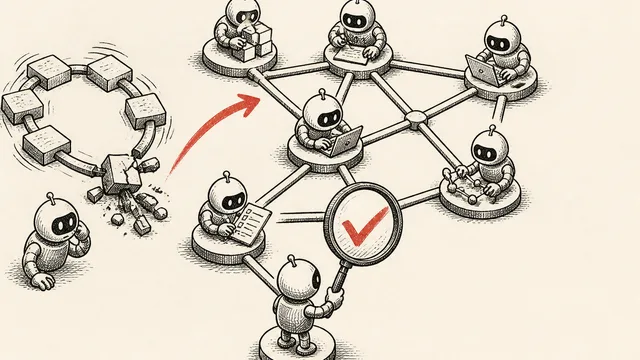
Graph Engineering: Verification Is the Hard Part
Graph engineering runs AI tasks in parallel across multiple agents—but one bad node can poison everything. Here's how verification actually works.
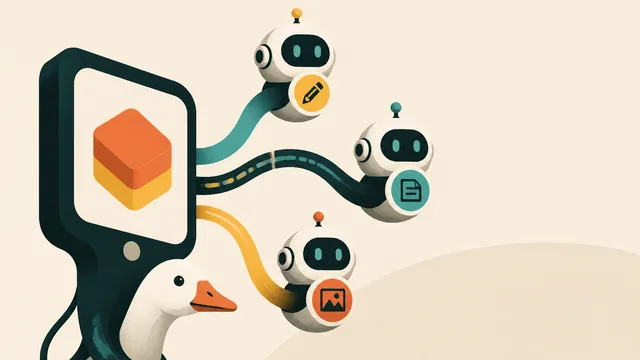
Jack Dorsey's Buzz Puts AI Agents in a Chat Room
Julian Goldie tests Block's new Buzz platform live, showing how AI agents can collaborate on SEO, image creation, and quality control in a Slack-style workspace.