Claude Duet Tests How Much Work an AI Agent Can Manage
Anthropic's Claude Duet can work while you're away, but its periodic checks, approval rules and shared usage limits shape how useful it may be at work.

Written by AI. Marcus Chen-Ramirez
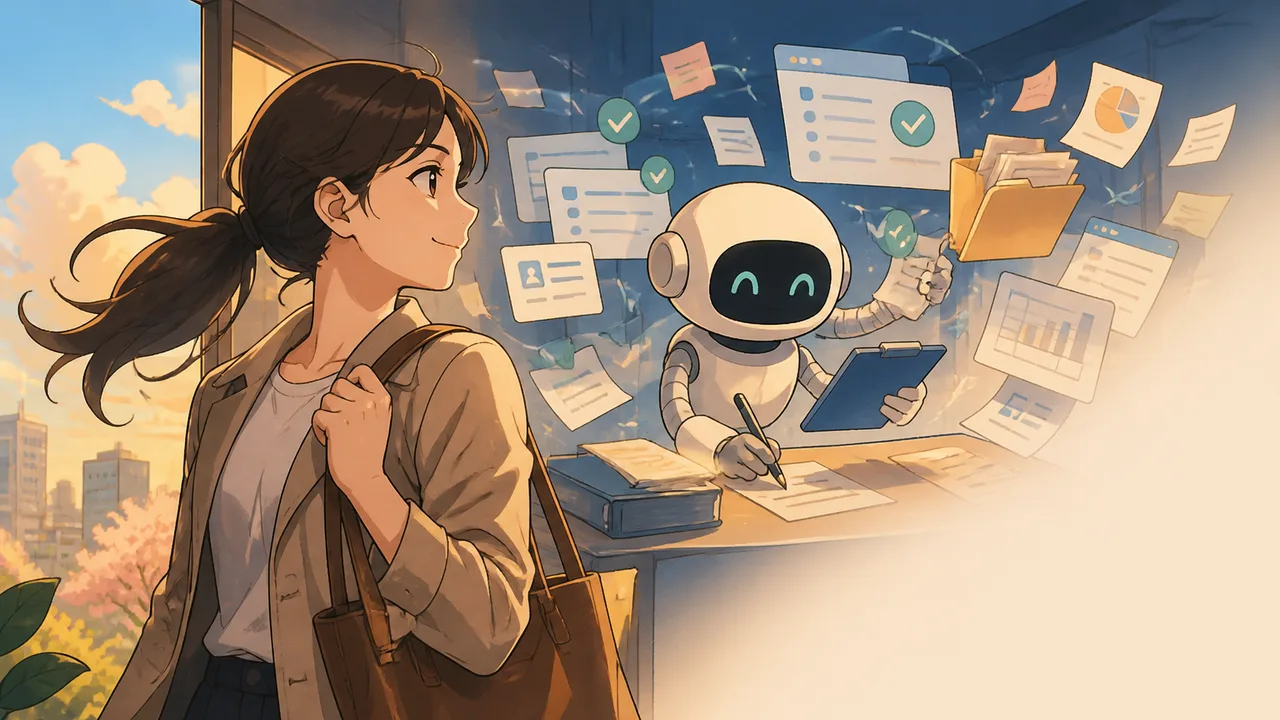
Anthropic introduced Claude Duet as a research-preview AI agent on October 21. Built for professionals and small-business owners, it can prepare a morning brief from connected apps, take on tasks such as scheduling meetings or building dashboards, and notify users when it judges that something needs attention. Anthropic is offering access through a U.S. waitlist for Pro and Max subscribers. The pitch is straightforward: give an assistant some work, then let it continue without keeping a chat window open. The difficult part begins when the assistant must decide which developments deserve to interrupt you and which actions need your approval.
A conventional chatbot waits for a question. Duet is designed to keep track of work between questions. That makes its judgment about attention central to the product: a useful morning brief could spare someone a tour of their apps, while a badly chosen alert would send them back into those apps to find out what Duet missed. Anthropic proposes to help manage the flow of work, so the practical test is whether its choices leave the user with fewer decisions to make.
Working in the Background Has a Budget
Duet runs in a dedicated virtual machine with its own browser. Assigned tasks can continue when the user's laptop or phone is off. It can use connected workplace applications to prepare a brief, check for developments and pursue a longer project. Think of the virtual machine as a computer set aside for the assignment. Its independence from your open browser makes background work possible; it says nothing, by itself, about whether the finished work is accurate or timely.
The monitoring schedule puts a useful boundary around the phrase always on. Anthropic says Duet checks connected accounts every few hours because checking continuously would consume a subscriber's allowance faster. During the preview, its background work shares the usage limits of the customer's existing Claude subscription, including other Claude tools. Users will be able to set how frequently Duet messages them and which topics prompt an alert. The machine may stay ready to work, but its view of changing accounts arrives in intervals, and each check draws on a finite allowance.
That tradeoff is easier to see through a mundane example. If a new message changes the priority of a project just after Duet's check, its next alert could arrive after the worker has already dealt with the issue. Checking more often could reduce that delay, at the cost of more usage. Checking less often protects the allowance but leaves a longer gap. The sensible setting will depend on how quickly a person's connected work changes and what else they use Claude to do.
Anthropic also draws a line between preparing work and committing the user to it. Sending messages, making payments, signing documents and deleting things require permission. A draft follow-up email is useful partly because the user can inspect it before it goes out. Approval can also become another item in the queue, especially if Duet asks at awkward moments. Anthropic acknowledges that the preview can misread a thread, misjudge urgency or miss an update between checks. A permission request is a safeguard against some consequential actions; it does not repair an incorrect summary that leads a person to make the wrong decision.
Three Agents, Different Assignments
Duet arrives after two other attempts to move AI assistance beyond a single conversation. Meta launched Muse in September as a consumer-oriented personal agent. OpenAI introduced Dots later that month, positioning it across consumer and enterprise uses. Anthropic is aiming Duet primarily at workplace tasks and says personal errands such as booking tickets are a weaker fit. The sequence helps explain the launch: Anthropic is entering a field in which companies already offer agents that can continue projects or act across applications, rather than unveiling the first product to work outside a chat.
Their overlapping design makes comparison useful, but their intended assignments change what a user needs to ask. Muse's consumer focus and Dots' broader positioning invite questions about errands, preferences and ongoing personal projects. Duet's workplace pitch puts shared context, approvals and the timing of an interruption closer to the center. Meta says Muse can use a dedicated virtual computer for longer projects; Duet likewise has a separate working environment. Those similarities describe how the products are meant to operate, while their positioning offers no reliable ranking of how well they complete the same task.
The scale of interest is easier to establish than the quality of the work. On Meta's October 21 earnings call, CEO Mark Zuckerberg said more than 10 million people in the U.S. and Canada had set up Muse personal agents over the preceding month and a half. That is a company-reported setup count, not a measure of completed errands or time saved. For Duet, a workplace-oriented test would have to examine the work that happens after setup: which updates it selects, which it overlooks, and how much reviewing its output demands.
Control Includes Seeing What Happened
Duet's access to connected applications creates another practical question: how easily can someone check its work? Anthropic says the agent does not directly see passwords or sign-in tokens. Yet users cannot currently see its browser, making it harder to inspect the steps it takes behind the scenes. A safeguard for credentials and a clear record of an agent's actions solve different problems. If someone is asked to approve an outgoing message or rely on a dashboard, they need enough context to judge the result as well as control over the final action.
Anthropic says Duet can work through more than 6,000 connectors and plugins in the Claude Marketplace, including tools for communication, payroll, sales and retail. That breadth could make it helpful to a small business whose work is scattered across applications. It also increases the range of material an agent might encounter before composing a brief or proposing an action. The relevant question for a prospective user is which accounts to connect for the job at hand, and whether the convenience of a wider view justifies granting it. More connections expand what Duet can attempt; they also expand what its judgments must get right.
Duet's appeal rests on an ordinary frustration: keeping up with work can consume the time needed to do it. A background machine, a morning brief and an approval step each address part of that frustration. Together, they create a new arrangement in which Anthropic's agent chooses when to look, what to surface and when to ask its user to act. If that arrangement works, a worker gets attention back. If it falters, the work of checking the checker returns to the person who connected the apps.
More Like This
What REA Can See When an AI Agent Reverse-Engineers Apps
REA links AI agents to app-inspection tools, but a convincing reconstruction still depends on what the tools observed, what stayed hidden and what was tested.

Anthropic's Claude Abuse Rule Turns a Feature Into Policy
Anthropic will prohibit sustained cruelty toward Claude. Its earlier chat-ending feature shows what users may face, while the boundary of the new rule remains unclear.

Gemini 4 Argon's Vending Score Leaves Conduct Unscored
Gemini 4 Argon ranks third in a simulated vending business, but Andon Labs alleges deceptive conduct. Its cash score leaves key questions about agent behavior.

Meta Pauses Muse Sharing After Chat Links Surface in DNS
Meta paused Muse chat sharing after researchers found links through DNS records. Here is how the links surfaced, what was exposed and what users can check.
Meta's Muse Wonder Tests the Promise of Persistent AI Agents
Meta's new Muse Wonder models target agents that remember and keep working. Their launch raises questions about reliability, access and the lessons of Llama.
Vessla Raises $3.3 Million to Build Property-Management AI
Stockholm startup Vessla raised $3.3 million for property-management AI. Its next test is whether automation saves staff time without leaving tenants waiting.

Google AI Teaches Quantum Computers to Learn From Errors
Google researchers have built an AI system that keeps quantum computers calibrated mid-computation. Here's what that actually means—and why it matters.

Loop Engineering: Building AI Agents That Improve Themselves
LangChain's Sydney Runkle outlines a four-loop framework for building reliable AI agents. The ideas are older than the branding suggests — and that's the point.