Google Takes Over Crusoe's Wyoming Data Center Site
Google bought Crusoe's Wyoming data center site after early development. The handoff leaves the campus alive, with its power plan and Crusoe's role in focus.

Written by AI. Bob Reynolds
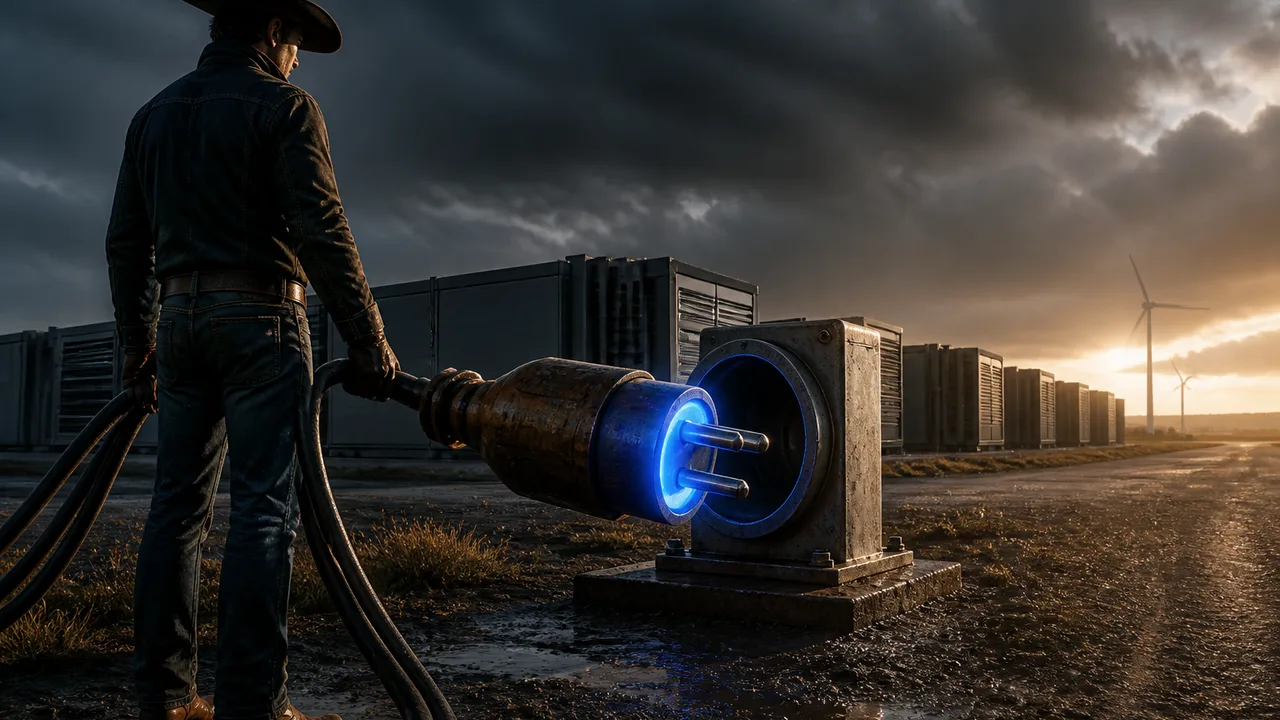
Google has bought Crusoe’s data center site in southeast Wyoming, ending Crusoe’s pre-development role in a campus Google plans to take forward. In its November 6 announcement, Crusoe said its work covered site selection, government approvals and a power strategy developed with Tallgrass Energy. The companies did not disclose the purchase price.
The handoff changes who develops the campus. It does not mean the campus has been scrapped. Google had announced a $17 billion long-term investment in its first Wyoming data center the day before Crusoe disclosed the sale. That figure describes Google’s planned investment, not what it paid Crusoe for the site.
Why Google took over is a separate question. Crusoe had failed to secure customers for the Wyoming project. That is a plausible explanation for a developer handing a site to a company able to use the computing capacity itself. Google’s decision to buy the site and Crusoe’s account of completing its early work can both be true without telling us what each company wanted from the original arrangement.
The Work Before the Building
Crusoe and Tallgrass began the Wyoming project by developing plans for its power supply and data center infrastructure together. Crusoe describes a process that brought energy-system design, engineering, site development and discussions with potential large customers onto the same schedule. A data center needs more than land: a developer must work out how to supply electricity, obtain approvals and make the site usable for whoever eventually operates the computers.
Crusoe announced the project with Tallgrass in July 2025, when it said the campus could eventually grow to 10 gigawatts. That was an early ambition, not Google’s present construction commitment. By November 2026, Crusoe described its own Wyoming assignment as finished pre-development work. The sale therefore came after the site and its power strategy had been prepared, before the campus became an operating data center.
This sequence helps explain what Google acquired. The site came with planning work already done, while Google took on the next stage. Crusoe’s chief executive, Chase Lochmiller, described the company’s efforts as having set the project up for construction and eventual operation. Construction and operation will determine how much of the proposed campus reaches customers.
The account of customer trouble deserves the same separation. Bloomberg tied the takeover to Crusoe’s failure to sign customers for this project. The Next Web described concerns about costs and timing, citing Bloomberg. A missed customer agreement at one campus would put pressure on a developer’s plans, but the undisclosed transaction terms prevent any firm conclusion about Crusoe’s financial result from the sale.
Crusoe, for its part, says it has more than 6 gigawatts of capacity under contract across its business and more than 40 gigawatts in its pipeline. Those are company-wide figures, not evidence that Wyoming had a customer. Nor does a pipeline measure completed data centers. The Wyoming handoff is a change in responsibility at one project; its implications for Crusoe’s wider business depend on what happens at its other sites.
Who Supplies the Electricity?
The power plan shows why a change of developer does not settle the practical questions. Crusoe’s Wyoming strategy combined fuel cells, grid power and natural-gas turbines. Carbon capture at Tallgrass’s regional storage hub appears in Crusoe’s description as a longer-term plan. None of those components should be confused with a completed, running power system.
A planned 702-megawatt fuel-cell project would use natural gas, with Bloom Energy expected to supply equipment and American Electric Power expected to own and operate the installation. The plan calls for capturing carbon dioxide and storing it through Tallgrass. The eventual emissions benefit depends on what is built and how reliably the capture and storage systems work. Google has not confirmed the data center’s final computing capacity or a complete construction schedule.
Another part of the power picture predates the sale. Black Hills and Google signed energy-service agreements effective September 30. Black Hills plans new natural-gas generation and will manage other contracted resources through a private microgrid. The reported resource mix totals about 2.7 gigawatts including reserve margins. That is a power-supply planning figure, not the disclosed size of Google’s computing operation.
Black Hills says its agreements protect existing customers from the costs of serving the planned data center. Whether those protections work as intended will depend on the regulatory framework and the project’s execution. For nearby residents and electricity customers, the ownership transfer leaves that question, along with the power system’s emissions and construction timetable, in place. A new name on the development side cannot build a generating station or demonstrate a carbon-capture rate.
The Other Google Campus
Wyoming is not the only arrangement between these companies. In September, Crusoe identified itself as the developer of Google’s data center campus in Armstrong County, Texas, outside Amarillo. Crusoe said construction there had begun in June 2025 and was underway when it made that announcement. Its Wyoming statement in November again pointed to its Texas role, even as it declared its Wyoming pre-development work complete.
The two projects put different jobs under the same broad label of data center development. In Wyoming, Crusoe selected and prepared a site, then sold it to Google. In Texas, Crusoe says it is developing a Google campus that has moved into construction. The companies have not set out matching contract terms or scopes for the two sites, so their different roles cannot be reduced to a single rule about when Google builds for itself. They do show that one Wyoming handoff has not ended every Google-Crusoe development relationship.
There is a second difference in the power plans. Crusoe describes its Texas campus as connected to an adjacent wind farm, with another nearby wind farm under construction, and says the facility will use a closed-loop liquid-cooling system. Wyoming’s proposed supply relies heavily on natural gas, with carbon capture planned for part of it, and Google says the data center will be air-cooled. These are plans tailored to different sites; neither campus is a ready-made test of which company is better at developing data centers.
For Google, acquiring the Wyoming site puts the customer that plans to operate the computers in direct control after Crusoe’s early groundwork. For Crusoe, the Texas project shows a continuing role with that same customer. The next useful Wyoming milestones are less dramatic than the sale: power infrastructure built, a construction schedule set and a campus that can actually run. Until then, the most concrete thing Google has bought is a prepared place to try.
More Like This

Chevron's Microsoft Deal: Big Oil Bets on AI Power
Chevron's West Texas data center deal with Microsoft reframes the company as an AI infrastructure play. What it means for Big Oil—and who bears the cost.
Google's €13 Billion Finland Bet: What It Buys and What It Risks
Google plans its largest European investment ever: €13 billion in Finnish AI data centers. What Finland gains, what it pays, and how to judge the deal.

Oracle’s Project Jupiter Notice Shifts AI Delay Risk
Oracle’s Project Jupiter notice shows how pipeline delays, local opposition and strained credit markets collide across the costly AI buildout.

Google's Wyoming Data Center Deal Exposes AI's Bottlenecks
Google's acquisition of Crusoe's Wyoming data center site puts power, construction and local trade-offs in focus as AI companies race to add computing capacity.

AI Second Brain for Engineering Managers, Explained
Marlon Vidal built an AI-powered knowledge system for engineering managers. Here is what it actually does, what it costs you, and who can realistically use it.

GLM-5.3 Flash: A Cheap Chinese AI Beats Pricier Rivals
Z.ai's GLM-5.3 Flash launched anonymously as "Ox Alpha," undercut American AI rivals by up to 90%, and ran on non-Nvidia chips. Here's what that actually means.