Godzilla Minus Zero Turns Recovery Into Arithmetic
Godzilla Minus Zero uses its title, R rating and postwar setting to ask whether recovery means safety, agency or simply greater power over violence.

Written by AI. Devon Quincy
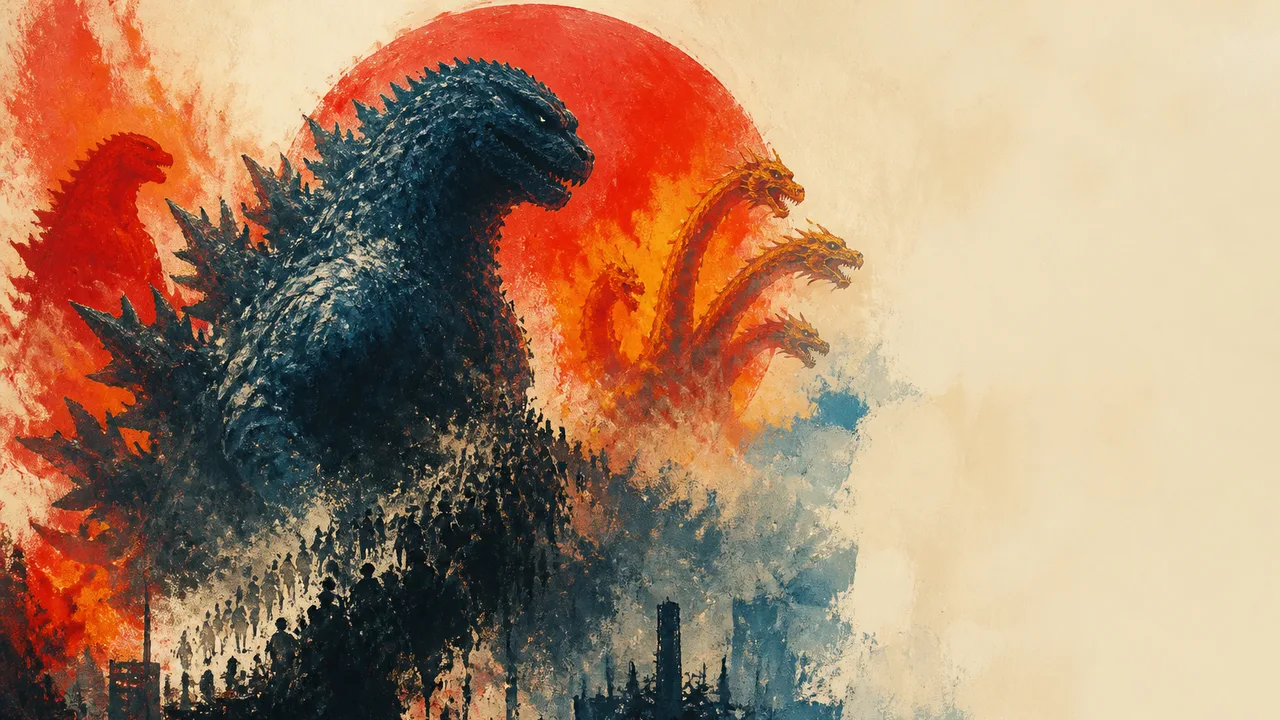
Takashi Yamazaki’s Godzilla Minus Zero premiered at the New York Film Festival on September 26 with a title that sounds like a subtraction problem written after someone misplaced the calculator.
Yamazaki has explained that the title of Godzilla Minus One carried two ideas: the film came before Ishirō Honda’s 1954 Godzilla, and its people began in a postwar Japan at “zero” before Godzilla drove them lower. That explanation of the earlier title supplies a useful way into the sequel, although Yamazaki has not provided an equally complete formula for Minus Zero in the material available so far.
Zero now looks like a disputed condition. Japan has climbed one numerical step since the previous film, yet the sequel’s 1949 society remains occupied, traumatized and vulnerable to another monster. Its institutions can organize a response, but they cannot guarantee safety. Its American occupiers possess military strength, but their help has limits. Its heroes can imagine turning monsters into weapons, but doing so risks reproducing the violence that created their world.
The film’s structure supports that interpretation. Yamazaki has not confirmed it as the title’s intended meaning. It nonetheless helps explain why a movie with two enormous creatures spends so much time asking who gets to command force, who must absorb its consequences and whether survival counts as recovery.
One Step Up, with Ghidorah Overhead
Minus Zero rejoins Kōichi Shikishima (Ryunosuke Kamiki), Noriko (Minami Hamabe) and their adopted daughter Akiko (Sae Nagatani) two years after Minus One. Godzilla begins the sequel dormant, while the dragon-like Ghidorah dominates its first half. The threat activates a Large-Scale Disaster Response Bureau led by Kenji Noda (Hidetaka Yoshioka), with meteorologist Makoto Aoyama (Masami Nagasawa) devising a defense that relies on forecasting as well as firepower.
That bureau gives the sequel a different political shape. The previous film assembled civilians and veterans around an improvised plan. Here, their expertise has acquired an office, a name and some authority. Japan has moved from emergency improvisation toward administration, which is one plausible meaning of the move from minus one to minus zero. Yet the people doing the work remain exposed. The institution can coordinate them without relieving them of sacrifice.
The United States sharpens that tension. The film’s US military offers planes but withholds troops, drawing Kōichi and Noriko back into danger. The occupying power is present in this story after being absent from Minus One, but presence does not produce dependable protection. Japan receives hardware while Japanese bodies remain closest to the monster.
The film characterizes its Americans as self-interested, an arrangement that makes Japanese agency an unusually easy case for the movie to argue. A more complicated ally would force the political inquiry to work harder. Within that characterization, planes without troops form a concise image of unequal power: the United States controls resources, while the Japanese protagonists inherit the risk.
An R Rating that Keeps Casualties in Frame
Godzilla Minus Zero is the first film in the 72-year franchise to receive an R rating, assigned for “violent content/bloody images.” Yamazaki told Variety that some scenes were “essential to the film” and that cutting or censoring them “was just not an option”.
A rating cannot establish a movie’s seriousness. Plenty of R-rated destruction is ketchup with a marketing budget. Here, however, the classification accompanies hospital scenes, maimed victims and obliterated streets, while Kōichi grieves casualties caused by monsters and human weapons alike. The sequel expands the spectacle, then keeps returning to bodies small enough to fit in a hospital bed.
That choice creates a productive strain. The movie sells the pleasure of Godzilla and Ghidorah tearing into each other while asking viewers to inspect the result. It cannot solve the old blockbuster problem of condemning destruction through spectacular destruction. It can make that contradiction harder to overlook.
The wider scale also costs the sequel some of Minus One’s intimacy. Its expanded ensemble allows more perspectives on postwar guilt, but places greater distance between the audience and the Shikishima family, as the GamesRadar review observes. Scale becomes an artistic trade. Minus Zero gains a national argument and loses some of the earlier film’s tight concentration on one damaged man.
Every Era Builds the Monster It Needs
Godzilla has carried political meaning since the franchise’s 1954 beginning, when atomic allegory and mass destruction entered a creature feature together. Yamazaki returned the series to postwar trauma in Minus One, grounding its effects-driven action in reconstruction, guilt and social reintegration. That approach honored the original film’s roots while shifting the emphasis toward a family and community rebuilding after war, as The Hollywood Reporter noted.
Minus Zero keeps the period setting but changes the question. A country climbing out of ruin now has to decide what recovery will authorize it to do.
The useful comparison is Hideaki Anno’s Shin Godzilla from 2016. That film relocated the monster into a post-Fukushima political climate and portrayed a contemporary Japanese state and military constrained by bureaucratic safeguards and international statutes before decisive officials and military technology prevailed. Slant’s political reading places it in conversation with former prime minister Shinzo Abe’s vision of a more assertive Japan, freer to pursue national power.
Minus Zero also worries about Japanese capacity, but its disaster bureau and traumatized protagonists make competence look less triumphant. Its people need enough power to survive Ghidorah; they also know what organized power did during the war. Kōichi’s reluctance to return to combat sits beside a plot that repeatedly demands his usefulness. The film makes renewed military capacity emotionally tempting and morally contaminated at once.
The comparison has limits. Shin Godzilla examines a contemporary state constrained by safeguards and international statutes before officials and military machinery prevail. Minus Zero is a period melodrama about occupation, bereavement and citizens forced back into service. One monster exposes the constraints on state action; the other pair exposes the danger of rebuilding national strength around wounded people.
The Revenge Fantasy and the Recoil
The sequel’s most volatile idea arrives when Japan imagines directing monstrous force outward. The film juxtaposes Godzilla’s destruction with imagery of Hiroshima’s aftermath, then briefly envisions nuclear revenge against the United States. It finally reflects that fantasy back as monstrous, according to Polygon’s account of the sequence.
That recoil supports an anti-war reading, but it cannot erase the pleasure of the fantasy that precedes it. Slant offers the more skeptical interpretation: the film indulges nationalist catharsis and recoils only after giving it spectacular form. A movie can condemn vengeance while still furnishing its audience with the sight of vengeance, polished for IMAX consumption.
That tension connects the sequel to Godzilla’s history without requiring one fixed meaning for the monster. The 1954 roots and Yamazaki’s postwar films use Godzilla as an atomic allegory; Minus Zero also presents Godzilla and Ghidorah as colossal action figures whose collision supplies blockbuster pleasure. The film asks viewers to process the historical wound and enjoy the smackdown in the same sitting.
The odd title earns its keep through that collision. Zero describes improvement from the previous film, but only in the bleakest possible accounting. Japan has institutions, expertise and a rebuilt family at the center of the story. It also has occupation, fresh casualties and the seductive prospect of answering atomic violence with atomic violence.
Godzilla Minus Zero reaches zero by showing how easily recovery can become another name for acquiring the power to send somebody else below it.
More Like This
Johnny Thunder: The Rise and Fate of LEGO's First Hero
How Johnny Thunder became LEGO's first original hero in 1998—and what the Adventurers theme reveals about branding, licensing, and toy storytelling.
When ABS Challenges Go Wrong: A Rules Breakdown
Umpire Carlos Torres denied two ABS challenges in one A's-Orioles game. Here's what the tape reveals about a protocol still working out its kinks.