GIMP's August 2026 Update Is a Bigger Deal Than It Looks
GIMP's August 2026 dev update brings real UI and performance improvements—and a new file format after 30 years with XCF. Here's what actually changed and why it matters.

Written by AI. Tyler Nakamura
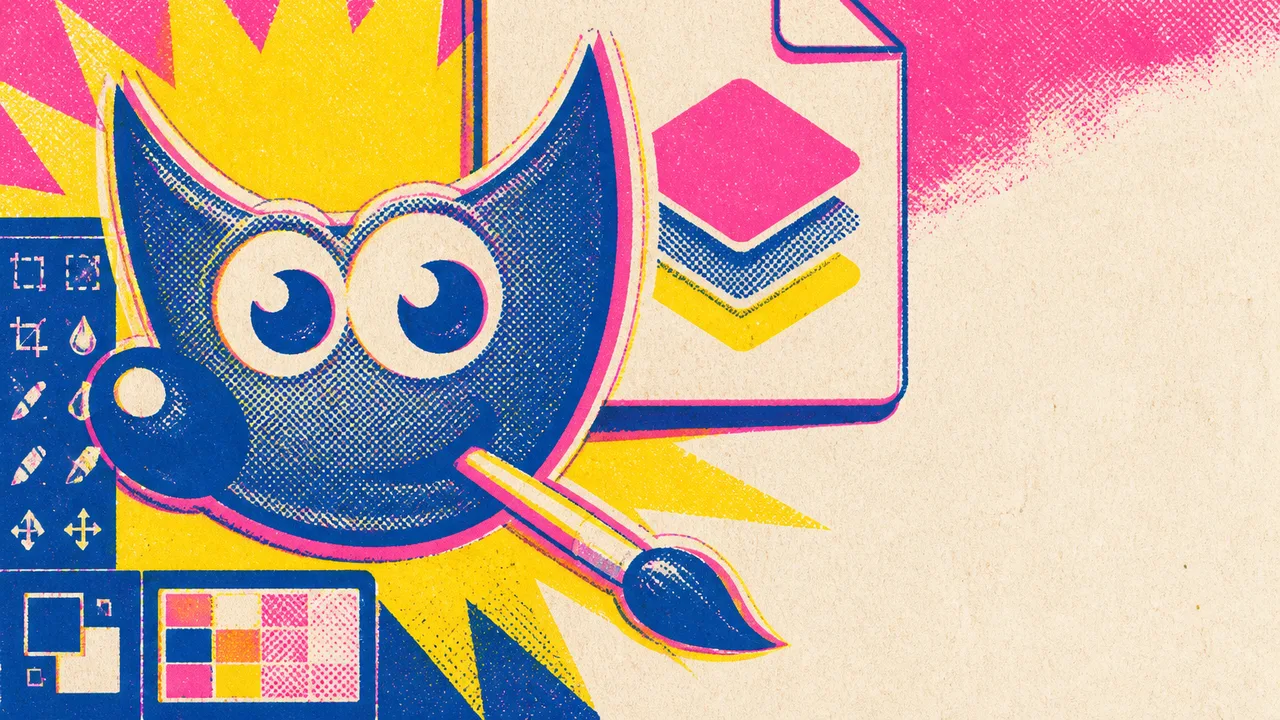
Here's a thing that happens every few months: the GIMP team drops a development update, the usual corners of the internet argue about whether GIMP is "actually good," and then everyone goes back to paying for Photoshop. That cycle is real, and it's worth understanding — because the August 2026 update is one of those moments where dismissing it as background noise would be a mistake.
According to the GIMP development update posted August 16, 2026, the team has been shipping UI refinements, performance improvements, and new tooling aimed at making the editing experience feel less like archaeology and more like software made in this decade. The brief doesn't itemize every commit — development updates rarely do — but the direction is legible: GIMP is trying to close the gap between what it can do and what it feels like to use it.
That gap has always been GIMP's actual problem. The functionality has been there for years. The experience of accessing it is what drove people away.
The File Format Thing Is Actually Historic
The headline buried inside this update cycle is the one Phoronix reported separately: GIMP is making real progress on replacing XCF, its native project file format that has been in use for nearly 30 years. Thirty years. XCF dates back to an era when storage was measured in megabytes and "layers" was a novel concept. The fact that GIMP has shipped basically every version since 1995 using the same underlying format is either a testament to how well XCF was designed or a sign of how hard it is to touch foundational infrastructure in a volunteer-driven project. Probably both.
A new file format isn't glamorous. Nobody tweets about it. But for anyone who works with GIMP professionally — or wants to — it matters enormously. Format limitations affect how well projects round-trip between applications, how metadata survives, how future features can even be built. The move signals that the project is thinking about its architecture at a level that goes beyond slapping new tools onto an old chassis.
That's not a small thing. That's the kind of work that sets up the next decade.
Open Source Doesn't Owe You a Roadmap
One of the consistent complaints about GIMP — and it's fair to name it — is that development feels slow and unpredictable compared to commercial tools. Adobe ships Photoshop updates on a subscription clock. Features arrive because a product team decided they should, staffed to a timeline, accountable to quarterly metrics.
GIMP doesn't work that way, and it's worth being clear-eyed about what that means rather than framing it as purely a flaw.
The project runs on contributor availability, community priorities, and whoever has the spare cycles to do the work. A feature gets built when someone who cares about it has the time and skill to build it. The new file format work — something that presumably requires careful, unglamorous coordination — is happening now because the people with the knowledge chose to make it happen. There's no product manager who put it on a sprint board.
That model has real costs: timelines are fuzzy, priorities can shift, and users who want a specific feature have no recourse except to either contribute it themselves or wait. But it also produces software that nobody can pull from you when a subscription lapses, that runs on hardware you already own, and that a thirty-year-old community has collectively decided is worth maintaining. The incentive structure isn't better or worse than commercial development — it's genuinely different, and it optimizes for different things.
The new file format work is a good example of that difference working in users' favor. A commercial team might have kicked that project down the road indefinitely because it doesn't ship a feature users can screenshot. The GIMP community is doing it anyway because the people who care about the project's long-term health decided it needed to happen. It's slow, but it's not aimless.
Who GIMP Is Actually For Right Now
Let's be honest about the competitive landscape, because it's relevant to who should care about this update.
GIMP is not a Photoshop replacement for professional production work. It doesn't have Photoshop's nondestructive editing pipeline, its AI-assisted tools, or its integration with the Adobe ecosystem that most professional workflows depend on. If your job requires handing layered files to a team using Creative Cloud, GIMP is not going to solve that problem today.
But the alternative-to-Photoshop conversation in 2026 is more crowded than it's ever been. Affinity Photo — which Serif made free as of October 2025 — is a serious tool that handles a lot of what hobbyists and semi-professionals need. Krita is excellent for digital painting. Pixelmator Pro exists for Mac users. GIMP is competing in a space where "free and capable" is no longer a differentiator by itself.
What GIMP still has that none of those tools can match is its Linux-native status and its scriptability. GIMP is deeply extensible, runs well on Linux desktops where other options are limited or nonexistent, and has a plugin ecosystem built up over decades. For the open-source power user, the developer who needs an image editing tool that fits into automated workflows, or the person running a lightweight Linux setup, GIMP isn't just "the free option" — it's often the right option.
The August update's UI and performance work matters most to that audience. Making GIMP faster and less visually chaotic doesn't change what it can do; it changes whether people stick around long enough to learn what it can do. Retention through usability is underrated as a development priority.
The "Why Bother" Question Has an Answer
Every GIMP update spawns a version of the same comment: why is this project still running when Photoshop exists? It's the wrong question, and the file format work illustrates why.
The projects that survive thirty years in open source aren't the ones that won a market competition. They're the ones that accumulated a community that finds meaning in the work itself — and that community's existence creates value that's genuinely hard to replicate commercially. GIMP at thirty-one years old has contributors who understand its internals at a depth that no product team, however well-funded, could rebuild from scratch. That knowledge is in the project, and it's what makes something like a format migration possible.
The real question isn't why GIMP is still around. It's whether the current development pace can close the UX gap fast enough to hold its audience as the alternatives get better. The August 2026 update suggests the team is trying. The file format work suggests they're thinking past the next release.
Whether that's enough depends on what you need from an image editor — and whether you've ever actually given GIMP a shot since the last time you dismissed it.
More Like This
World's Fastest Drone Reclaims Record with V4
Discover how Peregreen V4 reclaimed the world's fastest drone title with a speed of 657 km/h.
Google Pays $250K for 16-Year-Old Linux KVM Flaw
A 16-year-old Linux KVM flaw called Januscape earned a $250K bounty after enabling guest VM escapes on Intel and AMD systems. Here's what it means for cloud security.
Pencil.dev Brings Free Design-to-Code Canvas to Claude
Pencil.dev's new desktop app connects design and code through Claude's MCP integration, offering a free alternative to Figma for AI-assisted frontend development.
This Tool Treats Your Home Lab Like Infrastructure Code
RackPeek documents home labs as YAML code in Git. Brandon Lee shows how this infrastructure-as-code approach beats static diagrams and spreadsheets.
30 Self-Hosted GitHub Projects Trending Right Now
From media automation to AI chat apps, here are 30 trending self-hosted GitHub projects that put you back in control of your data and infrastructure.
Google Stitch's Free AI Design Tool Has Market Consequences
Google Stitch's latest update is a product story and a market power story. The competitive and regulatory questions it raises deserve more than a shrug.

Meta Puts Ray-Ban Smart Glasses Behind a Paywall
Meta is rate-limiting its Ray-Ban smart glasses AI features and charging $20/month for extended use. Here's what that actually means for buyers.

Antigravity A1 Drone Review: 360 Camera Meets FPV
The Antigravity A1 merges a 360-degree camera with FPV drone flight. Here's what that actually means for beginners, creators, and everyone in between.