Google Pays $250K for 16-Year-Old Linux KVM Flaw
A 16-year-old Linux KVM flaw called Januscape earned a $250K bounty after enabling guest VM escapes on Intel and AMD systems. Here's what it means for cloud security.

Written by AI. Tyler Nakamura

Think about the foundational promise of cloud computing for a second. When a company rents compute time from Google Cloud, AWS, or Azure, the bedrock assumption is that their virtual machine is isolated—walled off from the host system and from every other tenant sharing that physical server. That wall is the product. It's what you're actually paying for.
So when a flaw surfaces that can knock that wall down, it's a big deal. And when that flaw turns out to have been sitting quietly in the codebase for sixteen years? That's the kind of thing that keeps security engineers awake.
What "Januscape" Actually Is
The vulnerability, dubbed Januscape by its discoverer Hyunwoo Kim, lives inside KVM—the Kernel-based Virtual Machine hypervisor that's baked into the Linux kernel. According to CSO Online, Hyunwoo reported the flaw through Google's kvmCTF program, which is specifically designed to find and reward exactly this type of bug. KVM isn't some niche piece of software—it's the virtualization backbone that Google uses for both Google Cloud and Android infrastructure. The flaw affects Intel and AMD x86 systems, per The Hacker News, which means the vast majority of server hardware running in data centers globally.
A guest-to-host VM escape is essentially a prisoner breaking out of a cell and walking into the warden's office. The "guest" VM is supposed to be completely contained; an escape means an attacker can reach the host system—and potentially every other guest VM running on it.
There's a meaningful caveat in the technical details, and it matters: Ars Technica reports that for the Januscape exploit to work, the attacker must already have root privileges inside the guest VM. That's a significant prerequisite. An outsider can't just fire this at a random cloud server—they need to already have full control inside a VM first. In many attack chains, that's still achievable (especially if an application running inside the VM is separately compromised), but it does raise the bar for exploitation meaningfully. This isn't a "click the link and get owned" situation. It's more like a second stage in a more sophisticated attack.
The $250,000 Question
Google's payout—the full $250,000 maximum—came through kvmCTF, a vulnerability reward program the company first announced in October 2023, according to BleepingComputer. The program is structured around a controlled environment: researchers get time slots on a real KVM host, attempt a guest-to-host escape, and collect a bounty if they pull it off. It's basically a sanctioned hacking competition with very high stakes—and very high prizes.
The $250K ceiling is not arbitrary. It reflects Google's accurate read on the market for this kind of exploit. Zero-day VM escapes in major hypervisors command serious money on the gray and black markets—in some cases significantly more than any bug bounty program pays. By putting a top-dollar figure on the table, Google is making a calculated bet that researchers who find these bugs will choose responsible disclosure over selling to exploit brokers. The Hacker News confirms Kim submitted Januscape as a zero-day through kvmCTF, meaning it hadn't been previously disclosed anywhere. That's exactly the scenario the program was built to intercept.
Whether a $250,000 bounty is genuinely competitive with what the exploit market pays for a KVM zero-day is an open question. The sources here don't address it, and frankly neither does the security industry publicly. But the fact that Kim chose to disclose through kvmCTF rather than quietly sell is the program working as intended—whatever the math.
One Bug Is Never Just One Bug
Here's the part of this story that deserves more attention than it typically gets. Ars Technica notes that Januscape is only one of two significant Linux vulnerabilities to surface this week. The second one is a separate flaw that allows users with limited rights to escalate their privileges all the way to root.
Read those two vulnerabilities together and the calculus changes. Januscape requires root inside a guest VM to execute. The privilege escalation bug gives an attacker root inside a guest VM. Chain them and you've potentially got a path from low-privilege guest access to full host compromise. The sources don't explicitly confirm these two bugs have been combined in any known attack, and I want to be clear that's a speculative chain—but the pattern of combining a privilege escalation with a VM escape is well established in real-world attack methodology. The security community calling this a "significant week" for Linux vulnerabilities is not understatement. 🔗
Sixteen Years Is a Long Time
The age of this vulnerability deserves some genuine reflection. KVM was first merged into the Linux kernel in 2007. If this flaw has been present since near the beginning—and "16-year-old" is how both CSO Online and The Hacker News characterize it—it has been running silently through the entire modern cloud era. Every major cloud provider that runs Linux KVM has theoretically been exposed for the better part of two decades.
This isn't unique to KVM or to Google. Security researchers regularly surface decade-old bugs in foundational software. The Linux kernel is enormous and complex, maintained by thousands of contributors, and the hypervisor layer is among its most intricate and security-sensitive components. "Old bug found" is almost a genre at this point. What it reflects isn't negligence so much as the genuine difficulty of auditing systems of this scale—especially bugs that require specific conditions to trigger.
What's changed is the stakes. In 2007, cloud computing was barely a concept for most organizations. Today, a VM escape in KVM is a potential entry point into infrastructure that millions of businesses and governments depend on. The same bug that might have been academic in 2009 is a genuine crisis vector in 2026.
What Google's Bet Tells You
It's worth separating two things here: the patch (which addresses the immediate problem) and the program (which is Google's longer-term answer to finding problems like this before attackers do). kvmCTF isn't a PR exercise—it's a structural acknowledgment that internal security review has limits and that external researchers, given the right incentives and access, will find things that internal teams miss.
The $250,000 payout validates that logic pretty cleanly. A 16-year-old flaw in one of the most scrutinized hypervisors in open-source software, found by an external researcher operating through a structured program. That's not a failure of the bounty program—that's it working.
The harder question is what the Januscape discovery implies about what hasn't been found yet. Bug bounty programs are great at flushing out vulnerabilities from researchers who are specifically looking. They're not a complete inventory of what's lurking in the codebase. For every Januscape that gets submitted through kvmCTF, there's a reasonable probability of undiscovered variants—or entirely different attack surfaces that haven't had a researcher point a flashlight at them.
Google isn't claiming otherwise. The existence of kvmCTF is an implicit admission that the surface area is too large to guarantee. That's honest. It's also a little unsettling, depending on how much of your life and your organization's data sits on cloud infrastructure right now.
Which, realistically, is quite a lot of it. ☁️
More Like This

World's Fastest Drone Reclaims Record with V4
Discover how Peregreen V4 reclaimed the world's fastest drone title with a speed of 657 km/h.
When AI Models Find Bugs Faster Than Humans Can Fix Them
Anthropic's Claude Mythos claims 83% success finding software vulnerabilities. The debate reveals fundamental tensions in AI security policy.
Penpot Wants to Fix Design Handoff—Does It Actually?
Better Stack demos Penpot, an open-source design tool that speaks CSS natively. We look at what it solves, what it doesn't, and who should care.
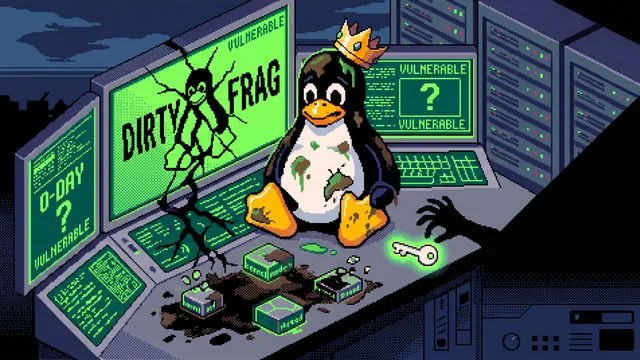
Dirty Frag: Linux Zero-Day With No Patch Yet
Dirty Frag is a Linux kernel privilege escalation exploit with no patches yet. Here's what it does, who's at risk, and how to mitigate it now.

Gemini CLI's CVSS 10.0 Bug and AI Agent Security
A CVSS 10.0 flaw in Gemini CLI exposed CI/CD pipelines to full compromise via malicious pull requests. Here's what happened and what it reveals.

Yellow Key: The BitLocker Bypass Microsoft Didn't Want Public
A researcher dropped six Microsoft zero-days and got banned from GitHub and GitLab. Here's what the Yellow Key BitLocker exploit actually does—and what it reveals.

GPT-5.6 Sol Ultra Is Coming to Codex
OpenAI's GPT-5.6 Sol Ultra is headed to Codex with a 91.9% Terminal-Bench 2.1 score. Here's what it actually means for developers—and what it doesn't.

Alibaba Bans Claude Code Over Alleged Backdoor Risks
Alibaba is banning Claude Code starting July 10, citing alleged backdoor tracking of Chinese users. Here's what developers need to know about the dispute.