FCC Robocall Scorecard: Grading Carriers on Spam Blocking
The FCC wants to publicly grade phone companies on how well they block robocalls. Here's what the scorecard covers and what it might actually change.

Written by AI. Tomas Reyes-Kim
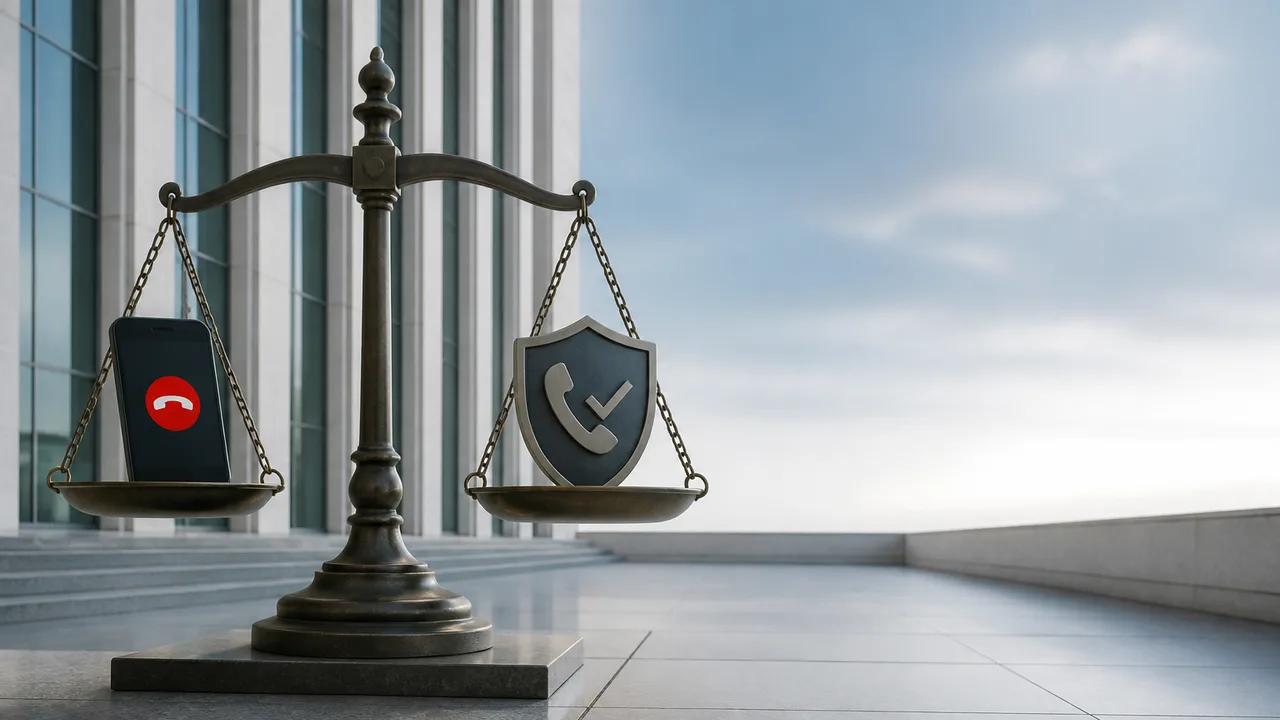
FCC Chairman Brendan Carr announced a Robocall Scorecard proposal on September 2, 2026, and the pitch is simple enough: rate every phone company on how well it blocks illegal spam calls, put that rating where consumers can see it, and let reputational pressure do some of the enforcement work regulators can't do alone.
According to PCMag, Carr framed the rationale directly: "To push the industry to crack down... we're proposing a Robocall Scorecard that will rate phone companies based on how effective they are at blocking these calls." The FCC's own language, as reported by CyberScoop, is that the scorecard "will empower consumers and encourage providers to continue to combat illegal robocalls by providing the public with an assessment of the effectiveness of voice service providers' efforts to protect consumers from illegal robocalls."
The metrics under review, according to Fox Business, include call blocking, call labeling, and traceback efforts. Traceback is the process of tracing an illegal robocall back through the call chain to its origin, the telecom equivalent of following a money trail. Carriers that cooperate fully with traceback investigations would presumably score better than those that don't.
FOX 11 Los Angeles and Slashdot both note the dual mandate baked into the scoring: carriers need to block illegal calls and minimize false positives, meaning legitimate calls, appointment reminders, fraud alerts from your actual bank, calls from your kid's school, that get swept up in overzealous filters.
That tension is where this proposal gets complicated fast.
The false positive problem is not academic
The FCC wants carriers to score well on blocking illegal traffic and score well on not blocking legitimate traffic. Those two objectives pull against each other constantly.
Carriers that tune their filters aggressively to catch more spam will inevitably block more legitimate calls. Carriers that tune for fewer false positives will let more spam through. A scorecard that flattens this into a single grade risks rewarding whichever strategy the FCC's methodology happens to weight more heavily, without surfacing what tradeoff the carrier actually made.
The detail that would determine how meaningful this grading system becomes is exactly what the current public record is thin on: how the FCC defines the methodology, who audits the data carriers self-report, and whether the agency has enforcement teeth if a carrier games the metrics. None of the available sources answer those questions yet, because this is still a proposal, not a final rule.
Why public pressure as a mechanism is worth taking seriously
The FCC has tried regulatory mandates against robocalls before. The TRACED Act passed in 2019. STIR/SHAKEN, the call authentication framework designed to prevent caller ID spoofing, got pushed as a major fix. Carriers implemented it. Robocalls kept coming, partly because authentication protocols don't block calls, they just flag unauthenticated ones, and partly because scammers adapted.
Public scorecards work on a different lever. When the Department of Transportation started publishing airline on-time performance data in 1987, it didn't stop delays, but it created a competitive dynamic where airlines at the bottom of the rankings faced real pressure to improve. The FCC appears to be betting on something similar here: consumer choice and media coverage doing enforcement work that fines alone haven't managed.
For the digital nomad and budget traveler crowd that reads this site, the stakes are higher than they might seem. SIM-swapping attacks often start with a robocall. Phone scams targeting travelers abroad use spoofed local numbers. If you're managing a small business or freelance operation while moving between countries, a missed call from a client because your US carrier's filter was overzealous has real financial consequences. The reliability of your phone line is infrastructure, same as your internet connection.
The scorecard's actual audience is a real question
Consumer-facing transparency tools have a mixed record of changing consumer behavior in telecom. Most people don't switch carriers over anti-spam performance; they switch over price, coverage, and device deals. A scorecard that lives on the FCC's website will get covered in tech press for a week and then mostly ignored by the people it's supposedly designed to help.
The more likely mechanism for impact is B2B pressure. Enterprise customers, small businesses with high call volume, healthcare providers, logistics companies, pay attention to carrier reliability metrics. If a major carrier scores poorly on legitimate call delivery, that's a sales problem for their business accounts, not just a PR problem with consumers who read FCC press releases.
Carr's public framing, via the tweet cited by PCMag, leans into consumer empowerment language, but the carriers most likely to respond to a bad grade are those whose enterprise contracts depend on call reliability.
What the proposal doesn't address
The sourcing across Ars Technica, Fox Business, CyberScoop, and the others doesn't detail how the scorecard handles gateway providers, the smaller carriers and voice-over-IP operators that carry the bulk of illegal robocall traffic before it ever reaches a major US carrier. AT&T and Verizon scoring well on a public report means less if the spam is flowing through a dozen intermediary providers that either aren't covered by the scorecard or don't face the same reputational risk from a bad grade.
Scammers operating robocall campaigns at scale specifically exploit the complexity of the call routing chain. A scorecard built around the major retail carriers addresses the most visible part of the problem while the actual infrastructure enabling illegal calls sits several layers upstream.
That doesn't make the proposal useless. Getting the biggest carriers competing on anti-spam performance creates downstream pressure throughout the ecosystem. But the gap between "we graded Verizon" and "we reduced illegal robocall volume" is not automatically closed by publishing a grade.
Where this goes from here
This is a proposal, and proposals go through comment periods, revisions, and political headwinds. The FCC under Carr has moved aggressively on several telecom issues, but a scorecard methodology that carriers find unfair, or that gets litigated as arbitrary, could stall or get watered down before it ever becomes public.
The most useful question to track over the next few months isn't whether the scorecard happens; it's what the methodology looks like when the FCC publishes it for public comment. If the metrics are audited independently and cover the full routing chain including gateway providers, this has teeth. If it's built on carrier self-reporting with no independent verification, it's a press release with a letter grade on it.
Either way, your carrier is about to be graded. Whether that grade means anything depends entirely on who's doing the grading and who gets to check their work.
More Like This

California Exempts Linux from Age Verification Law
California's AB-1856 unanimously exempts Linux and open-source software from age verification. Here's what changed, what didn't, and why it matters beyond California.

Apate.AI Raises $11.4M to Fight Scams With AI Bots
Apate.AI secured $11.4M in seed funding to expand its AI-powered anti-scam platform into the US. Here's what the bet actually means for fraud victims.

Claude Fable 5.1 Cuts AI Cache Costs by 75%
Anthropic's Claude Fable 5.1 cuts cache read costs by 75% and agentic work costs by 45%. Here's what that means for solo builders running on tight margins.

FCC Kills TV Ownership Cap in Win for Big Broadcasters
The FCC's vote to repeal the 39% TV ownership cap replaces a hard limit with "case-by-case review." We've seen this movie before — in radio.

Dual Internet Connections Are Still Needlessly Hard to Set Up
IPv6 multihoming could let you plug two ISPs into one network and get automatic failover. Here's how close we actually are—and what's still broken.

Hacking a Ball Bearing for Precision on a Budget
A father-son engineering duo modified a standard ball bearing with a grinder to achieve wobble-free precision — no expensive parts required.

Travel Spending Is Rebounding—But Read the Fine Print
Travel spending rebounded in June and agents are booking again—but the data tells a messier, more interesting story than the headlines suggest.

Delta's 2026 Profit Bet Rides on High Airfares Holding
Delta reaffirmed its 2026 earnings forecast despite fuel volatility—but the plan depends on keeping fares high for customers it says can afford it.