EU AI Watermarking Is Live. Here's What It Actually Does
The EU's AI watermarking law took effect in August. Here's how the technology actually works, what Google might do with it, and why most of the fear is manufactured.

Written by AI. Samira Barnes

Photo: AI. Hayden Cross
The EU's AI watermarking requirement took effect on August 2nd. Enforcement — the part with fines — follows on December 2nd. In between sits a four-month window where the technology is real, the legal teeth are not yet biting, and the content industry is doing what it does best: generating panic at scale.
The Authority Hacker podcast recently walked through how the watermarking actually works, what Google is likely to do with it, and why the scariest predictions tend to originate from people selling something. Their read is largely correct — but there are dimensions of this story they don't fully account for.
How the watermark actually works
The mechanism is worth understanding precisely because the public discourse around it is so loose.
The approach being implemented for text is not the crude Unicode character trick that briefly appeared in ChatGPT output earlier this year — invisible characters that anyone could strip out by opening a plain-text editor. What the EU's AI Act requires is something more structurally embedded: AI models are expected to subtly bias their word choices in ways that, accumulated across enough tokens, produce a statistically detectable signature.
The Authority Hacker hosts describe it clearly: the phrase "the proposal is particularly significant" and "the proposal is especially important" are semantically equivalent. An LLM choosing between synonyms in those moments can, by consistently weighting toward certain options, encode a fingerprint into the text itself. Copy it, paste it, OCR a photo of it — the signature survives, because the signature is the word choice.
There are real limits. Short-form content — a hundred-word social post, structured outputs like code, heavily templated text — may not contain enough tokens to produce a reliable signal. The watermark identifies the model provider (Claude, OpenAI, etc.), not the individual user who generated the text. And the EU's mandate reaches closed-source models straightforwardly — the regulator controls the distribution choke point — but open-source models present a structural problem the hosts correctly identify: once weights are distributed, inference providers and individual users can do as they please. The idea that this creates a two-speed system is probably right.
The Google question, with some additional pressure applied
The hosts' position on whether Google will use watermarks as a ranking signal is essentially: if it's available and correlates with user satisfaction, why wouldn't they?
That's a reasonable conditional, but it's worth stress-testing. Google's quality rater guidelines — the documents that instruct human evaluators how to assess search results — center on concepts like expertise, authoritativeness, and trustworthiness. Critically, those guidelines assess the content and its sourcing, not the mechanism of production. A watermark tells a system that Claude generated some text. It tells that system nothing about whether the underlying research was sound, whether the claims were verified, or whether a human with genuine expertise shaped the final product.
The hosts gesture at this with their "shade of something in between" framing, and they're right that the binary is the problem. But even if Google used watermarks as a signal, the more interesting question is how they'd weight it — against what. Google already has behavioral signals: dwell time, bounce rate, click-through patterns from search results pages. If AI-generated content performs worse on those metrics, Google already knows. The watermark would be a label for something the algorithm may already be detecting indirectly.
What the watermark does change is the explicit possibility: platforms could enforce disclosure rules, spam filters could target flagged outreach at scale, and advertisers could demand certified human-in-the-loop content. Whether Google wants to act is a separate question from whether Google could. Banning AI content wholesale is obviously incoherent — as the hosts note, at this point practically everyone is using AI in some part of their content production process, including the writers who don't think they are.
The fear economy, which is also kind of the honesty economy
The hosts make a sharp observation about the ecosystem growing up around this story. They acknowledge, somewhat to their credit, that their own packaging — a worried-looking thumbnail, a headline engineered for clicks — participates in the same fear cycle they're critiquing. "Everyone's going to play on that fear to sell their services. That's how this industry works."
What the self-critique misses is who profits from the opposite fear: the reassurance that nothing needs to change. The Authority Hacker podcast runs an AI membership product and sells training around exactly the workflows they're describing. Their incentive to understate the disruption is at least as real as a detection-tool vendor's incentive to overstate it. Neither fact invalidates their analysis — their read on how the watermark technically works appears sound — but the market for "don't panic, here's our course" is as lucrative as the market for "panic, here's our tool."
The honest answer is that no one knows how this plays out. The watermark is real. Its downstream use is genuinely uncertain.
The disclosure problem no one is solving
The law has two sides, and the side that doesn't involve AI companies has received less attention. Under the EU AI Act's provisions, companies or individuals publishing AI-generated or AI-altered content touching matters of public interest are required to visibly disclose it. That includes the social media ecosystem — Facebook, X, Substack — and it includes the AI-slop meme farms that have been a documented feature of political discourse for years.
The hosts are appropriately skeptical that this self-polices. Nobody who perceives a reputational or algorithmic penalty for disclosure is going to voluntarily disclose. The mechanism for enforcement, practically speaking, is the watermark itself: platforms that can detect AI-generated content can automate disclosure. Substack has already moved in this direction, integrating a third-party detection tool called Pangram — which, according to a review published by Phrasly.ai, claims 99.8% accuracy on its own benchmarks. (Self-reported detection accuracy should be read with appropriate skepticism; the watermarking era will make such claims more testable.)
The more interesting legal question is what happens when platforms know their content is AI-generated — because the watermark makes it legible — and still don't disclose. That's where the December enforcement window becomes something other than a technicality.
The circumvention industry has already begun
Watermarking advocates and critics share one prediction: people will route around it. The hosts expect workarounds to emerge through open-source models that carry no watermark requirement, through using watermarked models for research and structure but not final output, through programmatic paraphrasing, and through running older model versions that predate the requirement.
This is probably correct, and it maps onto every prior content-quality regime. When Google cracked down on thin affiliate content, the thin affiliate content got longer. When spam filters improved, spam got more personalized. Regulation that requires technical compliance tends to produce technical compliance at the margin while determined bad actors adapt.
Where this regulatory approach does have more bite is in enterprise contexts — large companies with legal and compliance departments that actually read vendor agreements. If the infrastructure those companies use demands watermark compliance, that's a real constraint. Most of their content will be watermarked. The circumvention market will be smaller businesses and individual operators who have both the technical sophistication and the incentive to avoid it.
Which means, practically, that the watermarking regime may end up being very good at tracking the compliant and largely invisible to the non-compliant — a regulatory outcome familiar from other domains.
The question worth sitting with isn't whether the watermark works. It's whether what it detects — AI involvement in text production — is actually the problem the EU thinks it is, or whether the real problems (misinformation, synthetic influence operations, labor displacement) require tools the watermark can't provide.
More Like This

Karpathy's Self-Evolving AI Wiki Tests New Memory Model
Andrej Karpathy released an architectural blueprint for AI agents that maintain their own knowledge bases. Does it solve AI's memory problem or create new ones?
Design.md Files Expose a Gap in AI Regulation Standards
How a GitHub repository of design system files reveals the absence of standardization frameworks for AI-generated interfaces—and why that matters.
OpenAI's Workspace Agents: The Governance Question No One Asked
OpenAI's new Workspace Agents automate team workflows—but the real product isn't the AI. It's the permission model enterprises can actually live with.

Kimi K2.6 Is Free on NVIDIA NIM—Read the Fine Print
Kimi K2.6 is now free via NVIDIA's NIM API. But who controls AI model distribution when NVIDIA becomes the default inference layer?
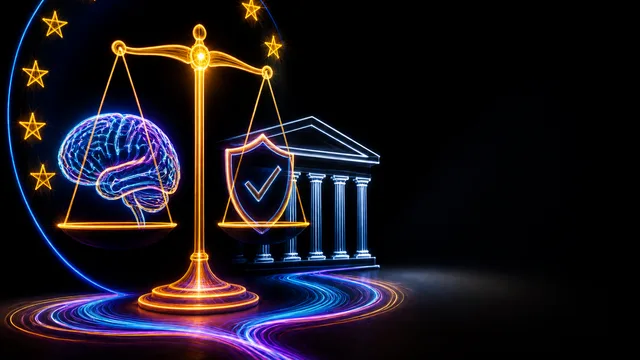
EU AI Act: How to Tell If Your AI Is High-Risk
The EU AI Act's high-risk classification isn't just about what your AI does—it's about how it's deployed. Here's what organizations need to understand now.

Authors' Mixed Verdict on Anthropic's $1.5B Copyright Ruling
Anthropic will pay $1.5B to hundreds of thousands of authors for copyright infringement. Why are so many of them uneasy about winning?
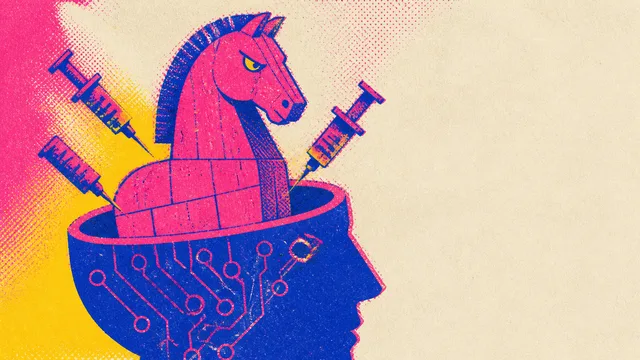
Promptware: When AI Agents Become Attack Vectors
Prompt injection attacks on AI agents follow a structured kill chain — and existing legal frameworks have almost nothing to say about who's liable when it works.

Planet Labs, Orbital AI Compute, and the Chip Tax
Planet Labs CEO Will Marshall argues chip efficiency—not launch cost—will determine who wins the race to put AI compute in orbit.