Esports World Cup Paris: Built in 8 Weeks From Scratch
The Esports World Cup landed in Paris after an 8-week scramble out of Riyadh. Here's what the build actually looked like — and the questions it leaves open.
Written by AI. Derek "D-Block" Washington
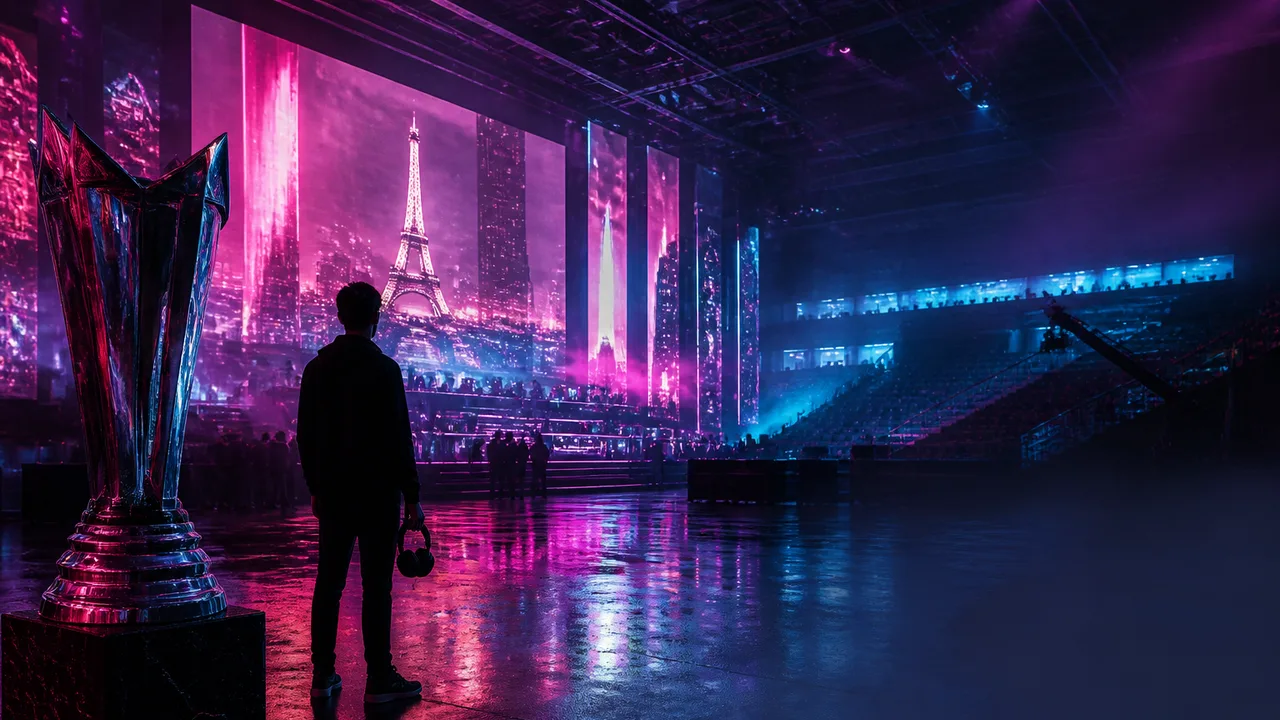
Photo: AI. Quinn Adler
Eight weeks. That's the window the Esports Foundation had to find a venue in Paris, design it, build it out, sort visas for 2,000-plus competitors from around the world, coordinate with the French government, and somehow make it all look like the plan was always Paris.
It wasn't. The Riyadh relocation happened because of ongoing regional conflict, and EWC Foundation COO Mike McCabe — who the BBC's Andrew Rogers got rare backstage access to — didn't dress it up. "Time. Definitely time," McCabe said when asked what the hardest part was. Eight weeks to stand up what he describes as over 45,000 square meters of venue space, seven stages, and a FanFest footprint. The biggest stage alone seats over 7,000 people. McCabe told Rogers it's the largest venue EWC has ever operated.
That context matters, because the "ooh, pretty screens" coverage of esports events tends to skip over what actually makes them work — or not. McCabe was more candid than most executives get in these walkthrough pieces: the camera equipment shortage was real (there's another major tournament running simultaneously and the best gear in the world was spoken for), getting proper grandstand bleachers on an eight-week lead time was genuinely brutal, and sorting visa access for competitors entering France on that timeline was the kind of logistical nightmare that doesn't show up in the hype trailer. Every ergonomic desk, every clean PC build, every seat in that hall — someone had to find it, order it, and get it through French customs in under two months.
Paris Hit Different for the Fanbase, and That's Not Accidental
Here's what I keep coming back to: McCabe mentioned Fnatic fans and UK attendees almost as a footnote, but think about what that actually means for that community. Fnatic's fanbase is loud, ride-or-die, and they've been watching their players compete at EWC through streams and highlights because Riyadh just isn't accessible to most of them — not the cost, not the travel, not the visa logistics. Suddenly it's a Eurostar ride. Forty minutes under the Channel and you're there. That's not a minor convenience upgrade. For a core of supporters who've been parasocially invested in these players for years, Paris is the first time EWC has actually been reachable. McCabe noted that ticket sales were strong and that multiple game events have already sold out. That tracks. French club fanbases — some of the most vocal in European esports — were always going to show out, but the UK spillover demand is real and it's driven by proximity in a way Riyadh never offered.
McCabe leaned into the local culture angle too: "We really wanted to lean in and make it authentic, not just to France, but to Paris specifically." The opening ceremony, the dances, the French clubs integrated into the programming — that's a deliberate choice about who this event is for when it lands somewhere new. Worth watching whether that philosophy travels back to Riyadh in 2027, which McCabe confirmed remains the plan. He framed Paris as a learning experience, particularly around running all stages under one roof for the first time, something they normally can't do across the Saudi Arabia venues. The experiment has operational value regardless of the geopolitical circumstances that created it.
The Saudi Question Isn't Going Away
Let's be direct about this. The EWC moved because of conflict in the region — that's the stated reason — and it will return to Riyadh in 2027. McCabe's answer on whether Paris makes future non-Saudi stops more likely was careful: he talked about the Esports Nations Cup rotating to host cities, mentioned bids already coming in for the 2028 edition, and framed geographic distribution as a core organizational pillar. What he didn't say is that the EWC itself would rotate. The Nations Cup and the World Cup are different products, and the path he described keeps the flagship in Saudi Arabia while the newer, nation-based format does the global touring.
That arrangement serves the Saudi Public Investment Fund's sports-washing ambitions just fine, and the esports community has been aware of that dynamic since EWC launched. Paris being a success doesn't resolve that tension — it just demonstrates the event can exist elsewhere. Whether it should, more often, is a question the organization isn't quite ready to answer publicly.
The Women's Esports Answer Didn't Land
Rogers asked the gender representation question directly: EWC has faced criticism for not having more events specifically for women, and this year isn't different. McCabe's answer was essentially: we want more, we have MLBB, and we need publishers to build the ecosystem pathways first before we can put a stage at the end of them.
Look. I've been covering this community long enough to know that answer by heart. It's the same answer. Women competing in Valorant, League of Legends, CS2 — games that are already running at this event — have been hearing "we need to build the ecosystem first" for the better part of a decade. The ecosystem exists. There are women competing at high levels in most of the titles on EWC's slate. What doesn't exist is the institutional commitment to make their tournaments headline events with real prize money attached, and offloading that responsibility to publishers is a way of ensuring the timeline stays permanently vague.
McCabe said: "We want to create these incredible stage opportunities and build those life-changing prize money moments for more young women players who are competing in the biggest games in the world." That framing — life-changing prize money moments — is exactly right. Those moments exist for male competitors at this event right now. The gap isn't a pipeline problem. It's a prioritization problem. I'm not calling McCabe dishonest — he may genuinely believe the publisher-first model is the path. But the community, especially the women in these competitive scenes, has heard this framing before, and they're running out of patience for the version that stays on the horizon.
What the Scale Actually Represents
McCabe cited the Road to EWC: over a million and a half players competing across more than 330 tournaments worldwide just to reach this event. Those are his numbers and worth taking as such, but even directionally — EWC didn't manufacture a fanbase and then invite them to watch. The pipeline into this tournament is genuinely massive, built from grassroots competition up.
That's why the Paris scramble is both impressive and instructive. The demand was always there — the question was whether the organization could meet it somewhere new, fast, under real pressure. By all accounts from Rogers' access, they pulled it off. Cinematic cameras capturing player facial reactions in real time, stages big enough that the smallest one looks enormous on camera, 500 people working broadcast behind a single curtain. McCabe's pride in the team felt earned, not performative. "If we're having a hard day, all we need to do is walk downstairs and walk around for a few minutes and you see the smiles."
But an organization that can spin up a world-class venue in eight weeks when circumstances force it also has fewer excuses for what it hasn't built in years of planning. The Paris test proved the capacity is there. The women's competition question is now harder to answer with "we're working on it."
Whether EWC uses what it learned in Paris — about accessibility, about under-one-roof operations, about what happens when a European fanbase can actually show up — to permanently expand its thinking, or files it as a useful anomaly and returns to Riyadh on schedule, is the only question worth tracking from here.
More Like This
World Cup Vibes Shift, Women's Soccer Builds
The USMNT's exit darkened the World Cup mood, but Gotham FC, the Big 12-Monster deal, and Apex Capital's NSL bet tell a longer story.

World Cup 2026 Is Reshaping US Tourism's Global Image
The 2026 World Cup is reversing a slump in international visits to the US—but the real story is what travelers are discovering beyond New York and LA.
Esports World Cup Moves from Riyadh to Paris
The Esports World Cup is moving to Paris eight weeks out. For the players and orgs who'd already arranged Riyadh travel, the real story starts now.
Peter Molyneux's Final Game: Masters of Albion
Peter Molyneux calls Masters of Albion his last game. The Fable creator reflects on legacy, AI in gaming, and why the UK industry needs more respect.
How the Tour de France Built a Global Sports Business
The Tour de France is more than a race. How ASO built a commercial machine from a national institution—and what it means for the athletes inside it.

WoW Gold Farming Strategies From ElonCS's Midnight Stream
ElonCS breaks down lumber farming, cross-realm flipping, and abundance runs in a recent WoW Midnight stream. Here's what actually holds up under scrutiny.
Cross-Realm Flipping in Midnight WoW: A Beginner's Guide
Boophie's cross-realm flipping guide for Midnight WoW breaks down TSM, Flipping Power, and Flip Q — but the real question is what happens when everyone's running the same stack.

Steam's Record Revenue and the Older Games Driving It
Steam is having its most profitable year ever — fueled by pricier games and players going back to old titles. Here's what that tension actually means.