Economy Tops Voters' Priorities After 2026 Midterms
A CNBC poll puts the economy ahead of democracy and immigration. After the 2026 midterms, affordability tests politicians while markets weigh policy uncertainty.

Written by AI. Raj Mehta
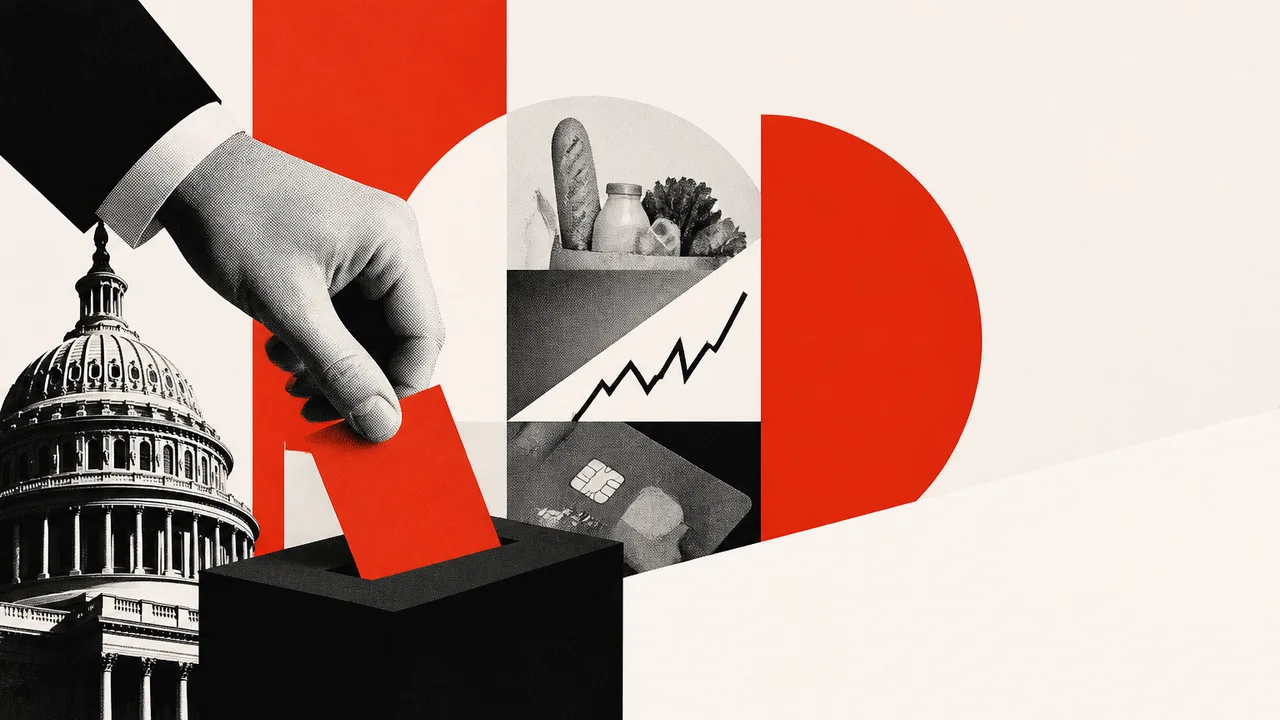
A CNBC voter poll puts the economy ahead of democracy-related concerns and immigration as respondents’ most important issue. That ranking gives the winners of the 2026 midterms a demanding assignment: voters will judge the country’s direction against the costs they meet in ordinary life, whatever else dominates the political calendar.
The finding also has limits. The poll details summarized with the result do not include field dates, sample size, question wording or group breakdowns, so the ranking cannot identify which economic pressures drove it, how widely the concern is shared or what caused any voter to choose a candidate.
An “economy” answer might mean a grocery bill, a wage that has failed to keep pace with expenses, an uncertain job or the cost of borrowing. Those pressures call for different remedies. A voter worried about layoffs may welcome stronger hiring even while another voter, struggling with rent, sees little relief in an improving jobs market. The single label makes for a clear poll result and a complicated governing brief.
Affordability is a Political Assignment, Not a Single Policy
Democrats’ midterm wins have sharpened the question of whether they can deliver on affordability. That question deserves a concrete answer rather than a promise that economic management will improve. A government can pursue lower household costs through competition policy, housing supply, targeted assistance or tax changes. Each tool reaches different people on a different timetable, and each comes with arguments over who pays.
Consider the gap between a slower rise in prices and a lower bill. If grocery prices rise more slowly next year, a family can still pay more than it did this year. Wages may eventually catch up, but households must cover expenses in the meantime. For a renter whose pay rises while housing costs rise faster, an aggregate improvement in earnings offers little comfort. For a worker facing reduced hours, the price of food may be only one part of the problem.
That is why the politics of affordability cannot be read directly from a national economic indicator. Voters encounter prices and pay at different moments. The worker who receives a raise once a year and buys fuel every week gets a running account of one side of the ledger, with the other side arriving much later. Candidates can promise to improve that arithmetic. Officeholders must decide which costs they can influence, and how quickly.
Elections add another complication: voters can reject an incumbent party for several reasons at once. Grocery bills and Trump’s rallies both feature in accounts of the midterms. Democracy-related concerns and immigration remain part of the political terrain even when fewer respondents select them as their single top issue.
The Same Election Looks Different on a Trading Screen
Stocks soared after Democrats’ midterm win, with an accompanying drop in oil prices. One interpretation is that investors welcomed a reduction in political uncertainty. A rally, however, does not settle what households expect from the next year. Traders may respond immediately to a changed policy outlook; a family deciding whether to replace a car or take on a larger rent payment works through income, bills and job security.
Markets compress many possible futures into today’s prices. A business weighing an investment asks whether taxes, trade rules, regulation or demand might change. A household deciding what it can spend asks whether the next paycheck will cover the next round of expenses. Those judgments can move in different directions after the same election. A stock gain can reflect confidence about corporate earnings without forecasting lower grocery bills.
Oil illustrates the distance between a market price and a household cost. Crude trades across borders, while the amount a driver pays also reflects refining, distribution and taxes. Businesses face their own chain of costs, from transportation to electricity. Even when an oil-price move eventually eases some expenses, the benefit can arrive unevenly. A decline on a trading screen is a possibility for relief, not a receipt handed to every consumer.
The international link runs the other way, too. If US demand changes because households pull back or firms delay investment, exporters elsewhere can feel it. If energy prices move sharply, countries that import fuel face a different pressure from those that sell it. An American election can alter expectations far beyond US polling places, while the people affected abroad have no vote in it.
Energy Prices Can Test Any Promise
High energy prices make midterms harder for incumbents. The political mechanism is easy to see: fuel and utility costs arrive repeatedly, and businesses can pass some of their higher costs on to customers. Households experience the total at the pump, on a bill or at a checkout, regardless of how many governments and companies shaped it.
Responsibility is harder to assign. Domestic policy can affect energy production, taxes and assistance, but energy prices also respond to global supply and demand. A politician can promise a cheaper commute; delivering one depends partly on forces outside that politician’s reach. That constraint does not excuse every policy choice. It does make sweeping promises vulnerable to the next change in world markets.
For a fuel-importing country, a rise in the price of oil can also increase the amount of foreign currency needed to pay for essential imports. A weaker local currency can compound the expense. The pressure then travels into transport and other costs before it reaches a household. These are familiar channels in international finance, and they explain why a US debate about affordability sits inside a larger world economy rather than apart from it.
What Voters Will Be Asked to Judge
The strongest reading of the CNBC result is straightforward: economic conditions sit at the center of many voters’ judgments. It gives politicians reason to explain what they would do about prices, pay and jobs, and businesses reason to watch whether households feel secure enough to spend. It leaves open which of those concerns comes first for different people.
The next useful reading will be one that separates them. Question wording can show whether respondents chose from a fixed list or described their concerns in their own terms. Breakdowns can show whether the ranking holds across voters facing different circumstances. Later polls can show whether the economy keeps its lead once the immediate election period has passed.
For the officials elected in 2026, the test will arrive sooner than any long account of the midterms. It arrives whenever a household compares its next paycheck with its next bill.
More Like This

Global Wealth Is $600 Trillion — and Mostly Paper
The world's net worth hit $600 trillion, but 75% of that growth since 2000 came from rising prices, not productive investment. Here's what that means.

Brand Authority Is Pricing Power—and Finance Knows It
Ryan Deiss's five brand "authority triggers" map onto real financial metrics. A global markets reporter translates what that actually means for valuations and beyond.

US Ban on Canadian Goods Changes the Importer's Calculus
Selected Canadian goods now face a US import ban. Earlier tariffs left a costly route to market; the new cutoff makes product classification and existing stock decisive.

Better Screens May Explain Why Screen Time Keeps Rising
A screen-time price index is down 39% since 2000, mainly because quality improved. The finding raises questions about digital growth, household costs and access.
August PCE Inflation Missed Forecasts as Spending Rose
August core PCE inflation undershot forecasts as real spending rose and income stalled. BEA revisions to earlier data complicate annual comparisons with July.

Saudi PIF Buys EA for $55bn in Major Gaming Takeover
Saudi Arabia's PIF, Silver Lake, and Jared Kushner's Affinity Partners have completed a $55bn acquisition of Electronic Arts, taking the gaming giant private.
Meta's AI Spending Rattles Investors and Global Markets
Meta shares fell more than 10% as investors balked at AI spending plans. But the real stakes extend far beyond Wall Street—to advertisers in Lagos and regulators in Brussels.