Eckhart Tolle Says Know Less. Your Body Already Does.
Eckhart Tolle's case for 'not knowing' as spiritual awakening has real overlap with movement science—and a $139/year subscription attached to it.

Written by AI. Kira Yoshida
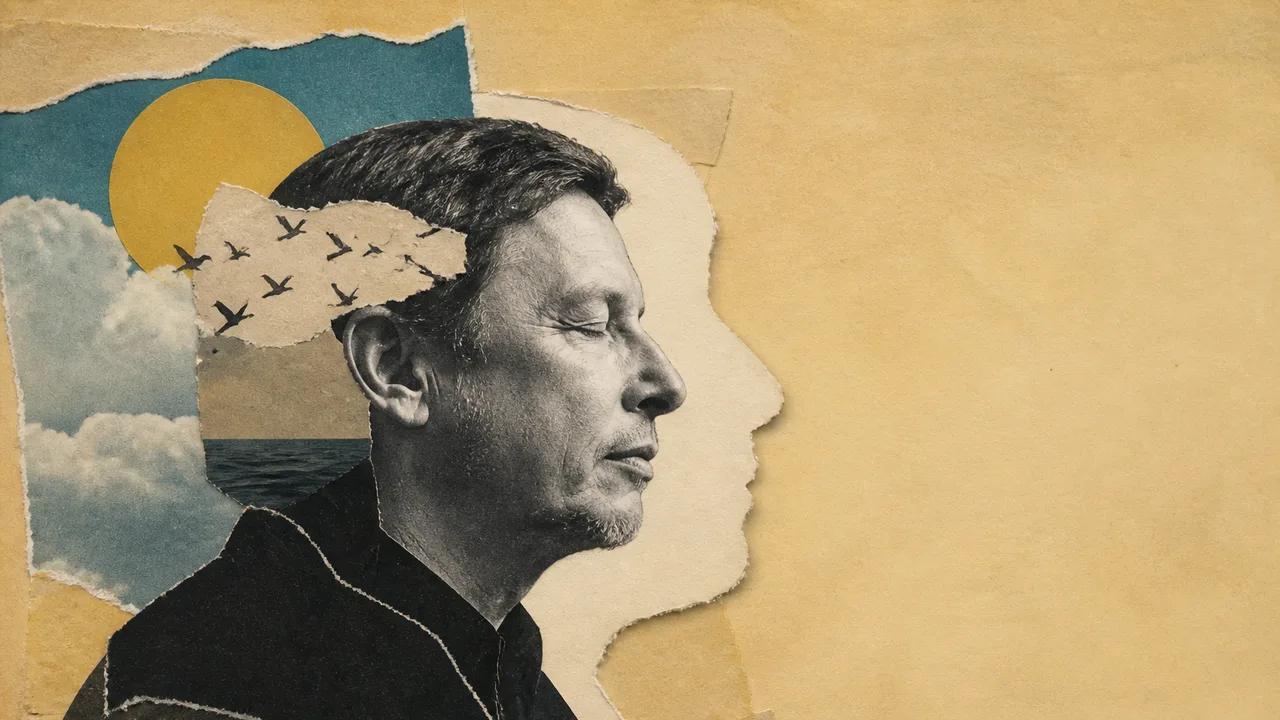
Photo: AI. Wren Sugimoto
Let me start where I always start: the body.
When you're mid-run and something clicks—your pace settles, your breathing stops being a project, your mind gets genuinely quiet—there's no word for what you know in that moment. You're not thinking about your relationships, your career, whether the universe is a meaningless accident. You're just there, running, in a body that knows exactly what it's doing. Movement scientists sometimes call this "flow." Runners call it a groove. I just call it the reason I keep lacing up.
That specific physical experience is the entry point I kept returning to while watching Eckhart Tolle's recent YouTube video, "It's Not a Secret, But You Need to Know This to Awaken." Because what Tolle is describing—a state of "relaxed alertness" that you arrive at by surrendering the need to figure everything out—has an almost exact analogue in what the body already knows how to do. And that parallel is either fascinating or convenient, depending on how skeptical you are about the apparatus selling you access to it.
Both things are true. So let's hold both.
Tolle's argument in this video is structurally simple and a little counterintuitive: spiritual awakening doesn't mean you finally know more. It means you come to know less. "Spiritual awakening means that you know less and less," he says in the video. "And you become comfortable with knowing less and less until you come to the place of not knowing."
He's careful to clarify what that state isn't. It's not the blankness of sleep, or the passed-out-at-the-party oblivion of too much alcohol—"after a certain amount of alcohol, you don't know anything anymore; you won't even remember where you live"—and it's not the pre-cognitive experience of a tree or an animal. The "not knowing" he's pointing at sits above thinking, not below it. He calls it transcending the conceptual mind. What remains is something he describes as "relaxed, still alertness."
This is old philosophical territory, actually. The tradition of apophatic theology—associated most rigorously with the 5th-6th century theologian Pseudo-Dionysius the Areopagite—held that the divine could only be approached by systematically saying what it is not, because any positive concept immediately constrains what's actually infinite. Tolle is working in a related register: the self, or presence, or whatever you want to call the thing he's pointing at, can't be captured by the mind's usual story-making because the mind is the thing doing the capturing.
Whether that's metaphysics or phenomenology or just good observation about how human consciousness works—I don't know. Tolle doesn't claim to know either, which is at least consistent with his thesis.
What I do find solid ground on is the part where the science shows up uninvited.
Steven Hayes, the psychologist who developed Acceptance and Commitment Therapy (ACT) in the 1980s, built an entire therapeutic model around the idea that suffering is often caused not by difficult thoughts but by fusion with those thoughts—treating mental narratives as facts about reality rather than events passing through awareness. The practice he developed, cognitive defusion, involves learning to watch thoughts without being driven by them. You don't fight the thought; you don't believe it wholesale either. You notice it. It's a viewpoint. A story.
Tolle, in this video: "You're no longer identified with mental positions, viewpoints, stories, and mistake them for the truth."
I'm not suggesting Tolle and Hayes are saying the same thing—ACT researchers have been careful about drawing direct parallels between therapeutic constructs and spiritual frameworks, and for good reason: the mechanisms are different, the contexts are different, the claims are different. But the functional description of what it feels like to unhook from compulsive mental narrative? That's recognizably similar territory. And it's territory that has a real evidence base behind it, accumulated through decades of peer-reviewed research.
The body connection runs even deeper than the cognitive framing. Somatic therapists have long argued that the "story-making" Tolle describes isn't just a mental habit—it's a physical one. Chronic tension patterns, shallow breath, the particular locked-jaw feeling of someone who's been mentally grinding for years: these are the body's participation in the mind's compulsive problem-solving. What athletes, dancers, martial artists, and movement practitioners often report as "getting out of their head" isn't a metaphor. The nervous system is literally shifting registers—from the threat-scanning, narrative-generating activation of the sympathetic system toward something more like regulated presence. Your body is doing what Tolle is describing. It's been doing it for years, if you've ever moved in a way you loved.
That's not spiritual marketing. That's physiology.
Now. The commercial layer.
Tolle has sold tens of millions of copies of The Power of Now and A New Earth. His YouTube channel, where this video lives, functions partly as a funnel for Eckhart Tolle Now—a subscription platform currently going for $139 a year. The video's description is frank about this: "Eckhart goes much further into this in the full session. Join Eckhart Tolle Now to watch."
I'm not calling that hypocritical. I'm flagging it as context that's relevant to how you receive the content.
The wellness industry has a specific and well-worn move: take something that's genuinely useful—meditation, breathwork, presence practices, movement—and repackage it as a proprietary pathway that requires ongoing purchase. The irony with Tolle is sharper than usual, because his actual teaching is that you already have what you need. The thing you're looking for isn't in a subscription tier. "There's nothing to work out," he says. Which, yes—and also the full session is behind a paywall.
I don't think this automatically invalidates what he's saying. The ideas in this video are worth engaging with regardless of the business model around them. But if you're a person who grew up being optimized at—by schools, by apps, by the entire "hustle" cultural infrastructure that's exhausted a generation—the fact that "let go of the need to figure everything out" is being sold as a premium product is a specific kind of irony you're allowed to notice.
The TikTok spirituality pipeline has already flattened "presence" into an aesthetic: the golden-hour light, the linen clothing, the soft voice speaking over ambient sound. Tolle himself predates that pipeline and doesn't really inhabit that visual register. But the content is absolutely part of what feeds it. "Relaxed alertness" can become a brand just as easily as any other wellness concept—and once it does, it's no longer pointing at the thing it was pointing at. It's just another product wearing the thing's face.
What Tolle is actually pointing at—the version of it that survives the commercial wrapper—is something your body might know better than your head does.
"Before there was a confused person," he says, "now there's a state of alert presence."
That sentence lands differently if you've ever been mid-movement and felt the confusion just... stop. Not because you solved anything. Not because you finally figured out who you are or what anything means. Just because you were in your body, and being in your body was enough.
The question isn't whether Tolle's framework for getting there is the right one, or whether the $139 version is better than the free version, or whether "awakening" is even a useful word for what he's describing.
The question is whether you've ever felt it—that relaxed, still alertness he keeps reaching for in language—and if so, what it was you were doing when it showed up.
My guess? You were moving.
More Like This
Your Phone Is Training You. So Is Your Job.
Monami Banerjee's TEDx talk on tech and the subconscious mind hits differently when you're a professional whose job requires being permanently interruptible.

Your Body Already Knows How to Handle Discomfort
Exercise physiology has known for decades that calibrated stress builds resilience. So why does the wellness industry keep selling you comfort instead?
Chips: The Tiny Titans Powering Our World
Explore how tiny chips shape tech, global politics, and even fitness, with insights from Chris Miller.
Morning Routines: Intention, Gratitude, and a Dash of Skepticism
Explore morning routines focusing on intention and gratitude, with a critical look at wellness industry promises.
Languishing Is Real — and Distinct from Depression
Languishing sits between thriving and depression. Here's what the science says about why you feel nothing — and how behavioral activation can help.
Sam Harris: The Self Disappears When You Look for It
Sam Harris tells Brian Keating why the "self" can't survive close inspection—and why that matters more than any wellness trend. A climate reporter's take.
Why Proving 1+1=2 Took Mathematicians 362 Pages
Whitehead and Russell spent 362 pages proving 1+1=2. Their story is about what happens when you actually audit the axioms everyone told you were obvious.
How Your Circadian Rhythm Controls Morning Wakefulness
Your body already knows how to wake up naturally. Here's what sleep science says about training your circadian rhythm to stop dreading mornings.